


Mastering Bridal Collection Assortment Architecture for Boutique Profitability
- Rui Tsai

- Jul 10
- 4 min read
Bridal collection assortment architecture is a strategic planning framework that helps boutique buyers and brand merchandisers balance high-volume core styles, commercial trend-driven designs, and high-impact statement gowns to maximize profitability and store appeal.
For bridal retailers, curating a collection is far more than just picking beautiful dresses. It requires a deep understanding of customer behavior, market trends, and financial viability. Without a structured framework, bridal shops often end up with redundant inventory, overlapping designs, and slow-moving stock that eats into profit margins.
By implementing a deliberate bridal retail buying strategy, store owners can curate a balanced collection that captures every bride's imagination while safeguarding their bottom line.
What Is Bridal Collection Assortment Architecture?
At its core, bridal collection assortment architecture is the blueprint of your inventory. It determines how many styles you carry, how they are priced, and how they cater to different bridal personas. Rather than purchasing wedding dresses based on emotional reactions or isolated trends, buyers use this architecture to build a cohesive, profitable, and structurally sound product range.
Effective wedding dress assortment planning requires looking at your boutique as a unified gallery. Every gown must have a distinct purpose and target customer. When your collection is structured correctly, your sales consultants can easily navigate options for brides, presenting clear choices rather than overwhelming them with endless, identical variations.
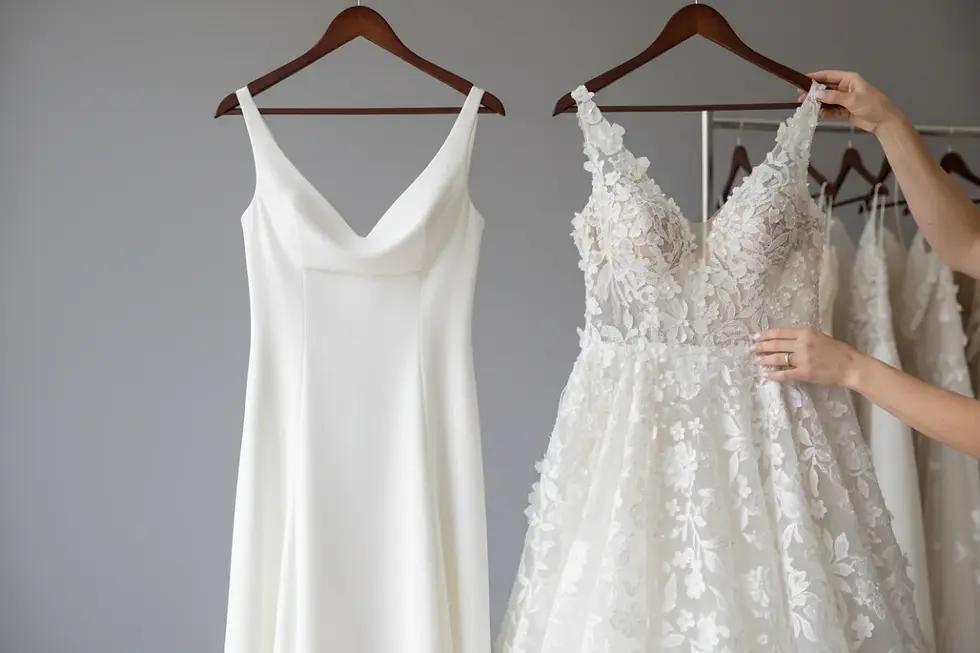
The Three Pillars of Bridal Assortment: Core, Commercial, and Statement Gowns
To achieve a balanced bridal boutique inventory mix, you must categorize your purchases into three primary product tiers. Each tier serves a unique purpose in your store's ecosystem:
1. Core Bridal Gowns
Core styles represent the timeless foundation of your inventory. These are classic silhouettes—such as clean A-lines, traditional ballgowns, and simple crepe sheaths—that consistently appeal to a broad demographic. They are low-risk, high-margin, and highly re-orderable.
2. Commercial Trend Gowns
Commercial trends are modern updates on classic designs. They incorporate current elements like 3D floral appliqués, detachable sleeves, or square necklines. These gowns capture the "modern bride" look and generate excitement in the fitting rooms without being too avant-garde for the average customer.
3. Statement Bridal Gowns
These are high-fashion, show-stopping pieces that define your boutique's identity and dominate your display windows. While they may not be your top sellers, they attract foot traffic, generate social media engagement, and establish your store as a style authority. Balancing core and statement bridal gowns ensures you look fashionable while remaining highly profitable.
Assortment Tier | Inventory Allocation | Role in Boutique | Risk Level |
|---|---|---|---|
:--- | :--- | :--- | :--- |
Core Gowns | 50% - 60% | Reliable, high-margin sales | Low |
Commercial Trends | 25% - 35% | Capturing seasonal demand | Medium |
Statement Pieces | 10% - 15% | Branding, PR, window-stoppers | High |
Why Overlap Hurts: The Pitfalls of Buying Similar Wedding Dresses
One of the most common mistakes in a bridal retail buying strategy is style overlap. It occurs when a buyer purchases multiple gowns that look almost identical under different brand names. For example, stocking five sheer-bodice, leafy lace A-line gowns from three different designers creates confusion for both your sales stylists and your brides.
When a bride is presented with too many identical choices, it leads to decision paralysis. Instead of choosing a dress, they walk away to "think about it." Furthermore, style overlap ties up valuable capital in redundant stock, leaving you with less budget to invest in unique market segments or emerging trends. A well-defined bridal collection assortment architecture acts as a filter, preventing redundant styles from entering your inventory.

How to Plan Your Perfect Bridal Assortment Mix Ratio
Planning a successful assortment involves analyzing your previous sales data alongside your future business goals. Follow these steps to optimize your buying architecture:
Analyze Historical Sales Data: Identify which silhouettes, fabrics, and price points performed best over the past 12 to 24 months. This forms the basis of your Core selection.
Define Your Customer Personas: Determine the percentage of traditional, modern, bohemian, and glamour-focused brides entering your boutique.
Allocate Budget by Tier: Ensure that 50-60% of your open-to-buy budget is spent on Core styles, with the remaining budget distributed between Commercial trends and Statement pieces.
Map Silhouettes Against Fabrications: Avoid buying multiple satin ballgowns or crepe mermaids unless they serve distinctly different price points or design details.
By enforcing these structural guardrails, your buying team can approach markets and trade shows with a highly targeted shopping list, minimizing impulsive purchasing decisions.
Partnering with Huasha: Streamline Your Bridal Buying Strategy
Executing a precise bridal collection assortment architecture requires a reliable manufacturing partner who understands the balance of commercial appeal and high-fashion design. At Huasha, we specialize in providing premium, customizable bridal designs that cater directly to boutique inventory needs.
Whether you need to restock reliable, high-margin core styles with impeccable fits, or inject fresh, trend-forward commercial gowns into your current season’s mix, our diverse manufacturing capabilities support your goals. Partnering with Huasha allows you to streamline your supply chain, reduce lead times, and maintain an optimized, highly profitable collection that delights every bride who walks through your doors.

Ready to transform your boutique's inventory performance? Contact our design and merchandising specialists today to strategically align your inventory with global trends.
FAQ
What is the ideal ratio for a bridal boutique inventory mix?
A highly successful baseline ratio is 50-60% Core styles (classic, high-margin, consistent sellers), 25-35% Commercial trends (seasonal, fashion-forward elements), and 10-15% Statement gowns (high drama, window-stoppers, and PR pieces).
How does style overlap damage a bridal retail buying strategy?
Style overlap occurs when a boutique buys too many visually similar gowns. This dilutes the distinctiveness of your inventory, confuses brides (causing decision paralysis), and ties up valuable capital in slow-moving, redundant stock.
How often should I review my wedding dress assortment planning?
Assortment planning should be reviewed before every major buying season (typically twice a year) and analyzed monthly against sales data to identify which core styles need restocking and which trends are slowing down.


Comments