


Easy-to-Fit Wedding Gowns: How Bridal Shops Can Reduce Alteration Stress and Sell with Confidence
- Rui Tsai

- May 24
- 10 min read
A beautiful gown can still become a problem.
I know that sounds strange. Maybe even a little unfair. But anyone who has worked inside a bridal shop knows exactly what I mean.
A gown can look stunning on a model. It can photograph beautifully. It can have the right lace, the right neckline, the right amount of drama.
Then it arrives in the fitting room.
The bride steps into it.The stylist starts clipping.Then clipping again.Then trying to explain what it will look like after alterations.
And slowly, the energy changes.
The bride starts looking uncertain. The mother stops smiling. The stylist works harder than she should. The gown may still be beautiful, but now the shop has to fight for the sale.
That is the hidden problem many bridal shop owners face.
Not every gown that looks good in a lookbook is easy to sell in real life.
For a bridal shop, the real question is not only:
“Is this gown beautiful?”
The better question is:
“Will this gown help my team sell with confidence?”
That is why I believe easy-to-fit wedding gowns are not just a design preference. They are a business tool.
The Real Problem: Brides Do Not Buy the Final Gown. They Buy the Try-On Feeling.
This is one of the most important things bridal shop owners understand better than anyone.
A bride is not buying a technical garment. She is buying a feeling.
She wants to step out of the fitting room and feel something immediately.
Relief.Excitement.Confidence.The quiet little shock of seeing herself as a bride.
But if the gown needs too much imagination, that feeling becomes harder to reach.
The stylist may say:
“Once we take this in…”“After we adjust the bust…”“When the hem is fixed…”“Try to imagine the neckline sitting better…”
Those words are sometimes necessary. But if the whole sale depends on imagination, the shop is working too hard.
An easy-to-fit gown gives the bride a stronger first impression.
It does not need to be perfect on every body. No gown can do that. But it should give the stylist a solid starting point.
The bust should feel supported.The waist should make sense.The neckline should sit cleanly.The skirt should fall in a way the bride can understand.
Because in bridal retail, the first try-on moment matters.
A lot.
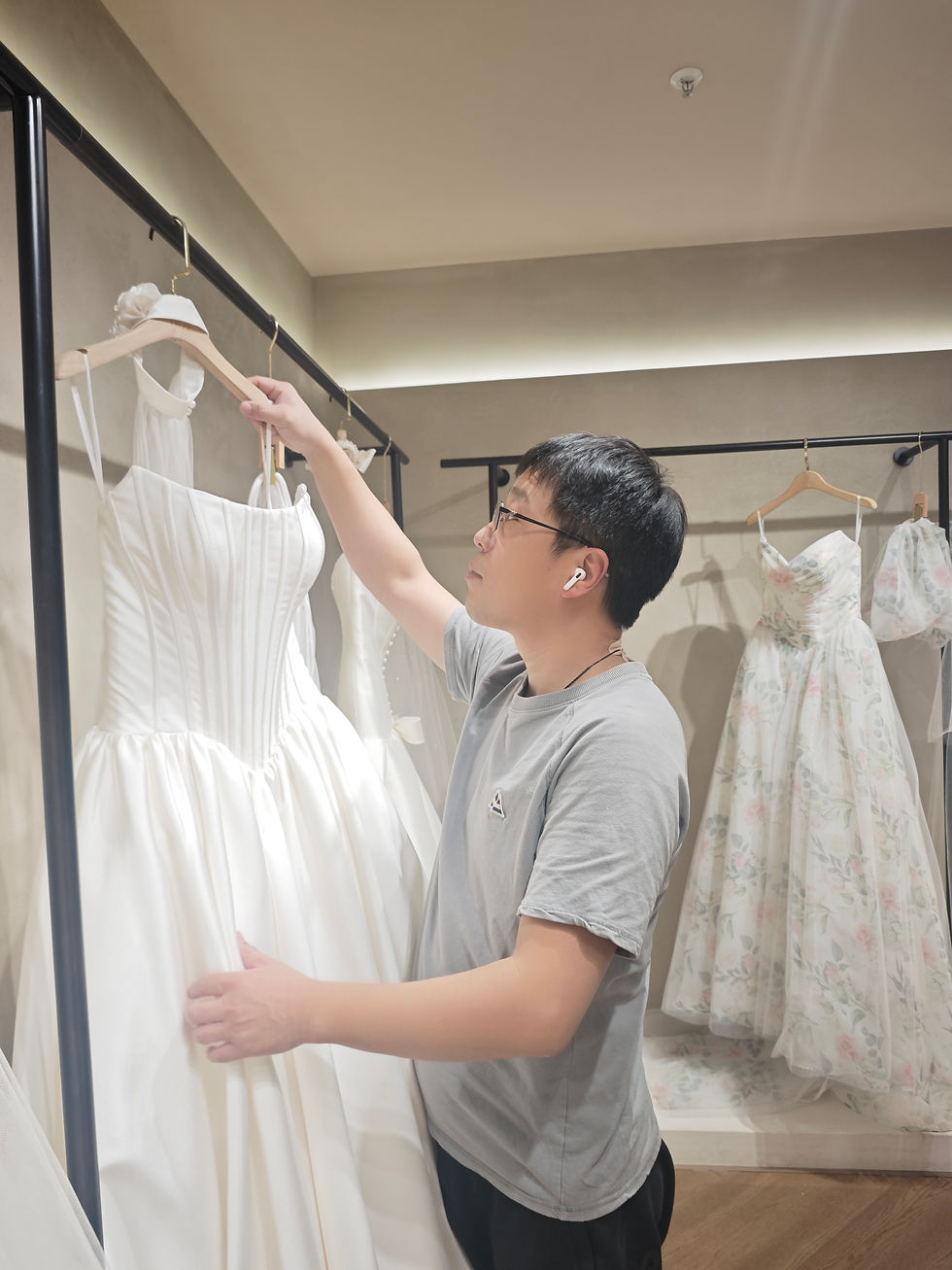
Why Fit Is a Sales Issue, Not Just a Tailoring Issue
Many people think fit belongs to the alteration room.
I disagree.
Fit starts affecting the sale before alterations even begin.
When a gown fits poorly during the appointment, it creates three problems for the shop.
First, it weakens the bride’s emotional reaction.
Second, it puts more pressure on the stylist.
Third, it creates doubt about the final result.
And doubt is expensive.
A bride may love the design, but if she is not sure the gown can be made to look right on her body, she may keep shopping. The stylist may know the gown can be fixed, but the bride does not always have that same confidence.
That is why bridal shop owners should evaluate fit as part of the buying decision.
Not after the gown arrives.
Before.
Problem 1: The Gown Looks Good on a Model but Does Not Work on Real Brides
This is one of the most common problems I hear from bridal businesses.
A gown looks beautiful in photos. The sample arrives. The team is excited.
Then real brides begin trying it on.
Different heights. Different bust shapes. Different waist positions. Different posture. Different levels of body confidence.
Suddenly, the gown is not as easy as expected.
Maybe the waistline is too specific. Maybe the neckline collapses on smaller busts. Maybe the skirt adds volume in the wrong place. Maybe the bodice needs too many clips before the bride can see the shape.
This does not mean the design is bad.
It means the design was not built with enough real fitting-room flexibility.
What bridal shop owners should look for
When reviewing a sample, do not only ask whether it looks good on the model.
Ask:
Can this gown flatter more than one body type?
Does the waistline work on different torso lengths?
Does the bodice still look good when clipped?
Can the neckline stay clean without constant adjustment?
Will a petite bride understand the shape?
Will a curvier bride feel supported?
Can my stylist explain this gown quickly?
A strong sample does not need to fit everyone perfectly.
But it should give your team options.
And options are what make a gown easier to sell.

Problem 2: The Bodice Does Not Give Enough Support
If I had to choose one part of the gown that affects sales the most, I would choose the bodice.
Not the train.Not the lace.Not even the skirt.
The bodice.
Why?
Because the bodice controls the bride’s confidence.
If the bride feels unsupported, she becomes distracted. She pulls at the gown. She looks down. She asks if it will stay up. She worries about dancing, walking, hugging, and breathing.
That is not the feeling a bridal shop wants in the mirror.
A good bodice should do quiet work.
It should hold.Shape.Support.Smooth.And then disappear into the beauty of the gown.
The bride should not be thinking, Will this fall down?
She should be thinking, I look good.
What makes a bodice easier to sell?
For bridal shop owners, a selling-friendly bodice usually has:
A stable inner structure
Smart boning placement
Cups that support without looking bulky
A waistline that helps shape the body
Enough firmness to hold the gown
Enough comfort so the bride can move naturally
This is especially important for strapless gowns, deep neckline gowns, fitted mermaids, and clean minimalist designs. The cleaner the design, the less it can hide.
A clean gown has nowhere to lie.
That is why construction matters so much.

Problem 3: The Gown Is Too Difficult to Alter
Some gowns are beautiful until the seamstress opens them.
Then the trouble begins.
Layers are hard to access. Beading blocks the side seams. Lace placement makes simple adjustments complicated. The hem has too many layers. The skirt is beautiful but takes too much time to correct.
For the bride, this may feel like a small issue.
For the bridal shop, it is not small at all.
Difficult alterations can create:
Longer fitting appointments
More pressure on the seamstress
Higher risk of mistakes
More emotional stress for the bride
More difficult conversations about expectations
Lower confidence when stylists recommend the gown again
A bridal shop does not only sell the dress.
It also has to guide the bride through the entire process after the sale.
So if a gown creates alteration stress again and again, the team remembers.
And next season, they may not reorder similar styles.
What makes a gown easier to alter?
An easy-to-alter gown usually has logical construction.
That means:
Side seams are reachable
Important alteration points are not completely covered by heavy embellishment
The bodice can be adjusted without destroying the design
The hem can be shortened cleanly
The skirt layers are organized, not chaotic
Lace placement allows reasonable correction
The back closure gives some flexibility
This is not the glamorous side of bridal design.
But it is the side that protects the shop.
A gown that is easier to alter gives the stylist more confidence during the sale because she knows the after-sale process will not become a headache.
Problem 4: The Stylist Does Not Know How to Sell the Gown
This is another issue many suppliers do not think about enough.
A gown may be beautiful, but if the stylist cannot explain it clearly, the gown becomes harder to sell.
In a bridal appointment, stylists need simple, useful talking points.
Not vague words like “romantic” or “elegant.”
Those words are fine, but they are not enough.
A stylist needs to say something the bride can feel immediately.
For example:
“This bodice gives you support without feeling heavy.”“This waistline helps create a longer shape.”“This neckline softens the shoulders.”“This skirt gives movement without overwhelming your frame.”“This lace draws the eye upward, so the whole look feels balanced.”
That is selling language.
Good gowns create these sentences naturally.
Weak gowns force the stylist to invent reasons.
And in a busy store, that matters.
How bridal shop owners can evaluate this before buying
Before adding a gown to your collection, ask your team:
Can we describe this gown in one clear sentence?
If the answer is no, the gown may be harder to sell.
A strong gown should have a clear reason to exist in your assortment.
Maybe it is the supportive strapless style.Maybe it is the clean modern gown for minimalist brides.Maybe it is the soft A-line for outdoor weddings.Maybe it is the fitted lace gown that feels secure but still feminine.
Whatever the reason is, your team should know it.
If the team understands the gown, the bride has a better chance of understanding it too.
Problem 5: The Sample Is Good, but Bulk Production Is Not Consistent
This is one of the biggest concerns when bridal shop owners work with manufacturers.
The sample looks right.The first order looks right.Then the next batch feels slightly different.
Maybe the fabric handfeel changes. Maybe the lace placement is not as clean. Maybe the bodice feels softer. Maybe the gown does not hold shape in the same way.
These small differences create big problems.
For bridal shops, consistency is trust.
When a bride orders a gown based on a sample, the final gown must feel faithful to that sample. It does not have to be magical. It has to be reliable.
That reliability comes from production discipline.
Pattern control.Fabric testing.Dye lot management.Lace placement standards.QC checkpoints.Clear communication.
This is where the factory side becomes very important.
A gown that is easy to sell in the shop must also be repeatable in production. Otherwise, the shop takes the risk.
And bridal shop owners already carry enough risk.
Problem 6: The Gown Does Not Fit the Store’s Assortment Strategy
Not every beautiful gown belongs in every bridal shop.
This is a hard truth.
A shop may fall in love with a dramatic gown, but if it overlaps too much with existing samples, it may not add real value. Another gown may look less exciting at first but fill an important gap in the store’s collection.
For bridal shop owners, every sample should have a job.
Some gowns attract attention.Some gowns close sales.Some gowns serve a specific body type.Some gowns support a popular venue style.Some gowns help stylists move a bride from “not sure” to “yes.”
An easy-to-fit gown is especially valuable when it fills a practical role.
For example:
A supportive strapless gown for brides worried about security
A soft A-line for brides who want comfort and movement
A clean gown for brides who dislike heavy decoration
A lace mermaid that gives shape without feeling too restrictive
A gown with smart structure for curvier brides
A lightweight style for outdoor or destination weddings
The point is not to buy more.
The point is to buy smarter.
A Practical Buying Checklist for Bridal Shop Owners
When evaluating a new gown, I would not only look at the front photo.
I would ask these questions:
Fit Questions
Does the bodice hold shape well?
Does the waistline sit in a flattering position?
Does the neckline stay clean when the gown is clipped?
Can this style work on more than one body type?
Does the bride need too much imagination to understand the gown?
Alteration Questions
Are the side seams accessible?
Can the bust and waist be adjusted reasonably?
Does lace or beading block key alteration areas?
Is the hem construction manageable?
Will this gown create unnecessary work for the seamstress?
Sales Questions
Can my stylist explain the gown clearly?
What type of bride is this gown for?
What problem does this gown solve in my assortment?
Does it create a strong try-on moment?
Would my team feel confident pulling this gown again and again?
Supplier Questions
Will production match the sample?
Are fabric and lace quality controlled?
Are construction standards clear?
Is communication transparent if a problem appears?
Does the supplier understand bridal retail, not just manufacturing?
These questions may not sound romantic.
But they help protect the business.
And protecting the business is what allows bridal shop owners to serve brides better.
What I Look for at the Factory Before a Gown Reaches the Shop
From my side, I do not think a gown is finished when it looks pretty on a mannequin.
That is only the beginning.
Before a gown reaches a bridal shop, I want to understand how it behaves.
How does the bodice hold?How does the fabric move?Does the waistline stay balanced?Can the gown be adjusted without damaging the design?Will the lace placement create problems later?Does the construction make sense for real production?
A wedding gown is emotional on the outside.
But inside, it is engineering.
Soft engineering, yes. Beautiful engineering. But engineering all the same.
If one part is wrong, the bride may not know exactly why. She just feels it.
Something pulls.Something gaps.Something feels heavy.Something does not sit right.
That is why the invisible work matters.
The bride may never see the inner structure. But she feels the result.
So does the stylist.
So does the seamstress.
So does the shop owner when the gown either sells smoothly or sits too long on the rack.
Easy-to-Fit Wedding Gowns Help Shops Sell with Less Friction
I like this word: friction.
Because in bridal retail, friction is everywhere.
A bride unsure about her body.A mother with strong opinions.A stylist trying to manage emotions.A seamstress with limited time.A shop owner watching sample performance.A supplier trying to deliver consistency.
A good gown reduces friction.
It does not solve every problem. No gown can.
But it makes the process smoother.
The try-on feels better.The stylist speaks more clearly.The bride trusts the final result.The seamstress has fewer surprises.The shop owner feels more confident about the purchase.
That is what an easy-to-fit gown really does.
It does not just fit the bride.
It fits the business.
The Best Gowns Are Designed for the Fitting Room, Not Just the Photoshoot
Photos matter. Of course they do.
A strong image gets attention. It helps a bride dream. It helps a shop market the gown.
But the photoshoot is not where the sale is won.
The sale is won in the fitting room.
Under real lighting.With real bodies.With clips on the back.With nervous laughter.With honest mirrors.With a stylist trying to guide the bride toward confidence.
That is where the gown has to perform.
A gown designed only for the camera may impress people for a few seconds.
A gown designed for the fitting room can support the whole sales journey.
That is the deeper standard bridal shop owners should expect from suppliers.
Final Thoughts
After years in bridal manufacturing, I have learned that the most valuable gowns are not always the loudest ones.
Sometimes the strongest gown is the one that quietly makes everyone’s job easier.
The bride feels more confident.The stylist knows what to say.The seamstress sees a clear path.The shop owner understands why the gown belongs in the collection.
That is the kind of gown worth buying.
Not just beautiful.
Useful.
Not just dramatic.
Sellable.
Not just impressive in a photo.
Reliable in the fitting room.
For bridal shop owners, easy-to-fit wedding gowns are more than a product category. They are a way to reduce stress, improve appointments, protect alteration time, and build a collection your team can truly stand behind.
Because at the end of the day, a gown that is easier to fit and easier to alter is not only easier to sell.
It is easier to trust.


Comments