

How to Improve Wedding Dress Sleeve Mobility: Technical Pattern and Fabric Solutions

To improve wedding dress sleeve mobility, patternmakers must engineer a higher, closer-fitting armhole combined with a lowered sleeve cap height, integrate bi-stretch illusion mesh or bias-cut underarm gussets, and validate full range of motion using the bridal fitting arm lift hug test during sampling. These adjustments prevent the bodice from pulling upward when the bride raises or extends her arms.
Why is sleeve mobility a critical quality standard for bridal boutiques?
Sleeve mobility directly influences bridal fitting satisfaction, alterations expenditure, and return rates. In traditional bridal gowns, restrictive sleeves create tight drag lines, pull the waistline out of alignment during movement, and cause bride fatigue or seam tears.
For bridal boutique owners, offering sleeved gowns with exceptional movement delivers specific business advantages:
Reduced In-House Alteration Costs: High-mobility sleeve construction eliminates the need for expensive post-production shoulder resets.
Higher Try-On Conversion: Brides feel comfortable hugging family members and dancing during initial showroom fittings.
Lower Defect Rates: Strategic ease prevents delicate lace and illusion tulle from tearing at stress points along the posterior armscye.
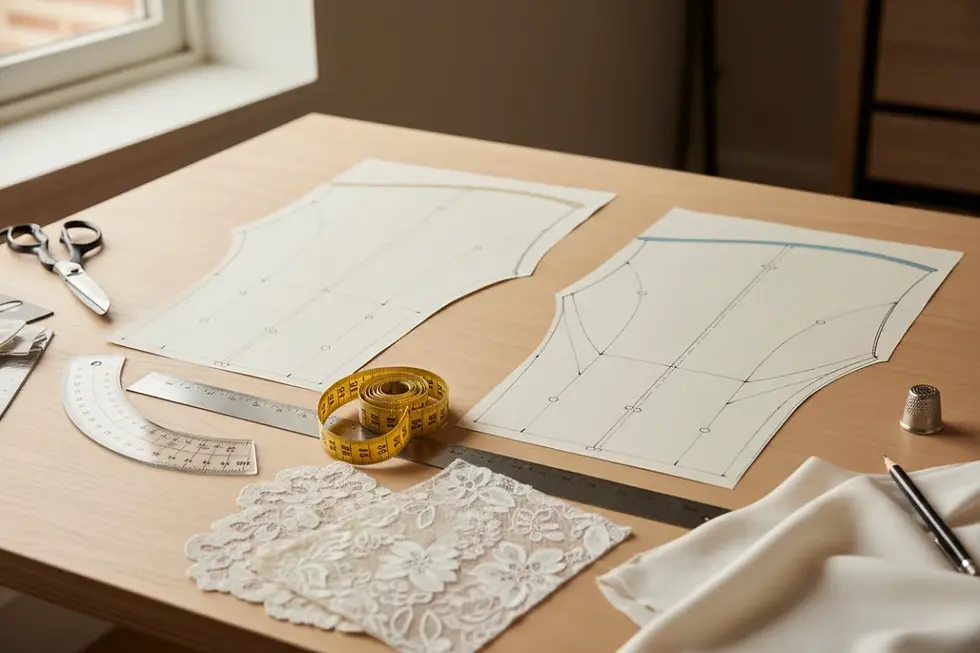
Raising the armhole depth and lowering the sleeve cap height creates independent arm movement.
How does wedding gown armhole fit engineering dictate arm movement?
Counterintuitively, a smaller, higher armhole provides significantly more arm mobility than an oversized, low-cut armhole. When an armhole sits low on the ribcage, raising the arm levers the entire gown upward.
Correct wedding gown armhole fit engineering involves precise geometric relationships:
Pattern Component | Restrictive Construction | High-Mobility Construction |
|---|---|---|
:--- | :--- | :--- |
Armhole Base Depth | Dropped 3.0 to 5.0 cm below natural axilla | Raised to 1.0 to 1.5 cm below natural axilla |
Sleeve Cap Height | High, fitted cap (14 to 16 cm) | Moderately lowered cap (10 to 12 cm) |
Underarm Seam Angle | Steep vertical alignment (narrow angle) | Angled outward (35° to 45° taper) |
Bicep Ease | Static 1.0 to 2.0 cm total ease | 3.5 to 5.0 cm mechanical/fabric ease |
By executing precise bridal sleeve pattern adjustments—raising the scye depth and flattening the sleeve cap curve—the sleeve acts independently of the bodice block, allowing overhead movement without distorting the waiststay or neckline.

Using high-recovery 4-way stretch mesh maintains sheer aesthetics while enhancing arm flex.
Which material techniques maximize stretch illusion sleeve flexibility?
Material selection determines whether a fitted sleeve can stretch comfortably across the elbow and shoulder joint. Rigid woven tulles and dense lace backings lock the arm in place.
To maximize stretch illusion sleeve flexibility, manufacturers employ several technical fabric methods:
Four-Way Stretch Polyamide Mesh: Substituting rigid nylon tulle with 4-way stretch illusion mesh (containing 12% to 18% elastane) allows 30% to 40% elongation under movement.
Floating Appliqué Placement: Applying lace motifs using flexible embroidery thread or spot tacking rather than continuous stiff glue or dense stitching preserves the underlying mesh stretch.
Bias-Cut Underarm Gussets: Inserting a small diamond or teardrop-shaped gusset under the arm in matching skin-tone illusion mesh grants 360-degree joint articulation without visible bulk.
Articulated Elbow Seaming: Incorporating subtle shaping darts or horizontal ease along the posterior elbow accommodates forearm flexion during dining and dancing.
How do you validate movement using the bridal fitting arm lift hug test?
Pattern quality should be verified physically before bulk production runs. The standard industry diagnostic is the bridal fitting arm lift hug test.
Step 1: Baseline Check -> Step 2: 90° Lateral Lift -> Step 3: 180° Overhead Lift -> Step 4: Forward Hug Test
(Verify waist placement)  (Check side-seam shift)   (Measure bodice lift)     (Check posterior seam stress)
During fit validation, inspect the gown against these benchmark tolerances:
90° Forward Hug: The bride extends both arms horizontally and crosses them over the chest. If the posterior shoulder seam pulls more than 1.5 cm away from the shoulder blade, additional cross-back width or sleeve cap ease is required.
180° Overhead Lift: When reaching overhead, the gown's waistline should rise no more than 2.5 cm. Excessive lifting indicates an armhole cut too low.
Forearm Flexion: Bending the elbow to touch the shoulder should cause zero pinching or seam splitting across the bicep or cubital fossa.

The arm-lift and hug test verifies that bodice placement remains stable throughout full joint extension.
How should bridal retailers specify sleeve revisions during production sampling?
When collaborating with bridal manufacturers like Huasha, clear technical specifications eliminate revision cycles. Communicate pattern revisions with standardized measurements rather than subjective feedback.
Specify the following parameters on your technical sample feedback sheet:
Scye Raising: "Raise underarm point of armscye by 1.5 cm and widen bicep by 2.0 cm across the flat pattern."
Cap Reduction: "Reduce sleeve cap height by 2.0 cm and redistribute ease toward the back sleeve head."
Mesh Specification: "Replace base sleeve mesh with high-recovery, 4-way stretch illusion tulle (minimum 15% spandex content)."
Motif Float: "Keep lace motifs discontinuous across the axillary seamline to maintain horizontal stretch."
Ensuring your gowns balance structural support with freedom of movement begins at the development stage. When finalizing your next bridal order with Huasha, make sure to Request a sleeve-mobility check during sampling.
FAQ
Why does a lower armhole reduce arm mobility in wedding dresses?
A low-cut armhole tethers the underarm seam directly to the ribcage area of the bodice. When the arm is raised, the sleeve immediately pulls the entire bodice upward. A higher, closer-fitting armhole acts as a true pivot point, allowing the sleeve to move independently.
Can tight lace sleeves be altered for more mobility after production?
Post-production alterations are limited. Seamstresses can insert an underarm illusion mesh gusset or release the posterior sleeve seam if seam allowances permit. However, the most effective solution is correcting the armhole geometry during the initial patternmaking stage.
What is the best fabric for fitted bridal sleeves requiring high flexibility?
Four-way stretch polyamide-elastane illusion mesh (with 12% to 18% elastane) provides the best balance of sheer transparency, shape retention, and flexibility. Floating lace appliqués sewn with stretch thread allow the fabric to flex naturally over joint articulation points.


Comments