

Plus-Size Wedding Dresses for Bridal Boutiques: Fit and Collection Planning

Why Plus-Size Wedding Dresses Belong in Your Boutique Assortment
For many bridal boutiques, expanding into plus-size wedding gowns is no longer a niche choice—it is a high-impact revenue opportunity that aligns with what modern brides are actively searching for. Curvy brides frequently report difficulty finding boutiques that carry stylish, well-fitting gowns in extended sizes, which means stores that invest thoughtfully in this category can build strong loyalty and word-of-mouth referrals.
Inclusive plus-size bridal assortment planning goes beyond simply adding a few larger sizes to an existing collection. It requires selecting gowns designed specifically for fuller figures, pricing them competitively, and training staff to help curvy brides feel confident during their appointment. When done well, this category can become one of the most profitable sections of your store, with higher average order values and strong repeat referral potential.
Boutiques that skip this segment often lose customers to larger retailers or online-only brands, even when those options cannot match the personalized service a local store provides. By building a thoughtfully planned plus-size collection, you position your boutique as a welcoming destination for every bride, regardless of size.
Understanding Plus-Size Fit Fundamentals for Bridal Wear
One of the most common mistakes boutique buyers make is assuming that standard wedding dress patterns can simply be graded up to larger sizes. In reality, plus-size wedding dress fit for boutiques depends on patterns that are designed from the ground up for curvy body shapes, with extra attention to bust, waist, hip, and upper-arm proportions.
A well-fitting plus-size gown should support the bust comfortably, cinch the waist in a flattering way, and skim over the hips without pulling or gaping. Straps and sleeves should be wide enough to avoid digging into the shoulders, and bodice linings should be structured enough to provide shape without feeling restrictive. Many curvy brides also prefer gowns with built-in shapewear or boning that smooths the torso while remaining comfortable through a full day of wear.

This sculpted sweetheart corset A-line gown demonstrates the importance of structured, supportive construction for plus-size fit adjustments on a full-figured dress form.
When evaluating samples, pay attention to how the gown sits on a full-figured dress form or live model, not just a flat size chart. Look for horizontal balance across the bustline, smooth seams at the waist, and enough skirt room to move, sit, and dance comfortably. Fit issues that are minor on smaller sizes—like a slightly narrow shoulder or a tight armhole—can become major comfort problems on curvy brides and lead to costly alterations or unhappy customers.
Most Flattering Silhouettes for Curvy Brides
When building your plus-size collection, start with silhouettes that have a proven track record of fitting and flattering a wide range of curvy body types. These core styles will form the backbone of your assortment and appeal to the largest number of brides.
A-line gowns are consistently top sellers because they flatter nearly every body shape. The fitted bodice and gently flaring skirt highlight the waist while skimming over the hips and thighs, creating a balanced, elegant silhouette. Plus-size brides often choose A-line gowns for both indoor and outdoor weddings because they are comfortable, timeless, and easy to accessorize.
Fit-and-flare and mermaid silhouettes are also popular, especially among brides who want a more dramatic, form-fitting look. For plus-size versions to work well, they need stretch-friendly fabrics, strategic seaming, and enough room through the hips and thighs to prevent restriction. Look for styles with a slightly lower flare point, which tends to be more forgiving and comfortable for curvy figures.
Ballgowns remain a classic choice for brides who want a fairy-tale wedding day look. In plus-size designs, the key is a structured bodice with proper bust support and a skirt that is proportionate to the body, so it does not overwhelm the frame. Lightweight skirt fabrics like tulle or organza help keep the gown feeling airy rather than heavy.

A flattering strapless satin A-line plus-size wedding gown with a forgiving, low-waist silhouette that highlights curves while offering comfortable, confident fit for curvy brides.
Sheath and column gowns can work beautifully for curvy brides too, but they require more careful fabric selection and construction. Look for styles with supportive lining, subtle ruching, or draped details that create shape and smoothness without clinging too tightly.
Key Construction Details That Ensure a Quality Plus-Size Fit
Curvy bridal gown sizing for retail buyers is about more than numbers on a tag—it is about how the gown is built. High-quality plus-size wedding dresses include construction details that support the body, maintain shape, and stand up to alterations.
Boning and bodice structure are especially important in larger sizes. A strong, well-placed boning system helps distribute weight evenly, keeps the bodice from shifting, and creates a smooth, defined waistline. Look for gowns with boning that is encased in soft lining, so it does not dig into the skin during long wear.
Fabric choice also plays a major role in fit and comfort. Sturdier fabrics like satin, mikado, and lace with a stable underlayer hold their shape well and provide more structure. Stretch fabrics, such as stretch crepe or stretch satin, can be very forgiving and comfortable, but they need a strong lining to prevent the gown from stretching out over the course of the day.
Other details to evaluate include wide, supportive straps or sleeves, reinforced waist seams, deep enough necklines that still provide coverage, and skirt hems that are weighted properly so they hang straight. Gowns with built-in cups or bust padding can reduce the need for specialized undergarments, which is a major plus for many plus-size brides.
How to Plan a Balanced Plus-Size Bridal Collection
A strong plus-size bridal assortment balances style, price point, silhouette variety, and wearability. Start by researching your local market to understand what kinds of weddings are most common in your area, what price ranges brides are comfortable with, and what sizes you should prioritize.
Most boutiques find that carrying sizes 18 through 30 as core samples covers the majority of plus-size brides, with additional made-to-order options available for sizes above and below that range. Your sample collection should include at least one gown in each major silhouette—A-line, fit-and-flare, ballgown, and a more casual or boho option—so every bride who walks in can try something that fits her vision.
Price variety is equally important. Include entry-level, mid-range, and premium gowns so you can serve brides with different budgets. Premium gowns might feature hand-beaded lace, custom details, or luxury fabrics, while entry-level styles can offer beautiful design at a more accessible price point.
You should also plan for seasonal updates, just as you would with your main collection. Refresh a portion of your plus-size styles each season to keep the assortment fresh and give repeat customers a reason to come back. Track sales data carefully to identify which silhouettes, necklines, and price points perform best, and adjust your buying plan accordingly.
Evaluating Size Range Accuracy and Sizing Consistency From Suppliers
One of the biggest frustrations for boutique owners and brides alike is inconsistent sizing between designers or even within the same brand. Curvy bridal gown sizing for retail buyers requires careful evaluation of size charts, sample fit, and grading standards before you place a large order.
Start by asking potential suppliers for detailed size charts that include bust, waist, hip, hollow-to-hem, and shoulder width measurements. Compare those measurements to industry standards and to the sizing of other lines you carry to see where adjustments may be needed. If possible, order a sample gown in one of your core sizes and try it on a live model or full-figured dress form to verify the fit in person.
Consistent sizing matters because it helps your staff accurately recommend sizes, reduces the number of alterations needed, and builds trust with your customers. Brides who find a gown that fits well off the rack—with only minor tweaks needed—are far more likely to leave positive reviews and refer their friends.
What to Look for in a Plus-Size Bridal Manufacturer
Choosing the right manufacturing partner is one of the most important decisions you will make when building your plus-size collection. A good plus-size bridal manufacturer for boutiques will not only provide well-made gowns but also support your business with reliable delivery, flexible ordering, and accurate sizing.
Look for a manufacturer with specific experience designing and producing plus-size bridal wear, not just a general wedding dress factory that has added larger sizes to its catalog. Manufacturers who specialize in plus-size understand the unique fit challenges of curvy bodies and use pattern grading that reflects real body proportions rather than simple linear scaling.
Other factors to consider include minimum order quantities, lead times, return policies for defective items, and the ability to customize gowns with different necklines, sleeve lengths, or color options. Manufacturers who offer sample programs or small-batch ordering make it easier for boutiques to test new styles without committing to large amounts of inventory.
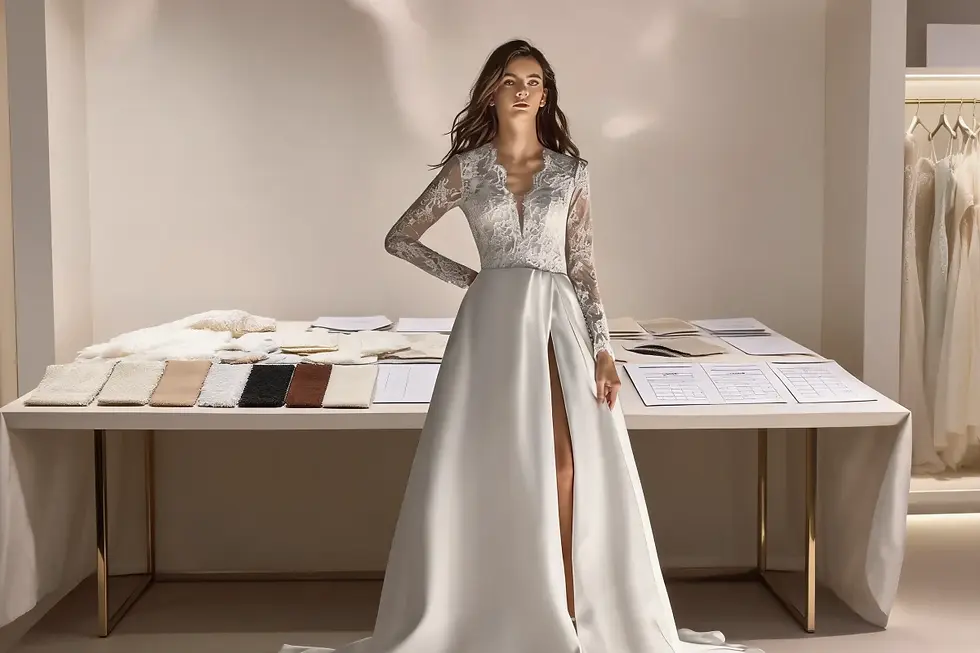
A Queen-neck long-sleeve lace and satin wedding style, one of the versatile silhouettes boutique buyers can select when planning a profitable plus-size bridal collection with manufacturers.
Good communication is also essential. You want a partner who responds quickly to questions, provides clear size and fit guidance, and works with you to resolve issues promptly. Over time, a strong supplier relationship can help you grow your plus-size category efficiently and keep your customers happy.
Merchandising and Styling Tips to Sell More Plus-Size Gowns
Even the most beautiful plus-size collection will underperform if it is not merchandised and styled correctly. Make sure your plus-size gowns are displayed prominently in your store, not tucked away in a back corner or mixed in with regular sizes in a way that makes them hard to find. Use full-figured mannequins or dress forms so brides can see how the gowns look on a body shape similar to their own.
Train your stylists to work confidently with plus-size brides, including how to take accurate measurements, recommend supportive undergarments, and talk about fit in a positive, body-affirming way. Brides who feel seen and respected during their appointment are much more likely to purchase from your boutique and recommend you to others.
Consider hosting dedicated plus-size trunk shows or sample sales to draw in new customers and generate excitement around your collection. Partner with local plus-size influencers, wedding planners, or photographers to help spread the word and reach brides who may not have found your boutique otherwise.
As you continue refining your assortment and fit standards, you will likely find that plus-size wedding dresses become one of the most rewarding parts of your business. If you are ready to start building or expanding your curated assortment, ask Huasha about plus-size wedding dress options and sizing for your boutique.
FAQ
What sizes should a bridal boutique carry for plus-size wedding dresses?
Most boutiques focus on sample sizes 18 through 30 as their core plus-size range, with made-to-order options available for sizes outside that span. The exact range should be based on your local market, customer demographics, and the price points you sell.
Why is plus-size wedding dress fit for boutiques different from regular sizing?
Plus-size gowns require patterns graded specifically for curvy proportions, including fuller busts, wider hips, and adjusted torso lengths, rather than simply scaling up a straight-size pattern. Proper construction details like boning, supportive linings, and wider straps also play a major role in comfort and fit.
How do I choose a reliable plus-size bridal manufacturer for boutiques?
Look for a manufacturer with proven plus-size bridal experience, detailed size charts, consistent grading, flexible minimum orders, and strong communication. Whenever possible, order samples first to verify fit, construction quality, and fabric quality before committing to a larger collection.
Which plus-size wedding dress silhouettes sell best in boutiques?
A-line gowns are the most universally flattering and top-selling plus-size silhouette. Fit-and-flare, ballgown, and structured sheath styles are also strong sellers. Boutiques usually carry at least one of each core silhouette to serve different style preferences and body shapes.


Comments