
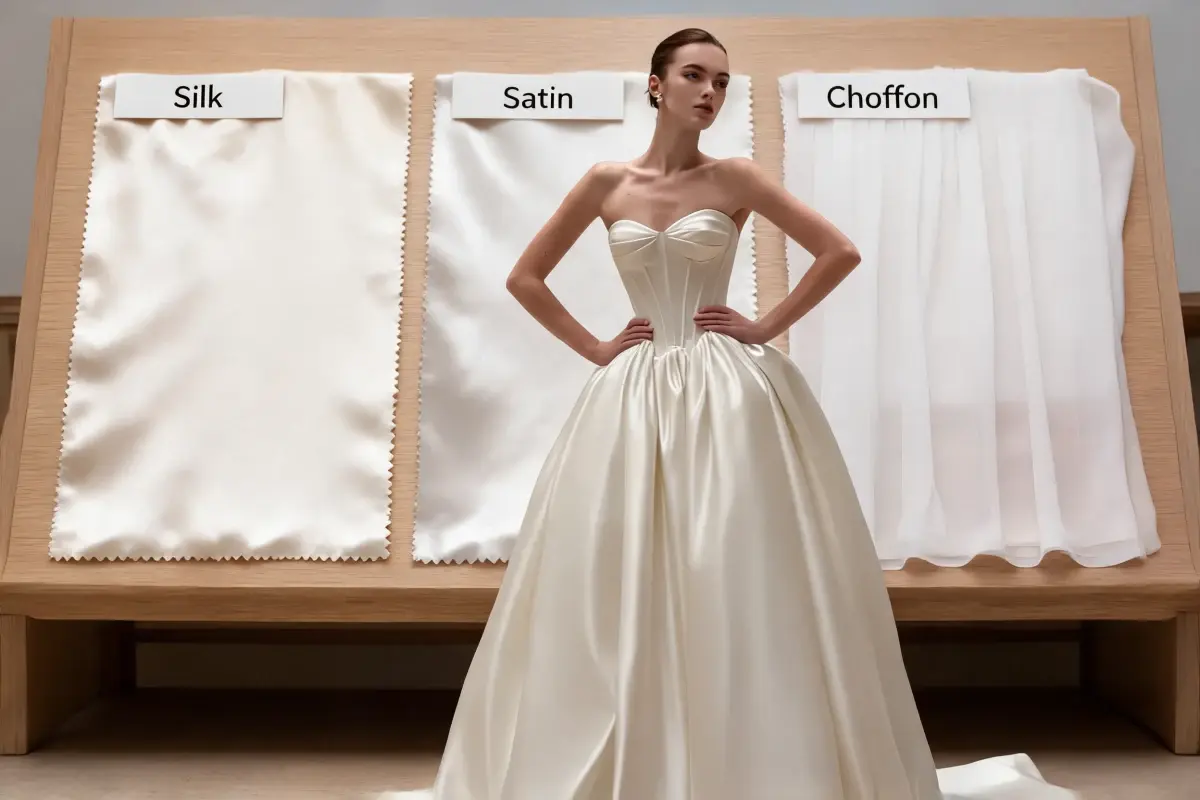
Silk vs Satin vs Chiffon Wedding Dresses: A Fabric Comparison for Bridal Buyers

Silk is a natural fiber with a luxe, breathable drape, satin is a weave (often made from silk or polyester) with a glossy, structured finish, and chiffon is a lightweight, sheer, flowy fabric—each suited to different bridal silhouettes, price points, and care needs. Understanding these distinctions helps bridal boutiques curate collections that match every bride’s vision and budget.
What is the core difference between silk, satin, and chiffon?
The most important distinction brides and boutiques often miss is that one is a fiber, one is a weave, and one is a fabric type. This is the foundation of any accurate bridal fabric comparison for boutiques.
Silk: A natural protein fiber produced by silkworms, valued for its softness, luster, and breathability. It can be woven into many finishes, including satin and charmeuse.
Satin: Not a fiber, but a specific weave structure characterized by a smooth, glossy front and a dull, matte back. It can be made from silk, polyester, nylon, or rayon.
Chiffon: A lightweight, plain-weave fabric with a slightly rough, crepe-like texture. It is traditionally made from silk but is now commonly produced in polyester for lower-cost bridal lines.
How do they compare in drape, weight, sheen, and breathability?
When evaluating silk vs satin wedding dress differences and chiffon’s unique properties, side-by-side comparison of core fabric traits makes selection much simpler.
Trait | Silk (as a fiber/standard weave) | Satin (silk or polyester) | Chiffon (silk or polyester) |
|---|---|---|---|
--- | --- | --- | --- |
Drape | Soft, fluid, and luxurious; falls in smooth folds | Structured, heavy drape; holds shape well | Airy, floaty, and translucent; cascades lightly |
Weight | Medium; substantial but not heavy | Medium to heavy; adds body to gowns | Very lightweight; barely there feel |
Sheen | Subtle, pearlescent luster | High, mirror-like gloss on the face | Soft, muted sheen; slightly matte texture |
Breathability | Excellent; regulates temperature well | Moderate to low; less porous due to tight weave | Very high; lightweight and open structure |
Chiffon wedding dress drape and weight make it a top choice for destination, beach, and summer weddings, while satin appeals to brides seeking a classic, formal ballgown silhouette.
Which wedding dress silhouettes work best for each fabric?
Fabric choice directly determines which gown styles will look and fit best, a key detail for bridal buyers building inventory.
Silk
Slip dresses and bias-cut gowns that highlight the body’s curves
Sheath and column silhouettes for a sleek, modern look
Light A-line styles with soft, unstructured skirts
Satin
Ballgowns and princess silhouettes that require structured volume
Mermaid and trumpet gowns that need fabric to hold dramatic shaping
Classic fit-and-flare designs with a polished, formal finish
Chiffon
Flowy A-line gowns with layered skirts
Boho and beach wedding dresses with loose, relaxed silhouettes
Overlays, sleeves, and veil details where sheer, light fabric is desired

A classic satin ballgown with a structured basque waist, demonstrating how satin’s ability to hold dramatic volume makes it ideal for regal, ceremony-focused silhouettes.
What are the care and durability differences for bridal boutiques?
A bridal fabric care guide for silk, satin, and chiffon is essential for boutiques advising brides on long-term gown preservation.
Silk: Requires professional dry cleaning only; prone to water spots and sun fading. With proper care, it lasts for decades and develops a softer patina over time.
Satin: Silk satin needs professional dry cleaning; polyester satin can often be hand-washed or gently machine-washed on cold. Satin’s glossy surface scratches easily, so gowns must be stored in soft, lint-free garment bags.
Chiffon: Most silk chiffon requires dry cleaning; polyester chiffon is more washable. Chiffon snags and tears easily, so it needs careful handling and is less ideal for gowns with heavy beading or frequent wear.
For boutiques, durability and care requirements directly impact return policies, alteration recommendations, and after-sales guidance.
How should bridal boutiques choose fabrics for their collection?
For bridal fabric comparison for boutiques, selection depends on target audience, price point, season, and brand aesthetic.
Price point positioning: Silk gowns sit at the luxury end, polyester satin offers a mid-range glossy option, and polyester chiffon is the most budget-friendly flowy choice.
Season and location: Chiffon and lightweight silk work best for warm-weather and destination weddings; satin is ideal for fall, winter, and formal indoor venues.
Silhouette assortment: Mix structured satin ballgowns, sleek silk sheaths, and airy chiffon A-lines to cover multiple bride personas.
Care accessibility: Carry easy-care polyester options for destination brides and premium silk styles for brides prioritizing luxury and heirloom quality.

This versatile strapless satin A-line highlights the forgiving drape and polished finish of satin, a core fabric that boutique buyers consistently stock for broad bridal appeal.
Which fabric is right for my bridal line?
There is no universal “best” fabric—silk, satin, and chiffon each serve distinct bridal needs. Silk delivers timeless luxury and breathability, satin offers structured glamour and iconic shine, and chiffon provides effortless, lightweight romance. Boutiques that balance all three can serve more brides across style, budget, and venue categories. To explore premium bridal fabric options and build a well-rounded collection, contact HUASHA to compare bridal fabric choices for your next collection.
FAQ
Q: Is satin more expensive than silk? A: Not always. Silk satin is typically more expensive than pure silk in simpler weaves, but polyester satin is one of the most affordable bridal fabrics. Price depends on the base fiber, not the satin weave itself.
Q: Can chiffon wedding dresses be altered easily? A: Chiffon is more delicate to alter than silk or satin because it frays and snags easily. An experienced bridal seamstress can work with it, but alterations often take more time and cost more than structured fabrics.
Q: Which fabric is best for a hot-weather or beach wedding? A: Chiffon is the top choice for hot and beach weddings due to its ultra-lightweight, breathable, and flowy nature. Lightweight silk is also a good breathable option, while heavy satin is generally too warm for high-heat venues.
FAQ
Is satin more expensive than silk?
Not always. Silk satin is typically more expensive than pure silk in simpler weaves, but polyester satin is one of the most affordable bridal fabrics. Price depends on the base fiber, not the satin weave itself.
Can chiffon wedding dresses be altered easily?
Chiffon is more delicate to alter than silk or satin because it frays and snags easily. An experienced bridal seamstress can work with it, but alterations often take more time and cost more than structured fabrics.
Which fabric is best for a hot-weather or beach wedding?
Chiffon is the top choice for hot and beach weddings due to its ultra-lightweight, breathable, and flowy nature. Lightweight silk is also a good breathable option, while heavy satin is generally too warm for high-heat venues.


Comments