


Standardizing the Wedding Dress Video Sample Approval Process for Bridal Brands
- Rui Tsai

- Jul 11
- 5 min read
The Ultimate Guide to Wedding Dress Video Sample Approval for Global Bridal Brands
In the high-stakes world of bridal fashion, translating a design concept into a flawless physical gown requires precision, speed, and absolute clarity. Traditionally, global designers and bridal boutique owners had to wait weeks for physical samples to ship back and forth across continents. Today, top manufacturers are embracing technology to speed up this timeline.
A professional wedding dress video sample approval is a standardized remote inspection process that allows bridal brand managers and overseas buyers to verify the design, fit, and craftsmanship of a sample gown through high-definition video, accelerating cross-border production without physical travel. This guide walks you through setting up, conducting, and finalizing an flawless remote approval system.
Why Video Sample Approval is Crucial for Cross-Border Bridal Brands
For international bridal brands, geographical distance can lead to extensive production delays. Navigating the logistics of cross-border bridal manufacturing approval via courier services can take anywhere from three to ten days per iteration. When a gown requires multiple adjustments, shipping costs accumulate quickly, and valuable time is lost before the launch of a new seasonal collection.
Implementing a robust wedding dress video sample approval workflow acts as a bridge. It dramatically compresses the feedback loop from weeks to hours. Instead of waiting for a courier to deliver a physical prototype, bridal brands can inspect design alignment, fabric drape, and beadwork details instantly over high-definition video. This rapid verification loop keeps your manufacturing timeline on schedule and ensures your brand can respond quickly to changing market trends.
Essential Lighting and Camera Setup for Accurate Video Inspection
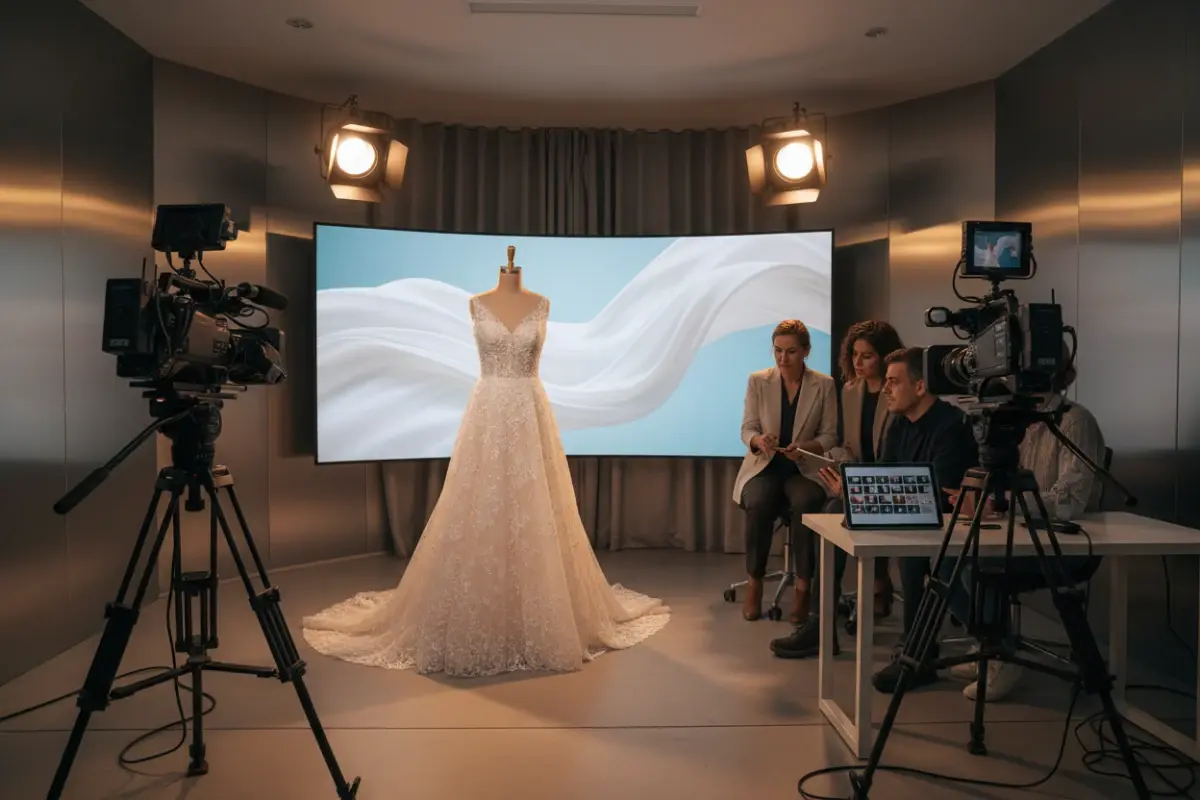
To conduct a successful remote wedding dress inspection, relying on standard smartphone video calls in low-light factory corridors is insufficient. To make precise design decisions, your manufacturing partner must utilize a professional, studio-grade video setup.
To ensure color accuracy and texture clarity, look for the following production standards:
High-Definition Cameras: The recording or live-feed setup should feature at least 4K resolution to capture intricate embroidery, beadwork, and fine lace details.
Studio Lighting (CRI 95+): White and ivory fabrics are easily distorted by artificial yellow light. The studio must use high Color Rendering Index (CRI) LED panels to represent the fabric's true shade.
Macro and Zoom Lenses: The camera operator must be able to transition seamlessly from a wide-angle shot of the full gown silhouette to micro close-ups of seams and fastenings.
Key Details to Inspect During a Wedding Dress Video Review
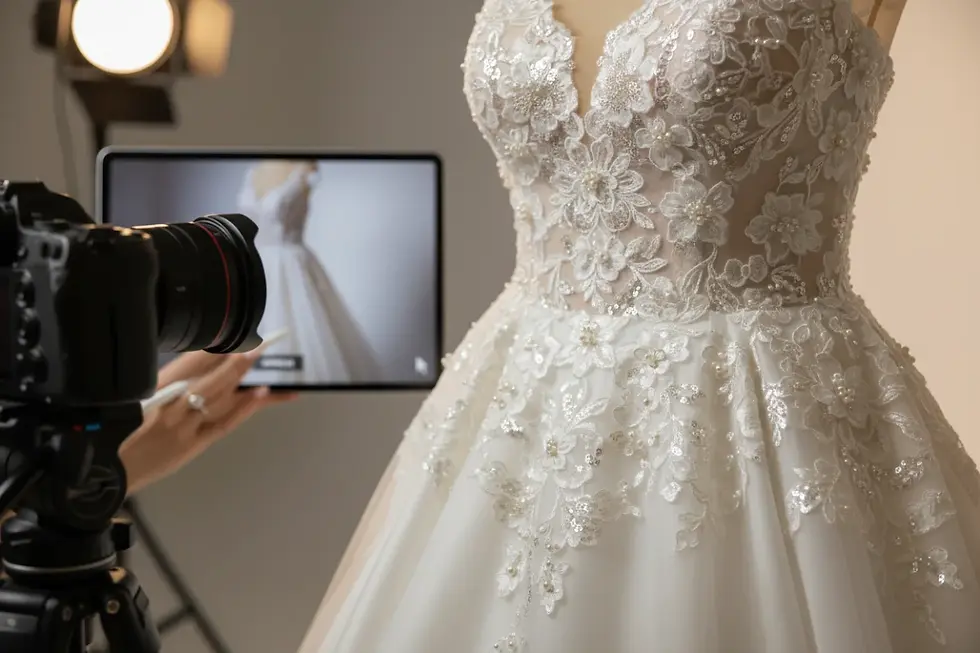
During a wedding gown sample quality check, there are several non-negotiable details that require close visual inspection. Unlike ready-to-wear apparel, bridal gowns rely heavily on internal structures and complex surface embellishments.
1. Silhouette and Outer Fabric Behavior
Observe how the skirt falls. Does the tulle flare naturally as designed? Is the satin draping without unsightly puckering? Your manufacturer should rotate the mannequin or model 360 degrees, showcasing the gown under natural movement.
2. Internal Structure and Support
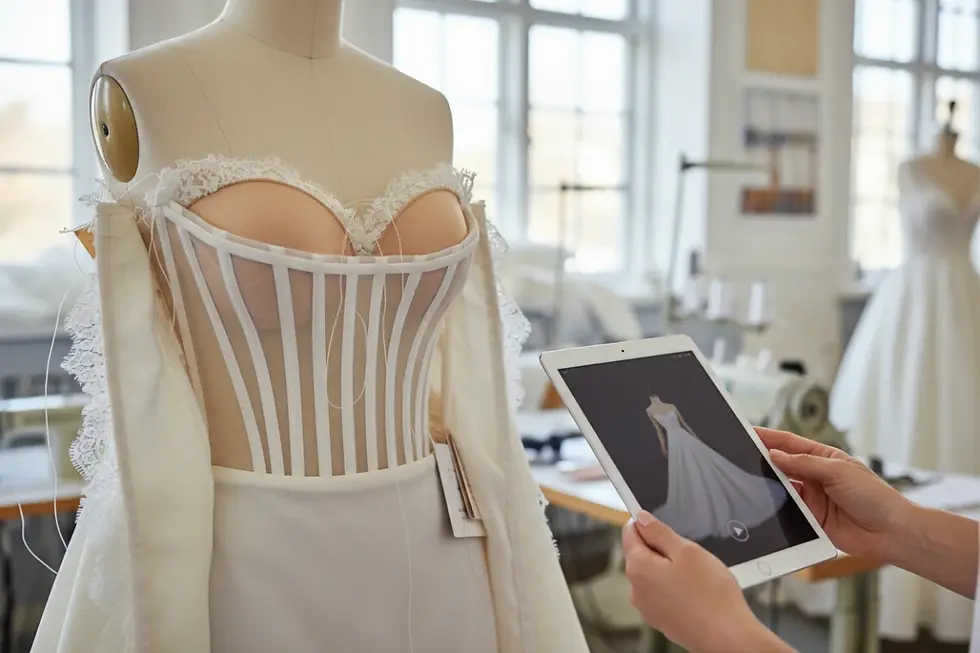
Ask the camera operator to turn the dress inside out. You must inspect the boning placement, cup alignment, and structural lining. Ensure that all internal seams are clean, finished, and robust enough to support the dress's weight.
3. Embellishments and Finishing Touches
Closely evaluate the symmetry of the lace appliqués. Zoom in on hand-beaded sections to verify the thread tension and secure knots. Any minor imperfection in beadwork can lead to larger quality issues during bulk production.
The Step-by-Step Remote Video Approval Checklist
To simplify your review pipeline and eliminate guesswork, utilize a comprehensive bridal sample video review checklist during every evaluation session. This structured approach guarantees that no critical detail is missed before giving the green light for mass production.
Preparation Phase:
Confirm the tech pack and original design sketches are ready for side-by-side comparison.
Ensure the manufacturing team has calibrated the lighting to daylight-balanced specifications.
Silhouette and Proportions Verification:
Check overall length, train proportions, and neckline symmetry.
Verify the fit on a standard fit mannequin or a live fit model under motion.
Fabric and Material Analysis:
Inspect fabric texture, color accuracy under controlled lighting, and layering consistency.
Confirm the lining weight matches the structural requirements of the design.
Hardware and Fastening Inspection:
Assess zipper integration, button loops, and inner elastic waistband security.
Verify hook-and-eye alignment and strength.
Documentation and Sign-off:
Capture high-resolution screenshots of critical areas for archival reference.
Annotate specific timestamps in the recorded video file where adjustments are required.
Common Pitfalls in Video Sample Approvals and How to Avoid Them
Even with high-definition video, a few common mistakes can disrupt your remote inspection process. Knowing these pitfalls helps you establish preventive protocols.
Relying Solely on Live Streams: Live streaming over platforms with unstable internet connections can compress video feeds, hiding flaws like loose threads or misaligned seams. Solution: Request that the factory record a local, uncompressed 4K video and share it via a cloud drive alongside the live call.
Ignoring Fabric Movement: A static gown on a mannequin can look perfect but fail to sit correctly when moving. Solution: Request a brief walking video clip on a live model to evaluate how the fabric drapes and responds to human motion.
Overlooking Internal Construction: It is easy to get distracted by dazzling external beadwork and forget to check the internal support structure. Solution: Make internal structural checks a mandatory, non-negotiable step in your wedding dress video sample approval process.
Streamline Your Production with Huasha's Remote Inspection Standard
At Huasha, we understand that maintaining impeccable quality standards is your highest priority. Our specialized video verification workflows are tailored specifically to meet the strict demands of global bridal brands and boutiques.

By leveraging advanced video technology, professional-grade studio lighting, and a detailed checkpoint framework, we bring the factory floor directly to your desktop. Our structured wedding dress video sample approval services ensure that every detail, from delicate lace trims to sturdy inner corsetry, matches your creative vision before bulk production begins. We help you accelerate your launch timelines while protecting your brand's reputation for exceptional luxury.
FAQ
How does video sample approval save time compared to physical shipping?
Physical shipping takes days or weeks to clear international customs. Video sample approval allows designers to inspect structural details, silhouette, and lace placement on the same day the sample is finished, cutting weeks off the typical sample correction process.
Can I trust video reviews for fine-tuning fabric colors?
Yes, provided the manufacturer uses professional-grade lighting with a high Color Rendering Index (CRI 95+). This daylight-balanced lighting ensures whites, ivories, and champagne undertones are represented accurately on camera.
What happens if a defect is spotted during the remote video inspection?
Any requested modifications are documented with high-resolution screenshots and timestamped notes. The factory adjusts the sample, records a follow-up video focusing on the corrected area, and seeks final approval before proceeding with bulk manufacturing.
Is a live video stream enough for approving complex beadwork?
We recommend combining a live video stream for interactive feedback with a pre-recorded, uncompressed 4K video. This ensures you can inspect fine beadwork and lace stitch-by-stitch without stream compression artifacts.


Comments