
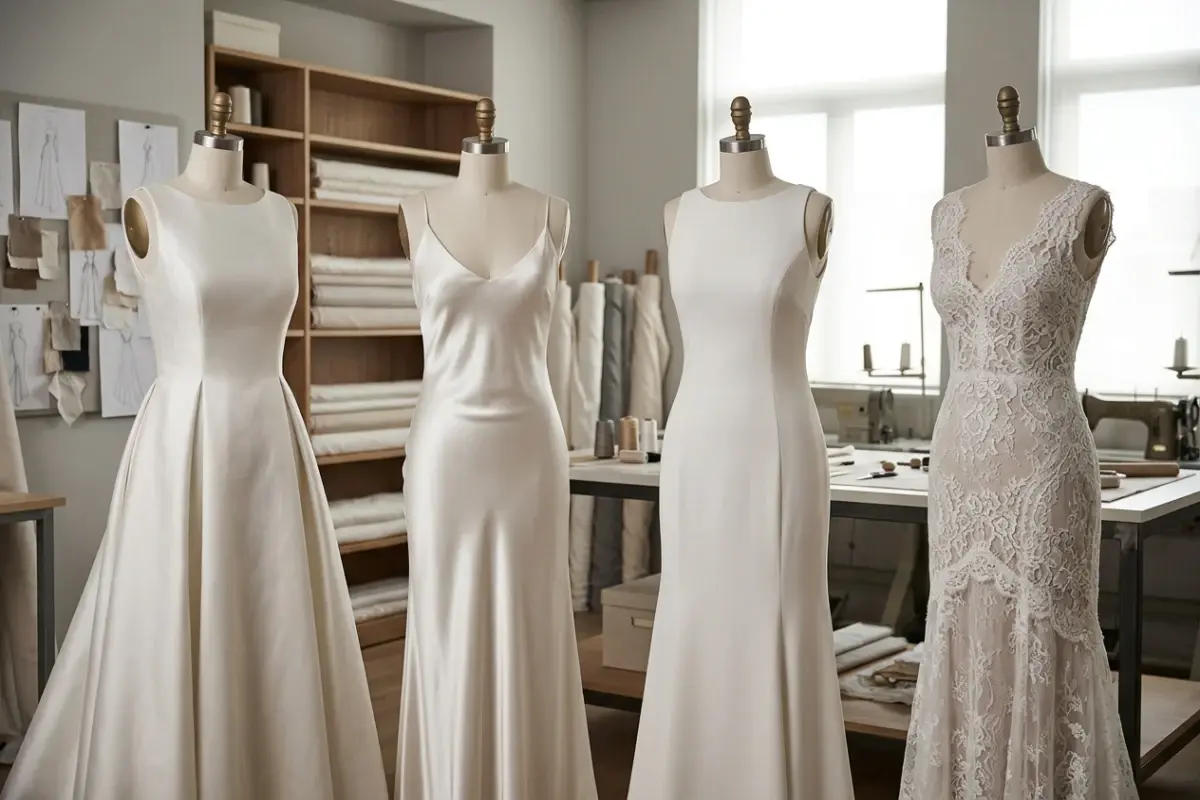
How Should Boutiques Compare Mikado, Satin, Crepe, and Lace Wedding Gowns?

Bridal boutiques should compare Mikado, satin, crepe, and lace across luster, structure, drape, wrinkle resistance, shipping durability, silhouette suitability, and wholesale cost to curate a balanced gown inventory. Evaluating these core fabric characteristics helps boutique owners optimize boutique wedding dress fabric sourcing, streamline sample care, and provide diverse styling options for various bride preferences.
What are the key visual and structural differences among bridal fabrics?
To effectively compare Mikado satin crepe and lace wedding gowns, bridal retailers must assess the weave, surface finish, and structural body of each material. Every textile provides distinct architectural characteristics and visual presence on the showroom rack.
Fabric Type | Luster & Finish | Weight & Structure | Drape Style | Common Silhouettes |
|---|---|---|---|---|
:--- | :--- | :--- | :--- | :--- |
Mikado | Subtle granular glow | Heavy, firm, structured body | Holds architectural volume and pleats | Ballgowns, structured A-lines, drop-waist gowns |
Satin | Smooth, reflective liquid sheen | Medium to heavy, smooth surface | Fluid, cascading, weighted fall | Fit-and-flare, bias-cut gowns, classic A-lines |
Crepe | Matte or lightly textured finish | Light to medium weight | Sleek, body-contouring, vertical drape | Sheath, column, minimalist mermaid |
Lace | Textured, openwork patterns | Variable by base mesh and embroidery | Dependent on underlying lining fabric | Romantic A-lines, illusion bodices, vintage styles |
This wholesale bridal fabric comparison gives boutique buyers a straightforward framework for selecting showroom samples that cover varied design aesthetics without redundant styling.
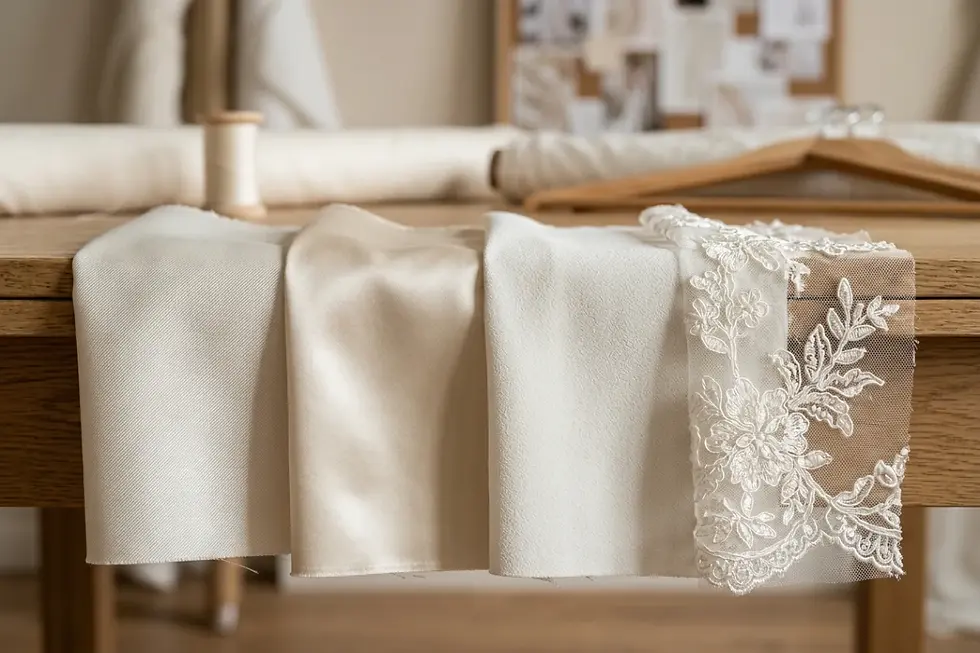
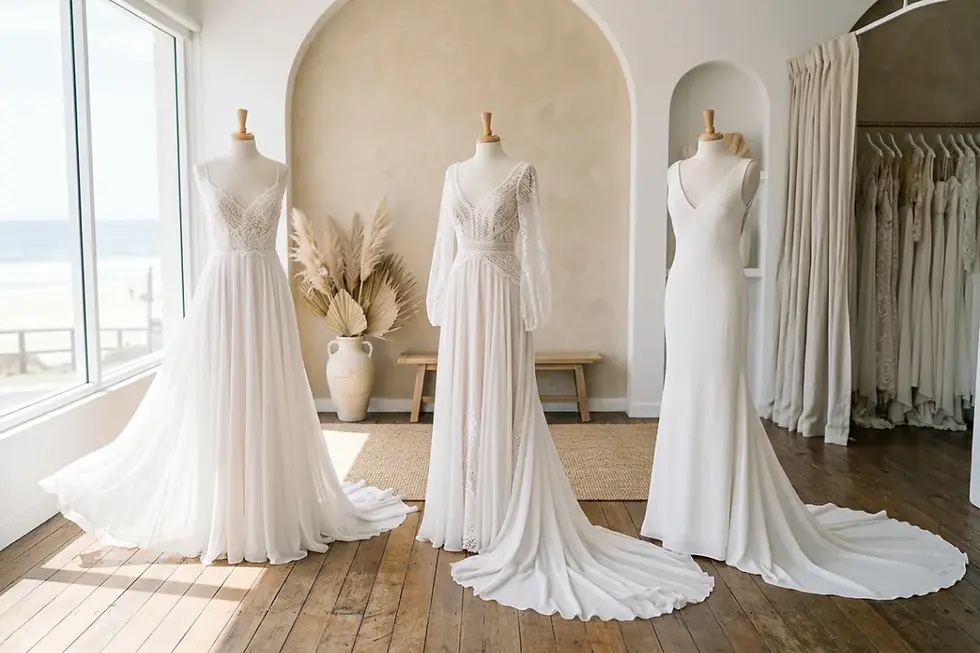
Surface textures and weave structures vary distinctly across bridal gown fabrics.
Mikado vs satin wedding dress: which structured fabric suits your showroom?
When evaluating a Mikado vs satin wedding dress for your boutique racks, the main differences center on surface texture and structural firmness.
Mikado Gowns: Mikado is characterized by a heavier body and a subtle twill texture. It offers rigid architectural support, making it well suited for structured bodices, deep box pleats, and clean seamlines. It maintains crisp volume without requiring excessive layers of crinoline.
Satin Gowns: Bridal satin features a smooth, high-sheen face that reflects showroom lighting cleanly. It delivers a softer, more fluid drape compared to Mikado, lending classic romance to flowing skirts and draped necklines while requiring attentive undergarment selection.
Stocking both options ensures your boutique addresses brides looking for crisp couture architecture alongside those seeking traditional glossy drape.
Crepe vs lace bridal fabrics: how do they differ in fit and presentation?
Analyzing crepe vs lace bridal fabrics highlights the contrast between modern clean lines and detailed decorative artistry.
Crepe Gowns: Crepe is defined by a matte or pebbled texture and a streamlined drape. It is popular among contemporary brides who prefer minimalist silhouettes, clean necklines, and comfortable movement. Crepe displays cut and seam precision clearly, making proper sample fitting essential.
Lace Gowns: Lace delivers dimensional surface interest through woven floral, geometric, or corded motifs. It works primarily as an overlay or focal accent on bodices, sleeves, and train extensions. The rich patterning of lace helps mask minor sample wear and creates standout focal points on boutique display mannequins.
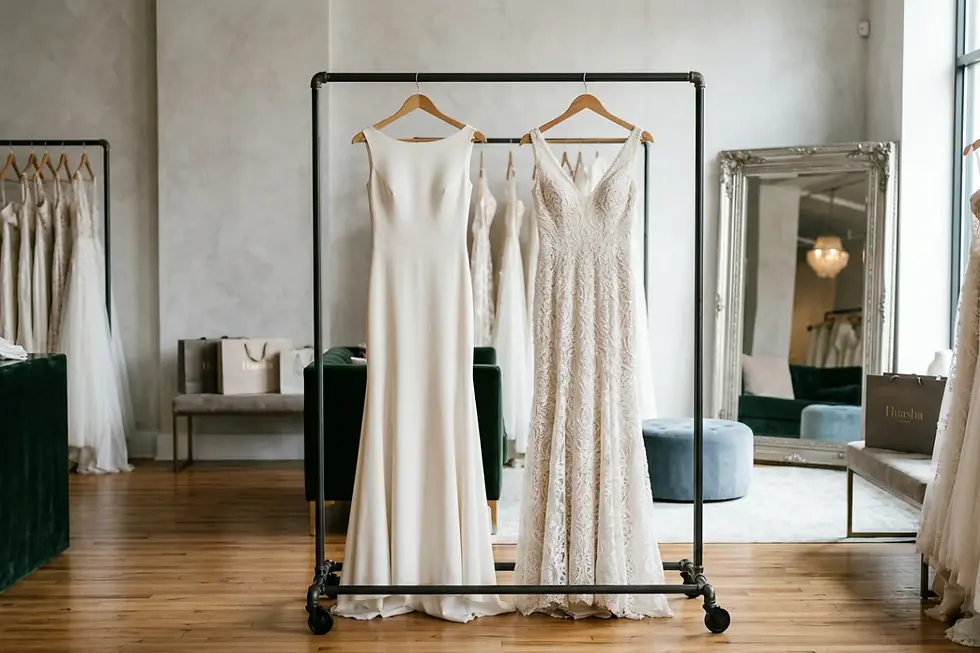
Crepe provides clean minimalist drape while lace delivers rich surface detail.
How do transit durability and wrinkle resistance impact boutique operations?
Showroom operations and destination bridal consultations require fabric choices that withstand shipping, unpacking, and frequent fittings.
Mikado: Resists deep crushing during shipment and responds well to standard garment steaming, maintaining its crisp silhouette on floor racks.
Crepe: Offers good recovery from packing folds, making it a reliable option for brides traveling to destination ceremonies.
Lace: Highly forgiving during transit because textured patterns conceal minor creases, requiring minimal preparation before display.
Satin: Smooth surfaces can reveal handling creases and require careful steaming and storage to prevent surface marks or fabric snags.
Selecting resilient textiles simplifies floor maintenance and keeps fitting samples looking fresh throughout daily bridal appointments.
How should bridal retailers build a balanced inventory across all four fabrics?
Successful boutique wedding dress fabric sourcing relies on stocking a balanced mix of structured, fluid, and textured gowns across core design categories.
Structured Classics: Feature Mikado and heavy satin gowns to anchor formal, traditional, and grand ballroom aesthetics.
Modern Minimalist Designs: Include fluid crepe and soft satin dresses to serve brides seeking contemporary, sleek, or outdoor wedding looks.
Romantic and Textured Styles: Display lace gowns with varied openwork details to cater to vintage, bohemian, and garden wedding settings.
Maintaining this balanced fabric mix ensures your salon can present suitable options for different venue styles, body preferences, and bridal aesthetics.
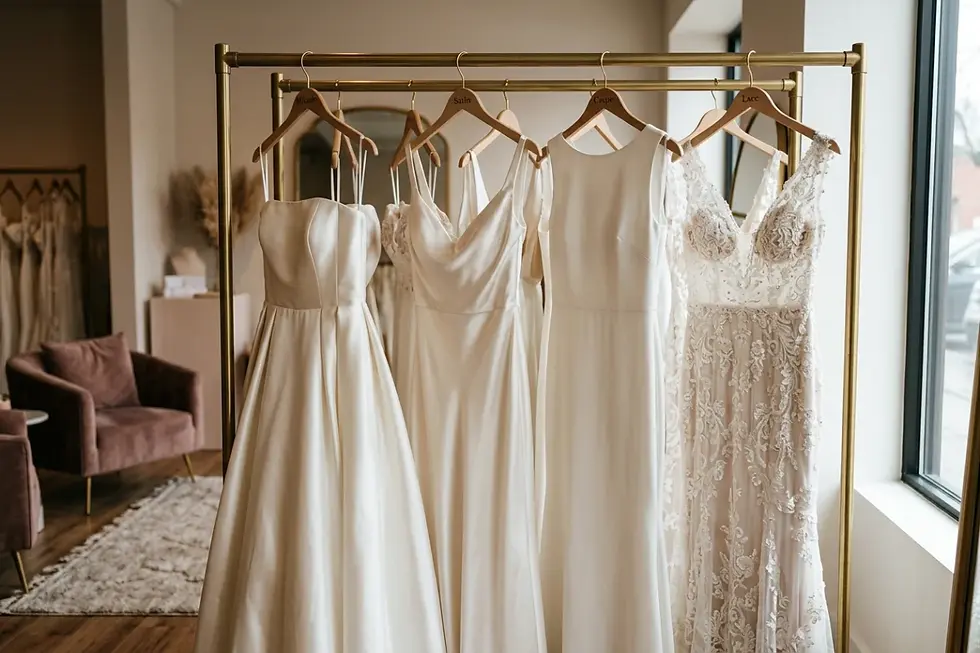
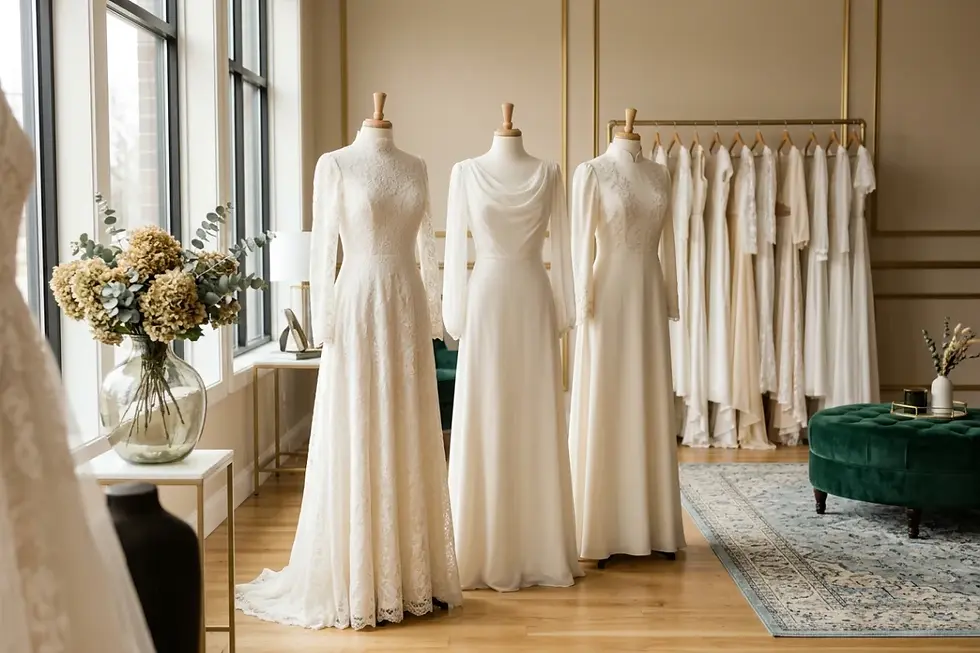
A well-curated bridal showroom incorporates balanced proportions of structured and fluid fabrics.
To discover reliable textiles and expand your upcoming seasonal collection, Request fabric recommendations from our wholesale team.
FAQ
Which bridal fabric is the most forgiving for showroom floor samples?
Lace is generally the most forgiving fabric for floor samples because its textured patterns naturally disguise minor handling marks and wrinkles from frequent fittings.
How does Mikado differ from traditional bridal satin in gown construction?
Mikado is firmer and has a subtle twill weave that holds structured, architectural volume, whereas traditional bridal satin is smoother with a high-shine finish and a more fluid, cascading drape.
Why is crepe a popular choice for modern bridal collections?
Crepe offers a clean matte or textured look with a body-skimming vertical drape, making it ideal for minimalist silhouettes and destination weddings where lightweight comfort and easy packing are valued.

Comments