
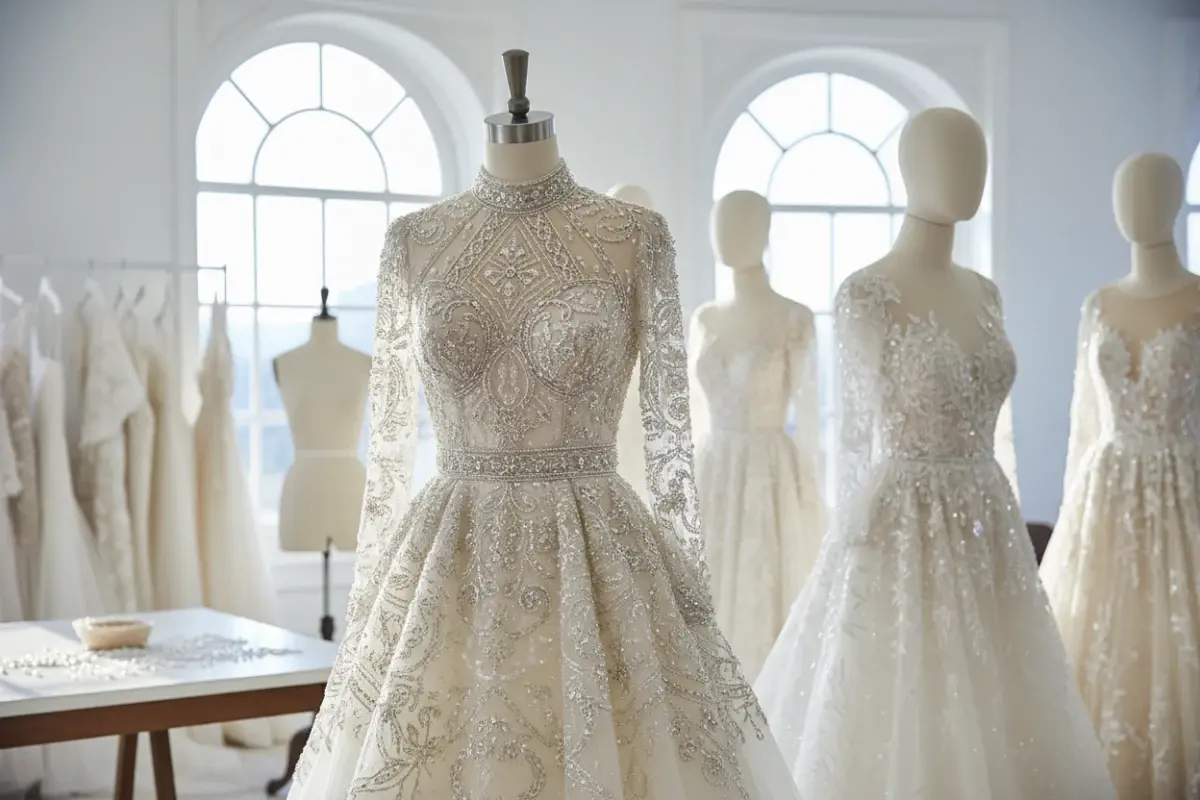
Choosing the Right Beaded Wedding Dress Manufacturer: Sourcing and Quality Guide for Bridal Boutiques

For bridal boutique owners, heavily embellished and intricately adorned gowns represent both high-margin showstoppers and significant operational risks. A single loose cluster of seed beads, uneven crystal tension, or an uncomfortable seam can turn a bride's dream gown into costly alterations and salon stress. Partnering with an experienced beaded wedding dress manufacturer ensures your retail racks feature breathtaking, durable gowns that maintain structural integrity from initial try-on through the wedding reception.
Crafting embellished bridal wear demands specialized artisans, structural engineering, and meticulous multi-tier inspections. Understanding how high-end manufacturing handles delicate materials allows boutique buyers to make informed purchasing decisions and maintain impeccable quality standards.
Understanding the Complexity of Hand-Beaded Bridal Gown Production
High-end bridal embellishment goes far beyond simply adhering decorative elements onto tulle or lace. A true hand beaded bridal gown supplier treats beadwork as an architectural element of the dress. Skilled artisans hand-stitch glass beads, Swarovski crystals, metallic bugles, sequins, and freshwater pearls onto delicate backing fabrics using specialized tambour or needle techniques.
In professional custom bridal beadwork production, artisans must follow precise placement maps. Each bead cluster must align symmetrically across bodice seams, illusion necklines, and skirt godets. Moreover, thread tension is critical: if stitched too tightly, the tulle puckers; if stitched too loosely, beads sag, rub against one another, and prematurely snap under minor friction.
Balancing Delicate Beadwork with Structural Durability and Comfort
One of the most persistent challenges boutique owners face with embellished gowns is balancing visual impact with wearer comfort and longevity. A heavily beaded bodice can easily weigh several kilograms. Without proper foundation engineering, that weight pulls the neckline out of shape and strains the zipper.
Internal Corsetry and Load Distribution: A reliable manufacturer builds an internal bustier with multi-layer interlinings and reinforced boning. This shifts the physical weight of the beads onto the bride's waist and hips rather than resting solely on sheer illusion tulle or delicate straps.
Underarm and Friction Relinquishment: Experienced patternmakers design clear bead-free buffer zones (often 1 to 1.5 cm) along the underarm curves and inner sleeve panels. This prevents abrasive friction against the bride's skin and protects delicate glass bugles from crushing against each other.
Friction Linings and Isolated Threads: To protect brides with sensitive skin, raw anchor knots are sealed between the outer embellished tulle and soft internal lining layers, ensuring no rough threads or bead wire touch the body.
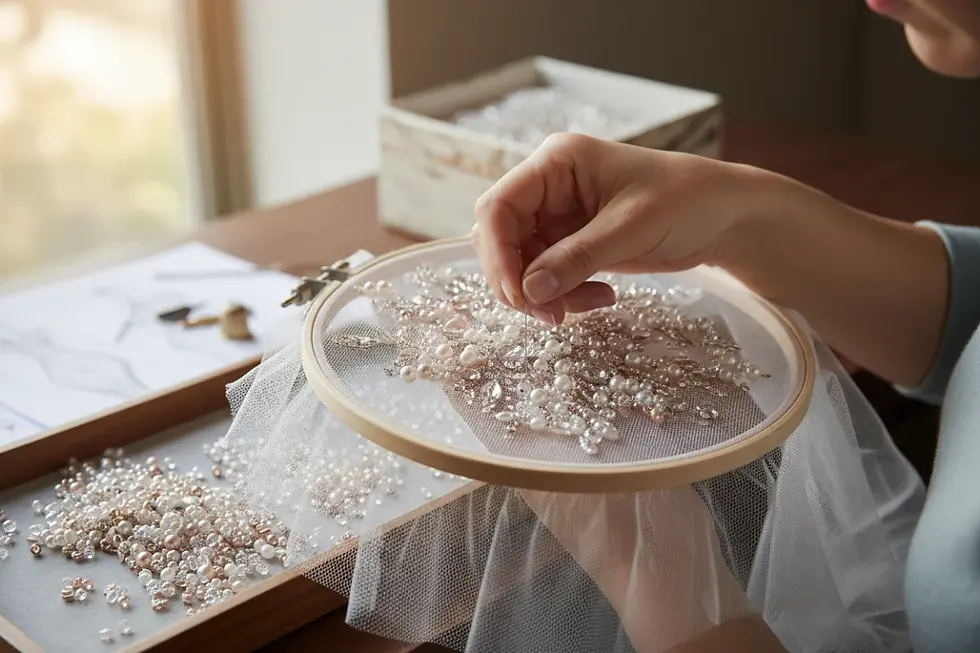
Hand-beading techniques require individual lock-stitches to prevent unraveling during wear and alterations.
Essential Bridal Embellishment Quality Control Checkpoints
Maintaining consistent showroom quality across multiple bridal seasons requires strict bridal embellishment quality control. Reputable manufacturing facilities implement multi-phase inspection protocols before packing and dispatching orders:
Material Pre-Inspection: Raw beads, bugles, and sequins are tested for colorfastness, anti-oxidation plating, and smooth edges so they do not slice neighboring threads during stitching.
In-Line Lock-Stitch Verification: Artisans must secure beadwork every 3 to 5 stitches with independent lock-knots. This failsafe technique ensures that if a single thread breaks during alterations or wear, the entire beading strand does not unravel.
Seam and Closure Stress Testing: Closures, hook-and-eye fastenings, and zippers must be tested under tension. Bead clusters bordering the zipper teeth must be hand-tacked with sufficient clearance to eliminate zipper jamming.
Final Shake and Tactile Sweep: Quality control specialists run soft cotton gloves across the embellished panels to catch snagged threads, loose beads, or sharp crystal prongs before steam pressing and protective bagging.
Managing Production Timelines and Lead Times for Intricate Orders
Intricate beading cannot be rushed on standard automated machinery. In the realm of luxury wedding dress manufacturing, hand-beading an opulent ballgown bodice or cathedral train can require anywhere from 40 to 120 artisan labor hours per gown.
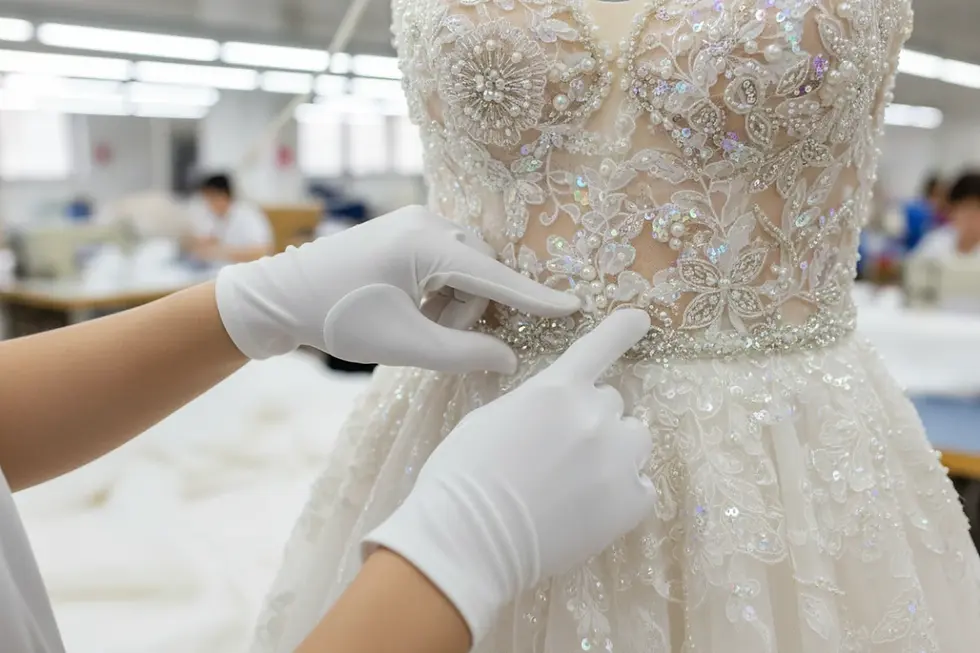
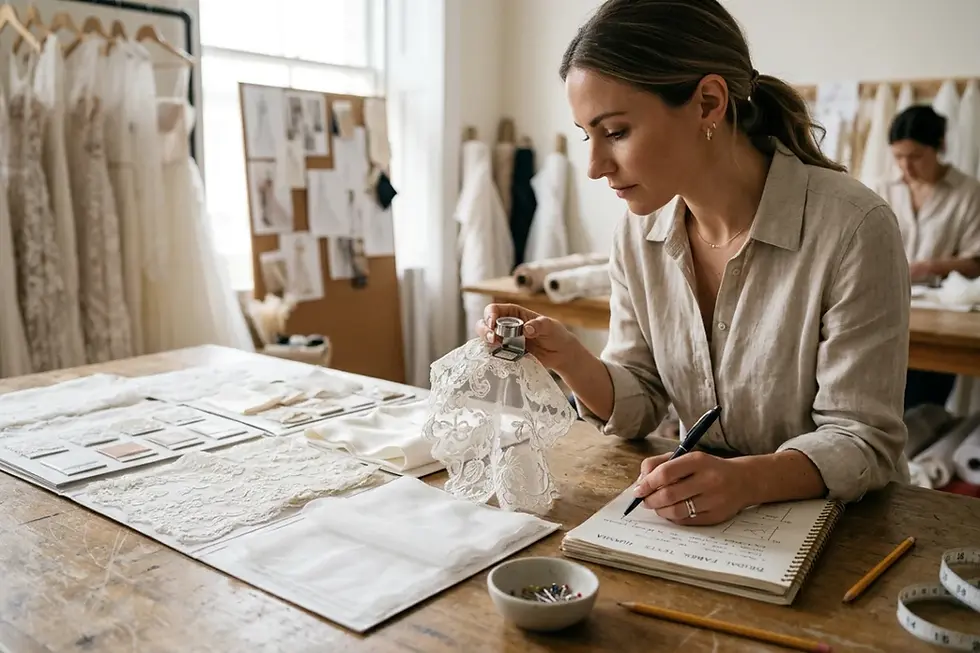
Thorough tactile sweeps and stress inspections ensure gowns withstand bridal fittings without bead loss.
Bridal salons must collaborate with manufacturers that maintain structured workflow planning. During peak bridal manufacturing seasons, a professional facility manages order sequencing by pre-beading standardized lace appliques during off-peak periods, allowing rapid assembly once custom silhouette orders are locked. Clear timeline transparency—from swatch approval to sample prototyping and bulk production—is the hallmark of a reliable manufacturing partner.
What Bridal Boutiques Should Evaluate in a Beaded Gown Manufacturer
When vetting an embellishment partner for your boutique or private label collection, look beyond digital catalogs and evaluate direct manufacturing capabilities:
Evaluation Factor | What Boutiques Should Look For | Red Flags to Avoid |
|---|---|---|
:--- | :--- | :--- |
Bead Quality | Glass beads, premium crystals, tarnish-resistant metal cores | Plastic beads with visible seam molding, easily scratched foils |
Knotting Technique | Segmented locking stitches on the reverse side | Long continuous floating threads running behind mesh |
Sample Accuracy | Bulk gowns match initial runway samples in bead density | Thinned-out beading on production runs compared to showroom prototypes |
Packaging Standard | Acid-free tissue layering, padded bead guards, moisture seals | Gowns folded raw against embellishments, causing self-snagging |
At Huasha, we understand that bridal boutique reputations rest on the flawless execution of every single gown. By combining skilled hand craftsmanship, robust structural corsetry, and rigorous quality milestones, Huasha provides boutiques with exquisite embellished collections ready for high-end retail presentation.
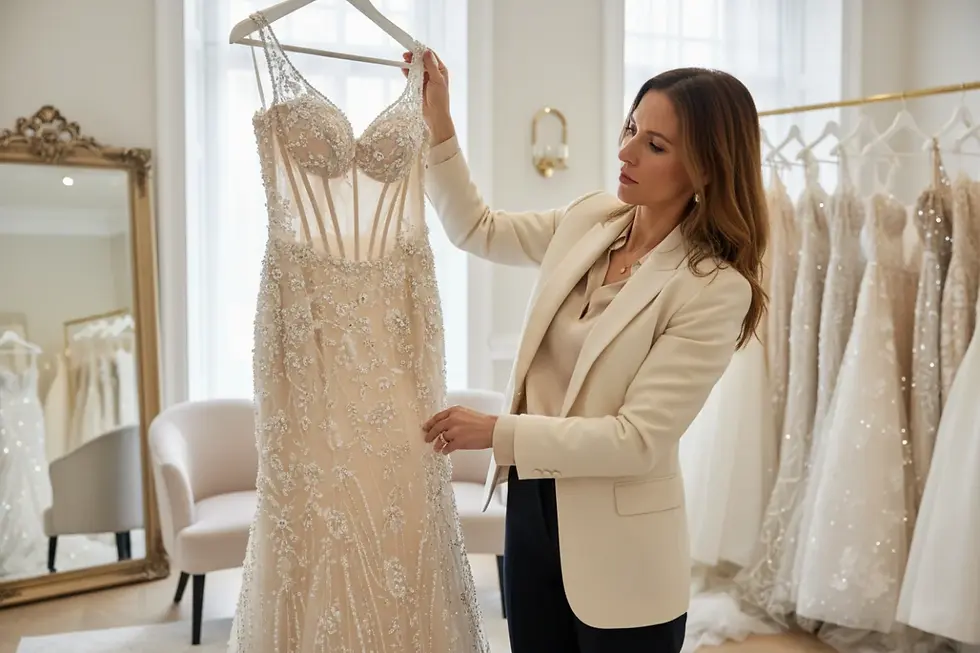
Selecting an experienced manufacturing partner guarantees sample consistency and reliable delivery timelines.
Elevate Your Boutique Collection with Expert Craftsmanship
Expanding your bridal line with meticulously embellished gowns gives your salon an irresistible competitive edge. If you are seeking a trustworthy beaded wedding dress manufacturer committed to artisan quality, structural integrity, and punctual delivery, explore our physical swatches and craftsmanship firsthand. Request Beading Detail Samples to examine our beadwork, thread-locking techniques, and luxurious fabric foundations today.
FAQ
How does a professional beaded wedding dress manufacturer prevent beads from falling off?
Manufacturers utilize segmented lock-stitching techniques where beads are tied off every few units rather than along a single running thread. High-tensile nylon threads and friction-resistant buffer panels near movement zones further ensure durability.
What is the typical production lead time for hand-beaded bridal gowns?
Depending on the density of the beadwork and order volume, lead times typically range from 8 to 14 weeks. Custom bespoke bead patterns or peak-season production may require additional advance planning.
Can bridal salons order custom bead patterns or modify existing embellishment densities?
Yes. A specialized manufacturer can adapt embellishment density, substitute bead types (such as pearls for crystals), or create unique motif placements to suit a boutique's specific aesthetic and price points.
Comments