
How to Build a High-Converting Wedding Dress Silhouette Mix for Diverse Body Shapes

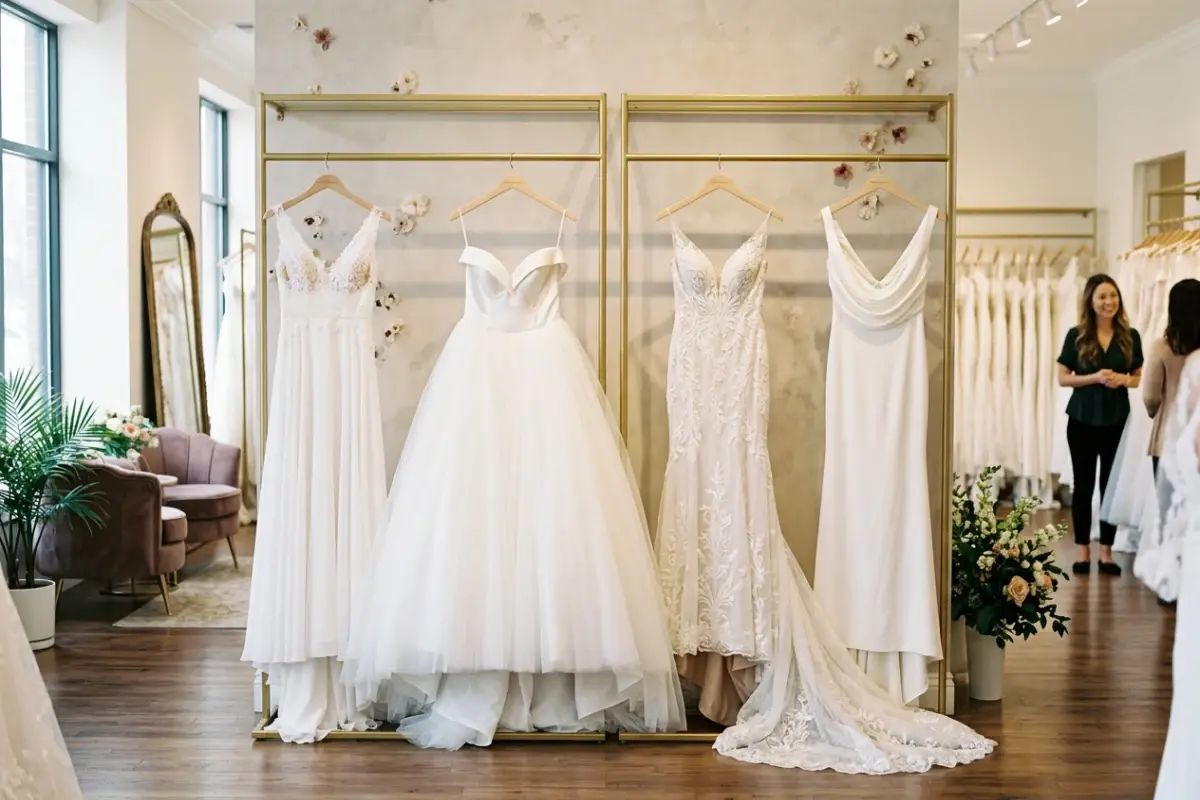
To maximize appointment conversion rates, bridal boutiques should balance universally flattering silhouettes like A-line and soft ballgowns with structured fit-and-flare and sheath cuts. Strategic bridal boutique sample inventory planning requires stocking size-inclusive sample ranges with alteration-friendly internal construction, ensuring every bride finds a silhouette that complements her proportions while keeping your carry costs low.
What Is the Recommended Bridal Shop Silhouette Ratio Guide for Inventory?
A profitable boutique sample floor balances broad-appeal silhouettes with specialized cuts. Rather than purchasing equal quantities across all dress categories, successful salon owners follow a structured inventory ratio based on retail sales velocity and customer body demographics.
Silhouette | Inventory Share | Primary Target Body Types | Key Selling Feature |
|---|---|---|---|
:--- | :--- | :--- | :--- |
A-Line | 35% – 40% | Pear, Hourglass, Inverted Triangle, Apple | Universally flattering; cinches natural waist while skimming hips |
Fit-and-Flare / Mermaid | 25% – 30% | Hourglass, Petite, Athletic/Rectangle | Accentuates curves and creates defined waist-to-hip contours |
Ballgown | 15% – 20% | Pear, Rectangle, Tall | Dramatic silhouette providing high waist definition and full skirt volume |
Sheath / Column | 10% – 15% | Petite, Lean/Athletic, Hourglass | Clean, modern lines ideal for minimalist brides and outdoor venues |
Fashion-Forward / Modular | 5% – 10% | Trend-Driven Brides | Detachable overskirts, modular sleeves, and convertible elements |
Maintaining this wedding dress silhouette mix for different body shapes ensures your consultants can offer multiple flattering options to at least 90% of incoming appointments without overextending sample budgets.
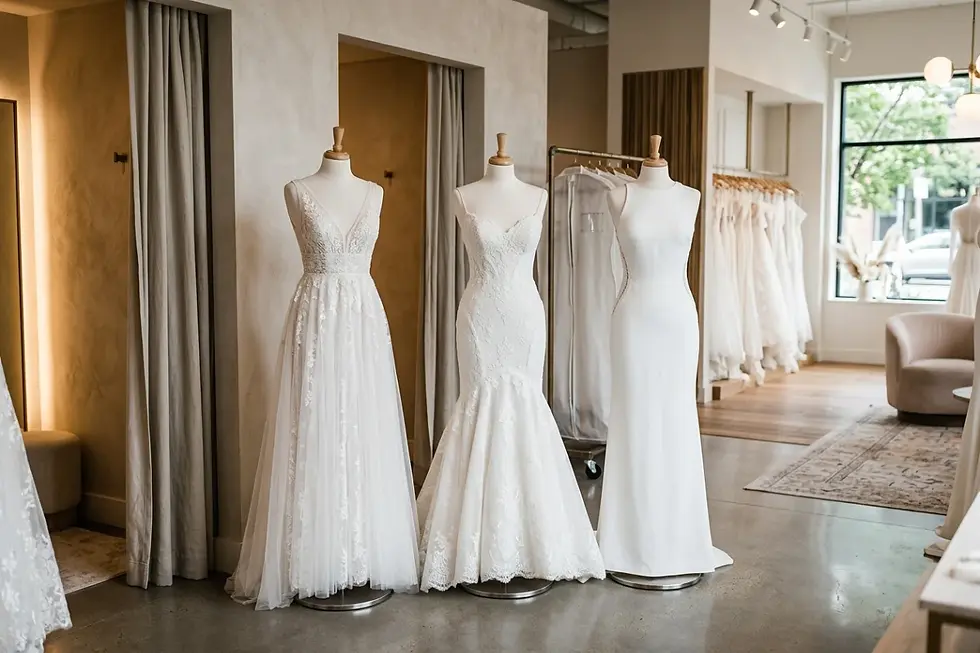
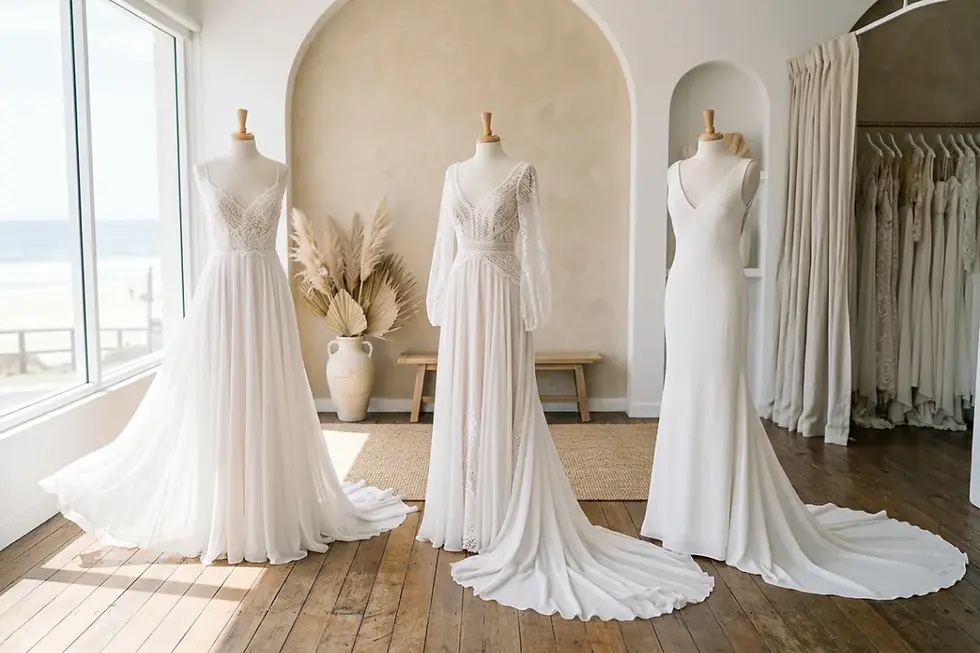
Curating an optimal mix of A-line, mermaid, and sheath samples maximizes fitting room versatility.
How Does a Wedding Dress Body Type Guide for Retailers Map Cuts to Customer Figures?
Consultants need a clear retail framework to match silhouette architecture with specific anatomical balance points during 90-minute styling appointments:
Pear-Shaped Figures: Best paired with classic A-line or modified ballgown silhouettes. Balance fuller hips by highlighting the décolletage with plunge V-necks, off-the-shoulder straps, or structured bodice details.
Hourglass Figures: Best highlighted through mermaid, trumpet, and structured fit-and-flare cuts that trace natural body contours without disrupting waist-to-hip proportions.
Petite Figures: Best complemented by high-waisted A-lines, column sheaths, or sleek trumpet gowns. Avoid overly voluminous tiered ballgowns that visually shorten the torso.
Inverted Triangle Figures: Benefit from fuller A-line or ballgown skirts that create visual equilibrium against broader shoulders or wider bustlines.
Apple & Full-Midsection Figures: Thrive in empire-waist or drop-waist A-line gowns with diagonal pleating and reinforced vertical boning to elongate the torso.
How Should Retailers Structure a Plus Size Bridal Sample Assortment for Curvy Brides?
A dedicated plus size bridal sample assortment is no longer a niche offering; it is central to boutique profitability. To fit brides wearing street sizes 16 to 30 comfortably, focus on garment construction rather than simply ordering larger sizes of standard samples.
Reinforced Internal Support: Prioritize gowns equipped with 12 to 18 internal steel or heavy-duty synthetic bones, wide inner waist stays (elastic stay belts), and multi-layer power mesh lining.
Corset and Lace-Up Closures: Stock samples featuring inner lace-up panels or combination zipper-lace designs. These allow consultants to adjust one sample gown across 2 to 3 different bride sizes seamlessly.
Proportional Neckline and Armscye Adjustments: Ensure your wholesale partner drafts dedicated plus-size patterns rather than linearly grading up standard sizes. This prevents overly deep armholes and gaping necklines.
Strategic Sample Sizing Strategy: Carry core sample styles in alternating sizes (e.g., sample A in size 10, sample B in size 18, sample C in size 24) to cover standard and curvy brides across every major silhouette style.
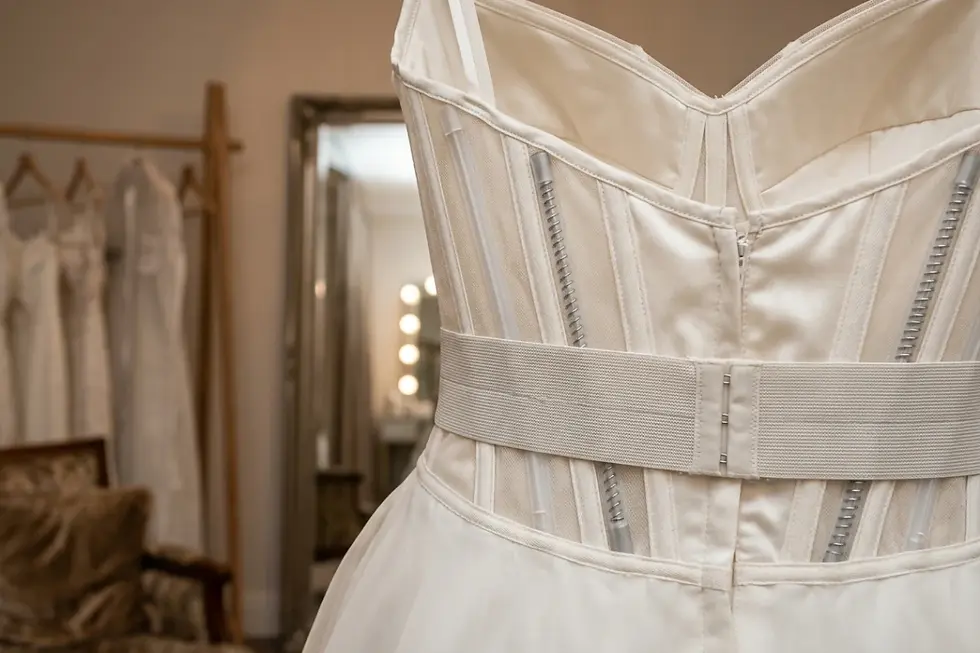
Heavy-duty internal boning and adjustable inner waistbands provide critical support for curvy and plus-size brides.
How Can Bridal Boutiques Select Alteration-Friendly Gowns to Streamline Fittings?
Fitting room success depends on how easily sample gowns can be clipped, pinned, and altered post-purchase. Selecting alteration-ready wholesale styles reduces customer friction and in-house alteration overhead:
Generous In-Seam Allowances: Choose designers who leave at least 1.5 to 2 inches of side-seam allowance, allowing dresses to be let out easily if the bride gains weight or falls between sizes.
Unbordered Hemlines and Separate Appliqués: Hemming intricate lace-border skirts is costly and time-intensive. Look for gowns with raw tulle edges, detached hem lace, or scattered lace appliqués that can be shifted easily.
Detachable Sleeve Construction: Detachable sleeves, swappable straps, and modular bows give your stylists the ability to customize neckline looks without ordering custom patterns.
How Does Strategic Bridal Boutique Sample Inventory Planning Balance Classics with Trends?
Managing a bridal boutique requires disciplined inventory planning. Rotate 20% to 30% of your sample inventory annually while preserving proven bestsellers.
Core Bestsellers (70%): Timeless A-line and clean crepe fit-and-flare styles in traditional ivory that convert consistently month after month.
Seasonal Statement Pieces (30%): Bold textured laces, square necklines, basque waists, and colored or floral underlays that drive social media engagement and store foot traffic.
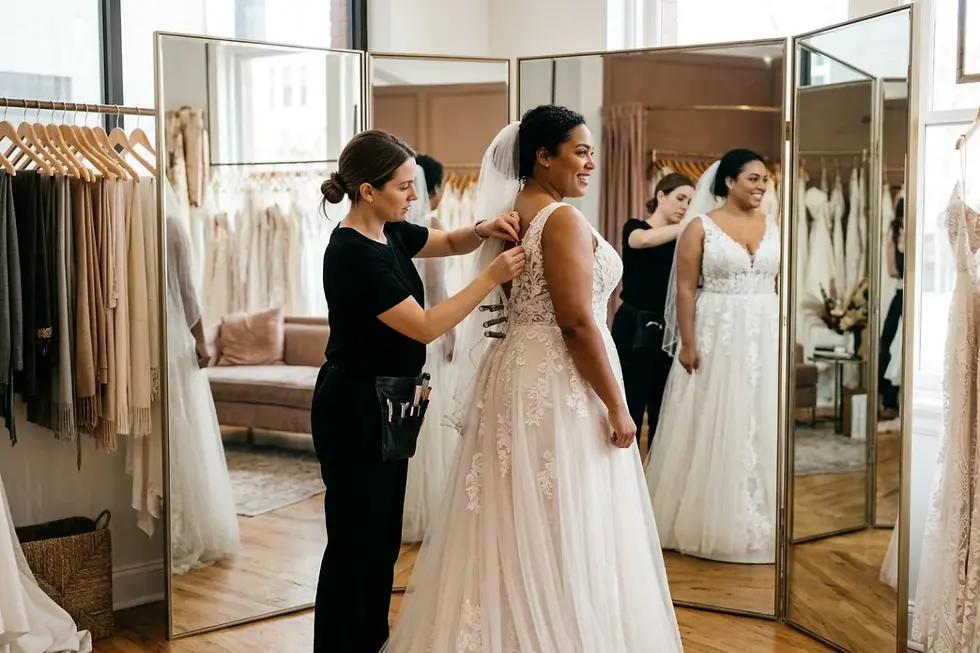
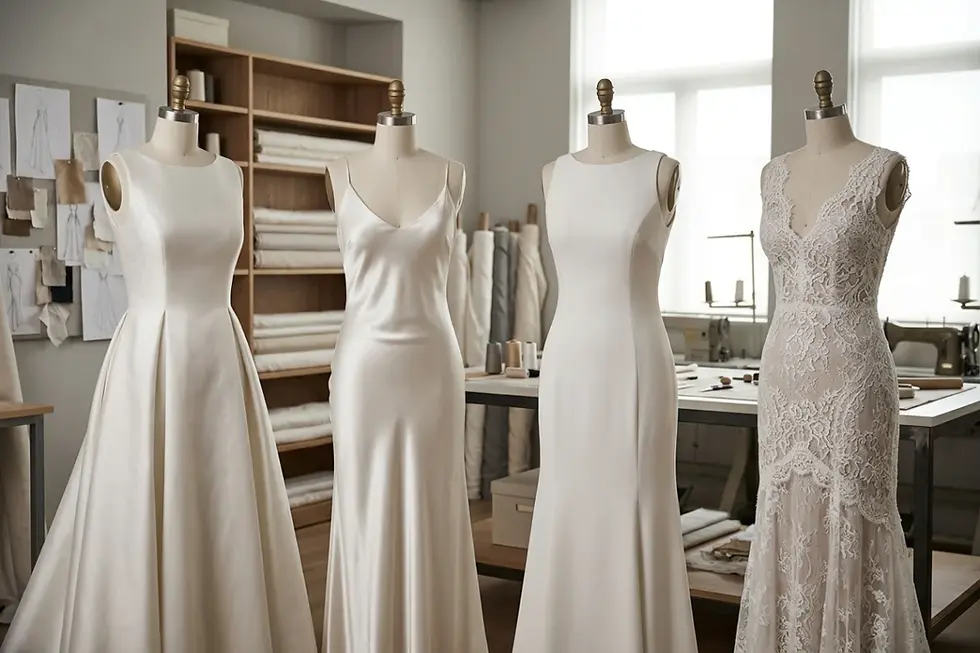
Alteration-friendly gown architecture allows consultants to deliver flattering sample fittings effortlessly.
Ready to enhance your showroom floor with high-converting, impeccably structured gowns that suit every bride's silhouette? Build Your Sample Assortment with our curated wholesale collections engineered for independent bridal salons.
FAQ
What is the ideal sample size range for a new bridal boutique?
Most profitable bridal boutiques stock bridal sample sizes ranging from bridal size 8 to 24, with the heaviest concentration in sizes 10, 12, 16, and 20. This spread allows consultants to comfortably clip down or bridge larger samples for the majority of brides.
How many total sample wedding dresses should an independent boutique carry?
A standard single-room bridal salon typically operates efficiently with 100 to 150 sample dresses. Multi-suite boutiques can carry 200 to 300 samples across varied price points and silhouette profiles.
How often should bridal retailers update their silhouette inventory?
Retailers should evaluate inventory sell-through twice a year. Typically, 20% to 30% of slow-moving samples should be moved into sample sales annually to make room for new seasonal wholesale styles.

Comments