
A Boutique Owner's Guide to Bridal Gown Sewing Quality and Construction Standards

For bridal salon owners, inventory quality directly influences alteration overhead, showroom sample longevity, and brand reputation. When sourcing new collections, assessing surface aesthetics is only half the battle. Evaluating bridal gown sewing quality requires systematically inspecting critical internal and external construction details, including seam tension, reinforced boning channels, clean lining closures, and stabilized hem finishes.
A single poorly constructed gown can lead to hours of costly in-house seamstress repairs, damaged try-on samples, or dissatisfied brides on their wedding day. This comprehensive guide outlines the technical benchmarks boutique buyers need to perform rigorous quality assessments before placing wholesale production orders.
Why Sewing Craftsmanship Determines Bridal Boutique Margin and Reputation
In bridal retail, seam failures and structural flaws directly erode profit margins. When wholesale orders arrive with inconsistent stitch density, weak zipper anchor points, or uneven boning, the burden of correction falls entirely on your boutique's alteration department. Beyond immediate labor costs, showroom samples with sub-par bridal gown sewing quality deteriorate rapidly under regular try-on wear, resulting in frayed tulle, popped seams, and compromised silhouettes that turn prospective brides away.
Conversely, sourcing gowns built according to strict bridal garment construction standards elevates your boutique's prestige. Gowns engineered with premium structural stability fit better straight off the rack, require fewer major alterations, and create a seamless luxury experience that drives word-of-mouth referrals.
Surface Stitching Standards: Seam Tension, Density, and Hem Finishes
When evaluating wedding dress stitching, start by examining the consistency of visible and structural seams. High-grade bridal manufacturing utilizes balanced thread tension calibrated specifically for each fabric type, preventing puckering on slippery satins or seam stretching on delicate crepes.
Stitches Per Inch (SPI): Premium gowns typically maintain 10 to 14 stitches per inch on structural seams. A stitch count below 8 often signals rushed, lower-tier assembly vulnerable to seam slippage under physical strain.
Seam Puckering & Tension: Run your fingers along curved princess seams. Puckered fabric indicates uneven feeding or improper machine tension, which cannot be steamed out.
Hem Stabilization: High-quality hemlines incorporate horsehair braid (crinoline) encased in bias binding, clean-finished baby hems, or blind-stitched linings that allow the skirt to fall gracefully without dragging or curling.
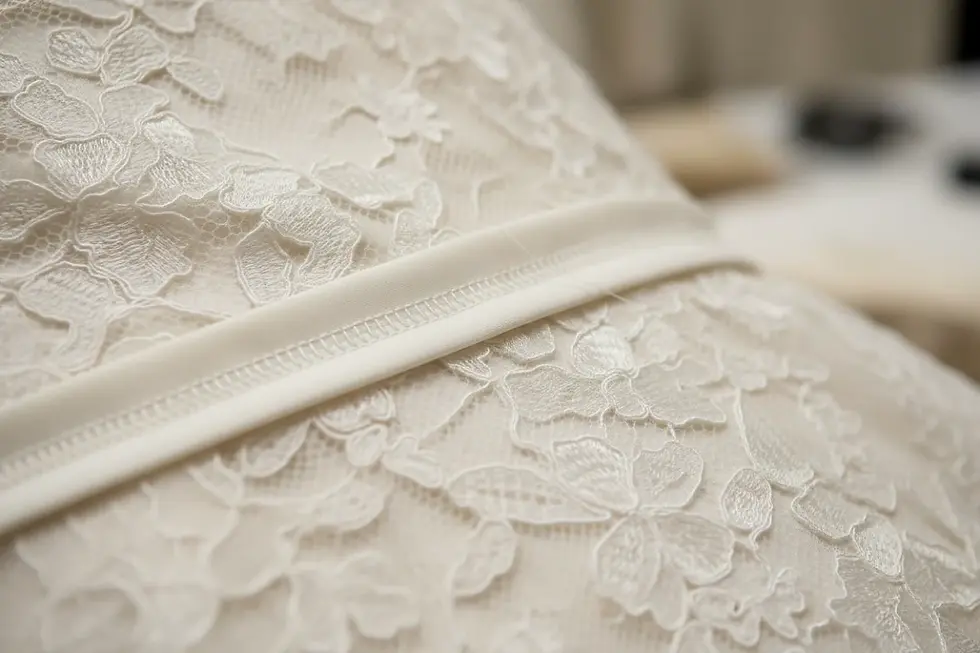
Consistent stitch density and proper seam tension prevent puckering along delicate bridal fabrics.
Hidden Internal Construction: Boning Channels, Cups, and Interfacing
A beautifully draping gown relies entirely on its internal foundation. When inspecting sample gowns, turn the bodice inside out to evaluate the internal architecture.
Boning Channels and Placement: High-end corsetry utilizes high-density spiral steel, plastic-coated spring steel, or premium German synthetic boning (Rigilene) encased in soft plush or double-layer twill tape. Ensure the boning ends are smoothly capped and stop 0.5 to 0.75 inches before seam allowances to prevent poking through the exterior silk or organza.
Waist Stays (Grosgrain Ribbon): An internal grosgrain waist stay with hook-and-eye closures anchors the weight of heavy, multi-layered skirts directly at the bride's natural waistline, preventing the bodice from slipping or dragging downward.
Molded Cup Integration: Padded bra cups must be invisibly hand-tacked or encased within interior lining layers rather than glued or bluntly machine-stitched through outer fabrics.
Interfacing & Underlining: Bodice panels should feature tailored fusible or sewn-in interfacing that provides crisp structure without creating stiff, cardboard-like bulk.
Hardware and Fastener Attachment: Zippers, Buttons, and Reinforcements
Fasteners represent high-stress points that frequently fail if factory assembly is inadequate. Examining hardware attachment is an essential step in bridal gown quality inspection.
Invisible Zippers: The zipper should glide smoothly without catching lining fabric. Quality production includes bar-tacking at the base of the zipper teeth to distribute tension and prevent zipper burst during bustling.
Working vs. Decorative Buttons: If a gown features a row of fabric-covered buttons, check whether they secure via elastic rouleau loops or an underlying heavy-duty zipper. Loops must be evenly spaced and reinforced with stay-tape along the seam.
Hook and Eye Closures: The top of every back zipper must feature a hand-sewn, reinforced hook-and-eye fastener to relieve direct mechanical stress from the zipper slider.
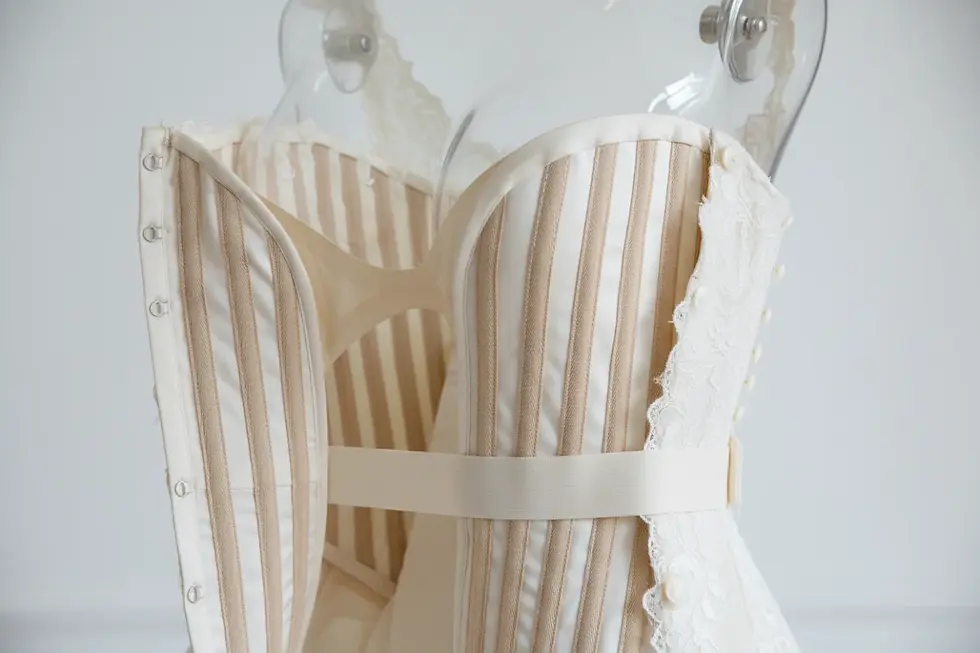
Proper internal construction including encased boning and waist stays provides essential structural support.
Handling Delicate Fabrics: Sheer Tulle, Beading, and Lace Appliqué Security
Bridal textiles such as illusion mesh, chantilly lace, and beaded organza demand specialized sewing techniques. Inferior manufacturers often cut corners by gluing embellishments or using abrasive monofilament fishing lines that irritate the bride's skin.
Lace Appliqué Attachment: Premium craftsmanship involves hand-stitching or precision micro-zigzag machine anchoring around the motifs. The edges of the lace should lay flat against the tulle base without raw backing threads showing through.
Bead and Crystal Anchor Stitching: Ensure hand-beading is secured with independent tie-offs every few inches. Continuous single-thread beading runs the catastrophic risk of an entire bead line unraveling if a single loop breaks.
Illusion Mesh Finishes: Sheer necklines and back panels should feature clean, raw-cut edges or microscopic rolled hems using tone-matched extra-fine thread that blends invisibly into diverse skin tones.
The Bridal Buyer Checklist: How to Audit Factory Workmanship Before Ordering
Before signing wholesale production contracts or onboarding a new bridal line, use this wedding dress craftsmanship checklist to benchmark physical samples:
Inspection Category | Low-Tier Red Flags | High-Quality Standards (Huasha Benchmark) |
|---|---|---|
:--- | :--- | :--- |
Bodice Foundation | Single-layer lining, raw boning ends, glue-attached cups | Multi-panel corsetry, twill-encased boning, interior waist stay |
Seam Integrity | Under 8 SPI, visible puckering, unclipped curves | 10–14 SPI, balanced tension, enclosed French or bound seams |
Embellishments | Loose threads, glued crystal clusters, visible knotting | Hand-anchored appliqués, partitioned beading threads, soft backing |
Hemlines & Lining | Raw serged edges, twisted horsehair tape | Fully enclosed bias bindings, suspended linings, weighted hems |
Hardware | Unreinforced zipper stops, weak button loops | Bar-tacked zipper bases, reinforced hook-and-eyes, sturdy rouleau loops |
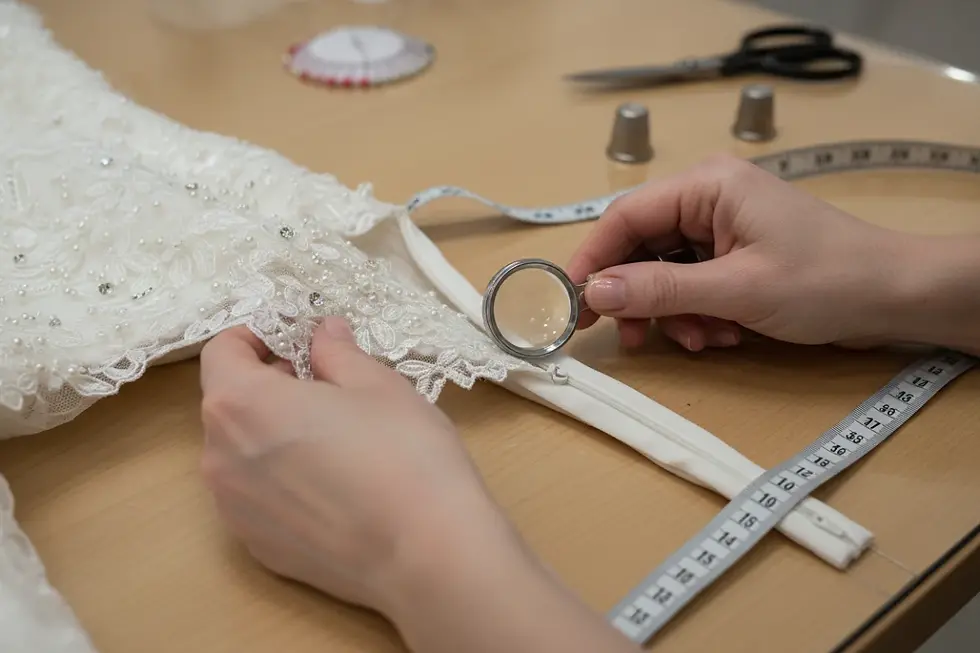
Systematic quality audits verify secure hardware and hand-stitched embellishments prior to retail dispatch.
By establishing strict quality control metrics and working with dedicated bridal ateliers that prioritize precision garment engineering, boutique owners can minimize post-delivery headaches and deliver gowns that brides treasure.
To evaluate our high-precision seams, internal corsetry, and artisanal finishing firsthand, Request Workmanship Close-Ups today to ensure flawless inventory for your boutique.
FAQ
What is the ideal stitch count for luxury wedding dress seams?
High-end bridal gowns typically feature 10 to 14 stitches per inch (SPI) on structural seams. This provides sufficient elasticity and strength without perforating delicate fabrics like silk organza, chiffon, or crepe.
Why is an internal waist stay important in a heavy bridal gown?
An internal waist stay (usually a grosgrain ribbon with hook-and-eye closures) transfers the heavy weight of multi-layered skirts directly to the bride's natural waistline. This prevents the bodice from sagging or placing excessive strain on the zipper and necklines.
How can boutique owners tell if beading is properly anchored?
Gently pull along the bead path. Quality craftsmanship utilizes independent lock-stitches or tie-offs every two to three inches. If pulling a single loose loop causes the entire string of beads to slide off, the manufacturer used low-cost continuous unanchored stitching.

Comments