
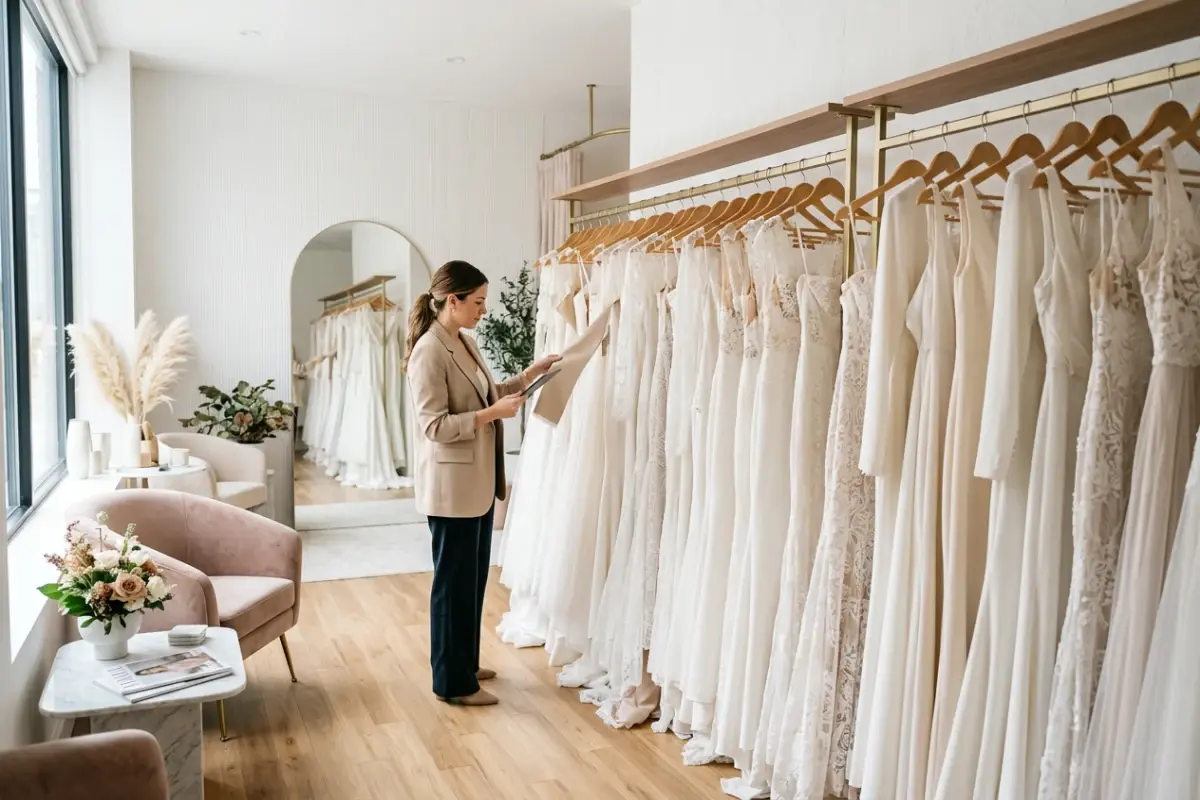
How Many Wedding Dress Samples Should a Bridal Boutique Order? Initial Inventory Guide

Most bridal boutiques launch with 30 to 80 sample dresses, but rather than adhering to a rigid count, owners should build a balanced silhouette assortment and scale sustainably by leveraging flexible manufacturing. The optimal initial volume depends on showroom square footage, appointment pacing, and supplier minimums, allowing boutiques to provide complete style representation without overextending capital.
What Factors Determine How Many Wedding Dress Samples a Bridal Boutique Should Order?
Determining your bridal boutique initial inventory requires evaluating physical space, operational cash flow, and target bride demographics. Rather than buying inventory to hold in multiple sizes, bridal salons operate on a made-to-order sample model where brides try floor samples before placing custom production orders.
Key variables include:
Showroom Display Capacity: Standard retail guidelines suggest allocating 1.5 to 2 linear feet of rack space per gown. Overcrowded racks damage delicate tulle, lace, and beading while diminishing the luxury shopping experience.
Appointment Structure and Fitting Rooms: If you operate two private bridal suites, having 40 to 60 gowns ensures multiple brides can browse distinct styles simultaneously without appointment overlap or rack contention.
Target Price Points and Designers: High minimum order quantities (MOQs) from traditional bridal design houses often force stores into buying 10 to 15 gowns per collection, which can rapidly inflate inventory costs.
Regional Bride Preferences: A boutique catering to classic cathedral weddings requires a different sample ratio than a destination-wedding studio focusing on lightweight crepe and sheath silhouettes.
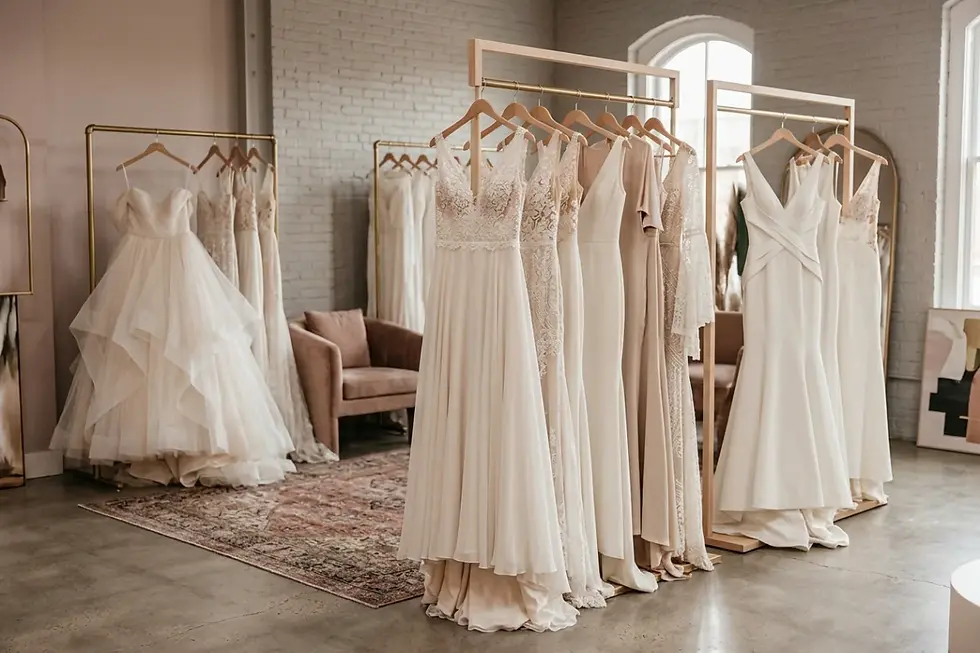
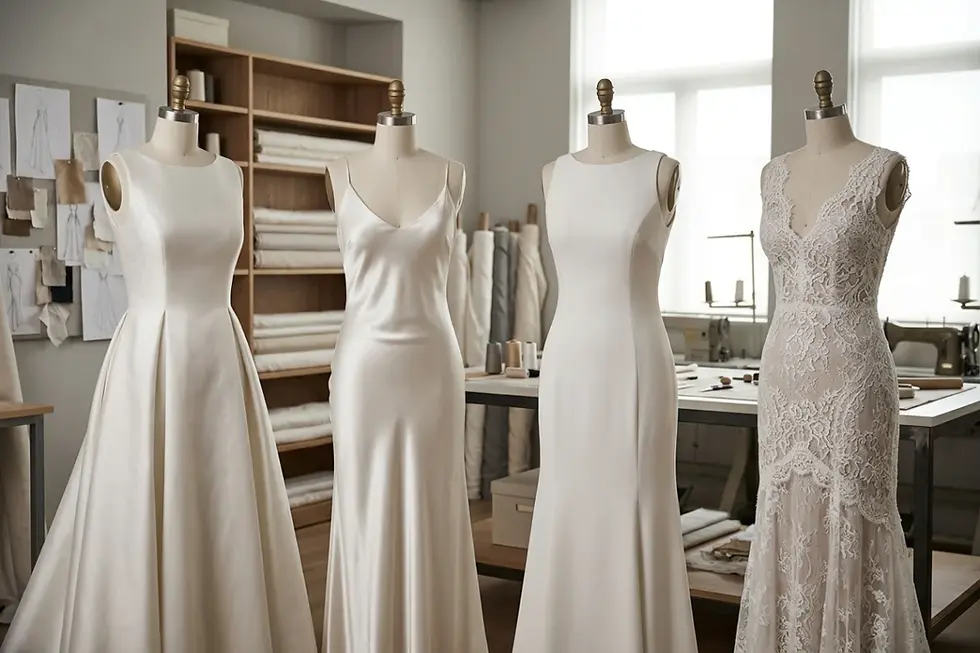
A balanced sample assortment covers core silhouettes from classic A-lines to fitted mermaids.
What Are the Sample Volume Benchmarks by Boutique Size and Stage?
To establish an effective bridal store inventory framework, match your sample count to your salon tier and square footage:
Boutique Category | Showroom Size (Sq. Ft.) | Recommended Sample Count | Fitting Suites |
|---|---|---|---|
:--- | :--- | :--- | :--- |
Micro Studio / By-Appointment | 500 – 900 | 25 – 40 Samples | 1 Suite |
Standard Independent Boutique | 1,000 – 1,800 | 45 – 70 Samples | 2 Suites |
Flagship / High-Volume Salon | 2,000 – 3,500+ | 80 – 140+ Samples | 3–4 Suites |
For a startup boutique, ordering between 40 and 60 samples provides sufficient variety across silhouettes, necklines, and fabrics without locking excessive cash into floor models.
How Should You Structure Your Sample Assortment Across Silhouettes and Sizes?
A comprehensive bridal shop sample order guide emphasizes diversity over sheer quantity. Brides need to visualize different cuts on their body types.
Balanced Silhouette Ratio
A-Line Gowns (30%–40%): The universally flattering cut and highest-converting silhouette for most boutiques.
Fit-and-Flare / Mermaid (25%–30%): Essential for modern, glamorous brides seeking structured bodice support.
Ballgowns (15%–20%): Vital for traditional ceremonies and fairy-tale aesthetics.
Sheath, Column, and Slip Gowns (10%–15%): Popular for outdoor, minimalist, and destination weddings.
Sample Size Distribution
Ordering all samples in standard bridal sample size 8 or 10 alienates a massive segment of brides. Successful boutique owners follow a dual-cluster sizing strategy:
Core Sample Cluster (Sizes 8–12): Represents 60% of your sample inventory for standard clipping and pinning.
Inclusive / Curve Cluster (Sizes 16–24): Represents 40% of your sample inventory, ensuring curve brides have structured gowns to try on comfortably.
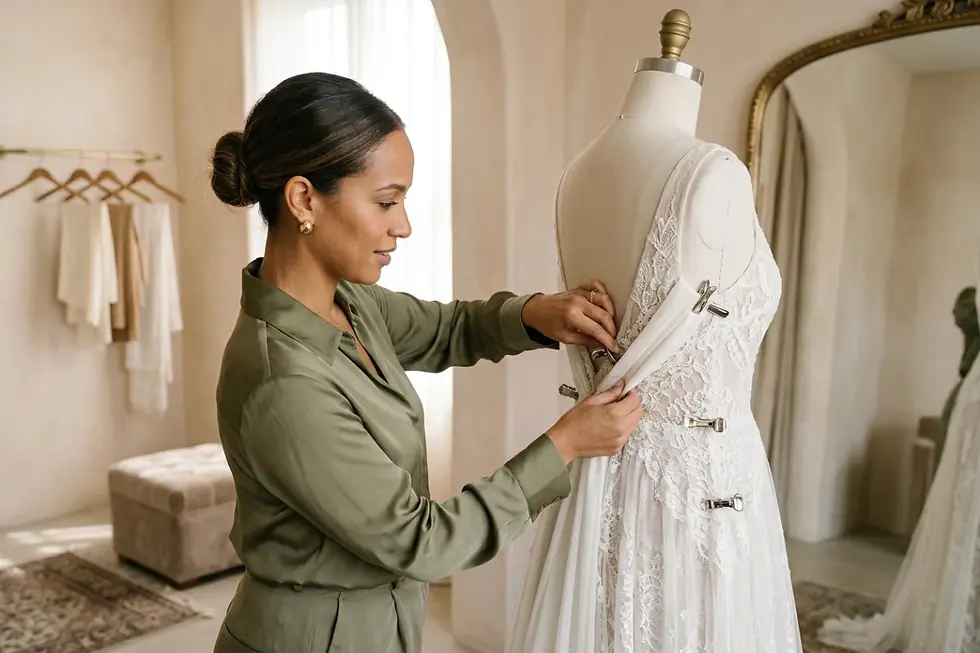
Carrying inclusive sample sizes ensures every bride experiences a tailored fitting appointment.
How Does Sourcing Wholesale Wedding Dresses with No MOQ Protect Cash Flow?
Traditional bridal wholesale models require retail stores to purchase mandatory 8–15 piece minimums per season from each label. This practice forces new boutiques to buy filler dresses that rarely sell, tying up working capital.
Working with suppliers offering wholesale wedding dresses no MOQ transforms your inventory agility:
Lower Capital Commitment: You invest solely in curated styles that fit your local market rather than fulfilling manufacturer quotas.
Responsive Reorders: If a specific square-neck minimalist gown trends, you can test single sample pieces immediately without committing to an entire collection.
Freedom to Test Emerging Trends: You can experiment with colored gowns, bold 3D florals, or detachable overskirts with zero dead-stock penalty.
Huasha supports bridal boutique owners with custom manufacturing and flexible wholesale ordering, allowing retailers to build tailored sample lines without restrictive purchase minimums.
What Common Sample Ordering Mistakes Should New Boutique Owners Avoid?
Buying Based on Personal Taste Instead of Market Research: Avoid curating an entire rack of avant-garde designs unless your market specifically demands high fashion. Always maintain strong foundational inventory in classic cuts.
Neglecting Construction Variety: Ensure your sample range includes diverse internal structures, from exposed corset boning to lightweight unlined bodices, accommodating varied support preferences.
Over-Investing in One Price Tier: Offer clear sample tiers within your boutique (e.g., Entry-Level $1,200–$1,800, Core $1,900–$2,800, and Premium $3,000+) so brides can find options within their budget.

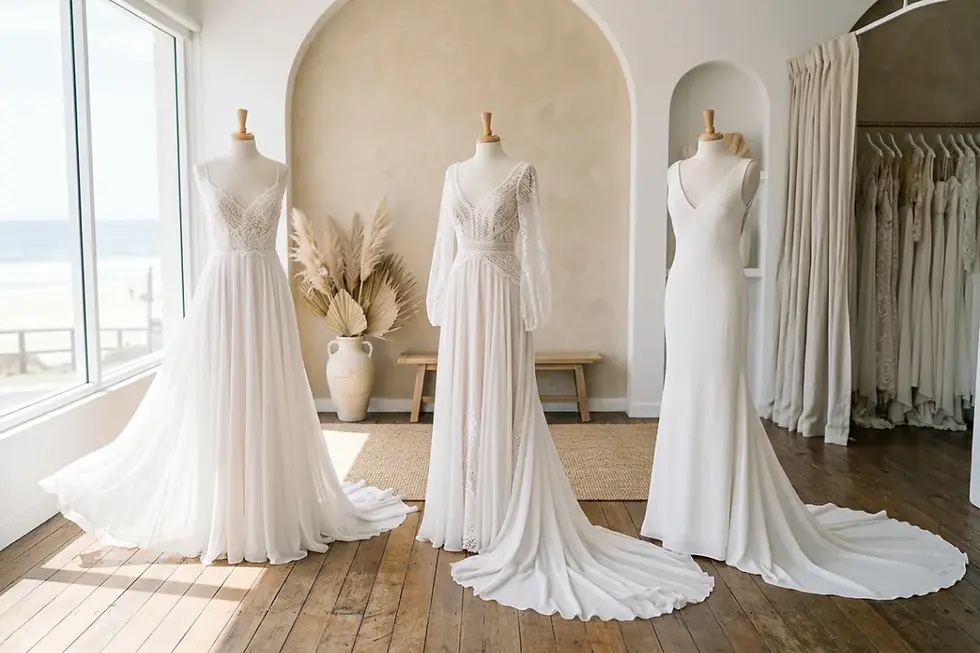
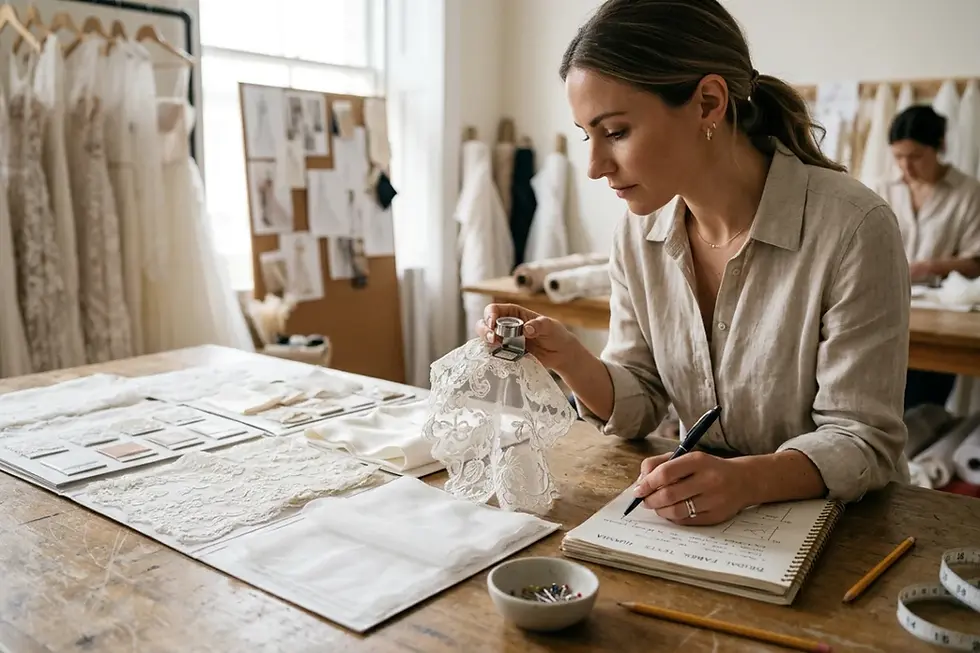
Flexible wholesale sourcing with no MOQ allows boutiques to customize samples without financial strain.
Ready to curate an agile, high-margin bridal inventory tailored to your boutique space? Build Your Sample Order Plan today and partner with Huasha for flexible, made-to-order bridal gown manufacturing.
FAQ
How often should a bridal boutique refresh its sample inventory?
Boutiques typically rotate their floor samples every 6 to 12 months. Discontinued styles or worn floor samples can be sold off during sample sales to recover costs and create room for new seasonal designs.
What is the average cost to build an initial bridal sample inventory?
Initial sample inventory costs generally range from $15,000 to $50,000 depending on your target retail price points and supplier terms. Utilizing no-MOQ wholesale manufacturing significantly lowers this upfront investment.
Should bridal boutiques sell sample gowns directly off the rack?
Standard practice is to keep floor samples for try-ons and order new made-to-order gowns for each bride. However, boutiques frequently sell older floor models off the rack during designated sample clearance events or for brides on tight wedding timelines.
Comments