
How to Avoid Overlapping Wedding Dress Samples: A Bridal Boutique Guide

To avoid overlapping wedding dress samples, audit your order matrix across silhouettes, fabrics, necklines, and price tiers so every gown serves a distinct bride without cannibalizing sales. By establishing a structured merchandise grid and differentiating bridal gown wholesale orders, boutique owners eliminate redundant aesthetics, alleviate bride decision fatigue, and maximize floor profitability.
Why Does Bridal Boutique Inventory Overlap Hurt Profitability?
Bridal boutique inventory overlap occurs when a retailer stocks multiple sample gowns that share nearly identical silhouettes, fabrications, and styling cues at similar price points. When two or more gowns cater to the exact same bride profile, they actively compete against each other rather than expanding your store's sales reach.
Sample Cannibalization: Instead of increasing total orders, redundant samples split bride interest across twin designs, diluting individual gown conversion rates.
Capital and Floor Inefficiency: Bridal sample gowns occupy physical rack space and tie up thousands of dollars in working capital that could test emerging bridal trends.
Bride Decision Paralysis: Too many near-identical choices overwhelm brides, extending appointment durations and often resulting in "I need to sleep on it" exits rather than confident same-day commitments.

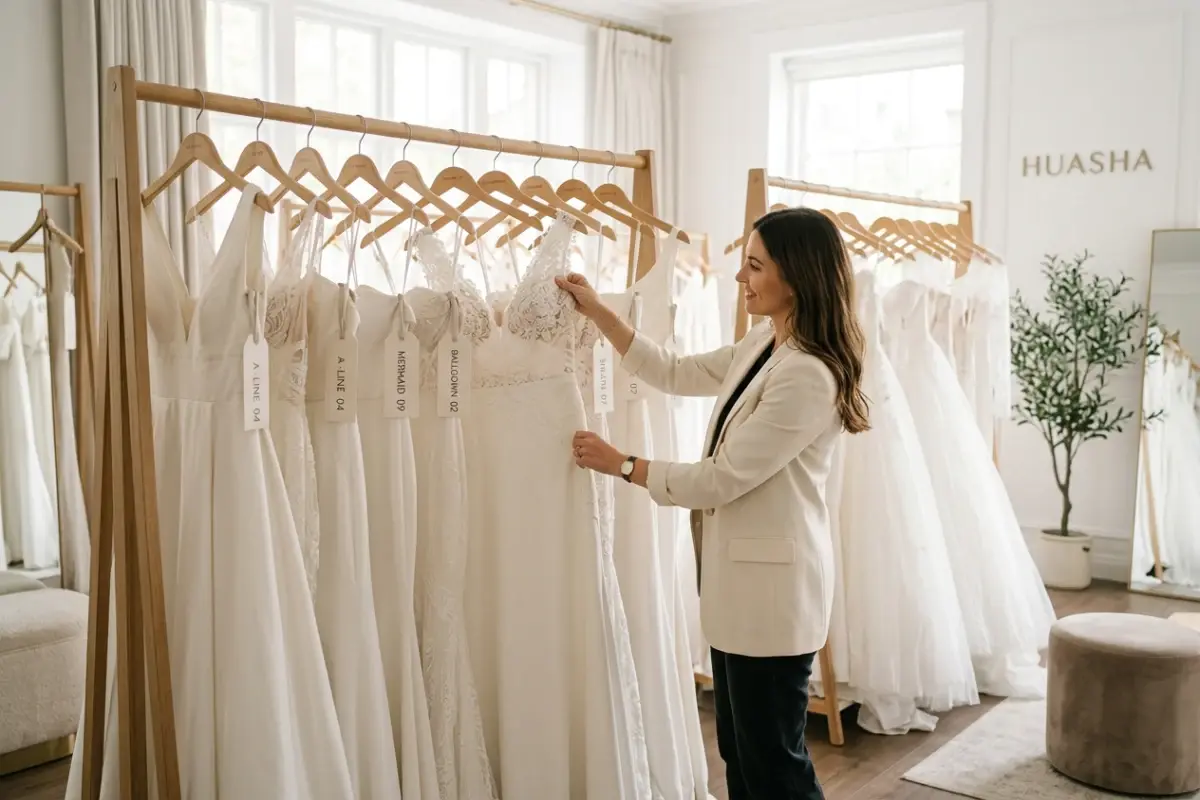
Auditing silhouettes, fabrics, and necklines prevents cannibalization across bridal sample racks.
How Do You Audit the 4 Key Variables: Silhouette, Fabric, Neckline, and Price?
Effective wedding dress assortment planning relies on deconstructing every prospective sample into four objective merchandising criteria before submitting wholesale purchase orders:
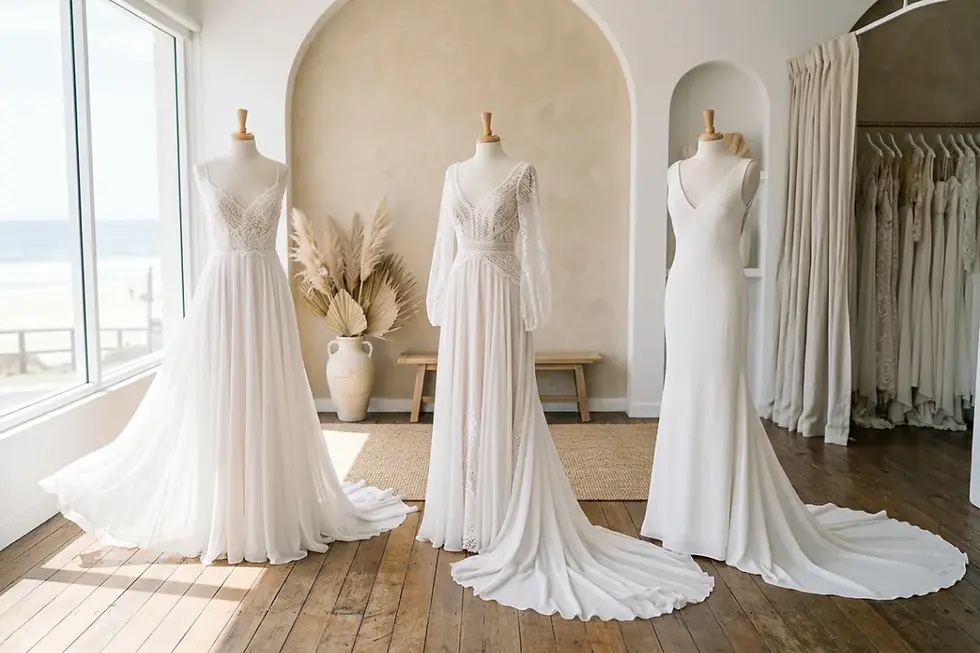
Silhouette Matrix: Divide your floor into clear categories—A-Line, Fit-and-Flare/Mermaid, Ballgown, Column/Sheath, and Modern Separates/Jumpsuits. Never order two gowns with the same body cut unless their fabrication or structural personality is completely distinct.
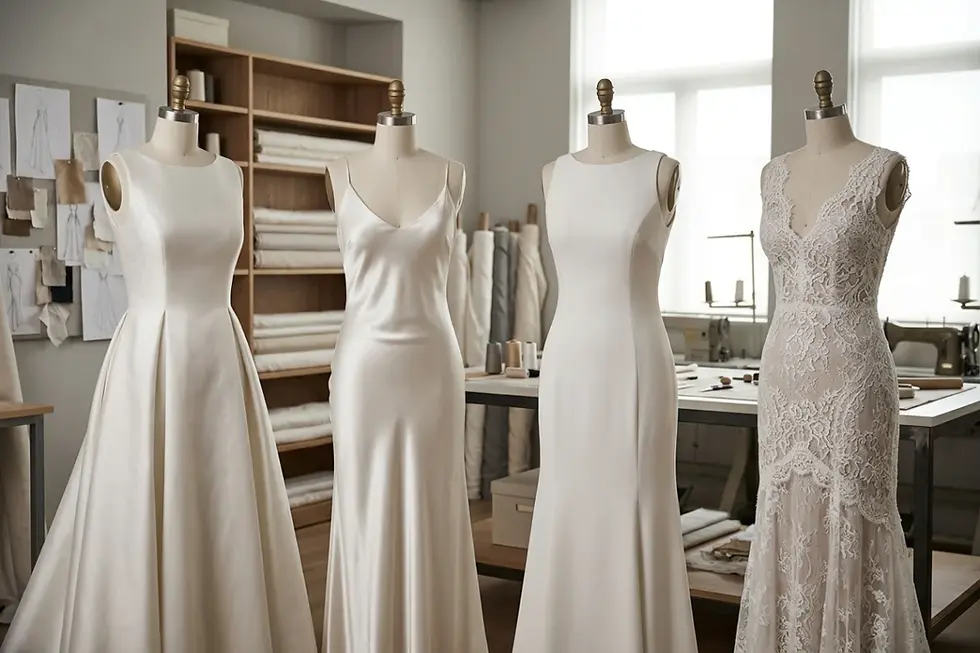
Fabric Hierarchy: Classify textures into distinct visual families—Heavyweight Crepe, Mikado/Satin, Floral Appliqué Lace, Geometric/Boho Lace, and Sparkle/Glitter Tulle. If you already have a floral lace A-line, ensure your next A-line sample features clean architectural crepe or botanical organza.
Neckline & Sleeve Accents: Balance plunge V-necks, square necklines, strapless sweetheart bodices, high illusion collars, and off-the-shoulder straps across your collection.
Price Tiering: Segment orders into defined retail pricing brackets (e.g., Budget/Entry, Core Sweet Spot, High-End Luxury). Ensure you do not carry three crepe fit-and-flare dresses in the exact same $1,800 to $2,000 price window.
How Can You Map an Inventory Grid for Strategic Assortment Planning?
A visual assortment matrix allows boutique buyers to spot duplicate aesthetics instantly before confirming orders with bridal manufacturers.
Merchandise Variable | Sample Gown A (Approved) | Sample Gown B (Potential Overlap) | Differentiated Alternative |
|---|---|---|---|
:--- | :--- | :--- | :--- |
Silhouette | Soft Fit-and-Flare | Fit-and-Flare | Architectural Column |
Fabrication | 3D Floral Lace over Chantilly | Beaded Floral Lace over Tulle | Clean Butter Crepe |
Bodice / Neckline | Plunging V-Neck with Straps | Deep V-Neck with Straps | Structured Strapless Square Neck |
Retail Price Point | $2,200 | $2,150 | $1,850 |
Strategic Decision | Keep as Core Bestseller | Reject / Overlap Risk | Approve for Assortment Diversity |

Assortment mapping ensures each sample caters to a distinct bride profile and price bracket.
How Do You Balance Core Bestsellers with Editorial Showpieces?
Curating bridal salon sample racks requires a balanced mix of commercially proven styles and eye-catching editorial gowns. Use the 70/20/10 merchandising ratio to guide seasonal buying:
70% Core Commercial Silhouettes: Reliable, universally flattering cuts (such as supportive A-lines and structured crepe fit-and-flares) that drive consistent volume across standard bride demographics.
20% Trend-Driven Styles: Fashion-forward updates, such as drop-waist silhouettes, basque waistlines, colorful floral embroidery, or pearl-embellished overlays that capture current bridal media momentum.
10% Editorial "Halo" Gowns: High-drama showpieces (dramatic royal trains, oversized bows, or avant-garde volume) that anchor window displays, generate social engagement, and elevate brand prestige.
How Can Manufacturer Customization Help Differentiate Wholesale Orders?
Rather than passing on a stunning gown because a similar sample already exists on your rack, partner with adaptable bridal manufacturers like Huasha that support custom pattern adjustments. Differentiating bridal gown wholesale orders at the production stage eliminates showroom duplication:
Adjust Lining Colorways: Order one gown in soft mocha/nude undertones and an aesthetically adjacent gown in crisp ivory to serve both modern and traditional brides.
Swap Bodice Construction: Convert an unlined illusion corset into a fully boned, clean satin bodice to create two distinct styling options from similar baseline designs.
Integrate Modular Accessories: Add detachable sleeves, matching overskirts, or cape veils to standard silhouettes, giving your stylists versatile 2-in-1 selling tools on the showroom floor.
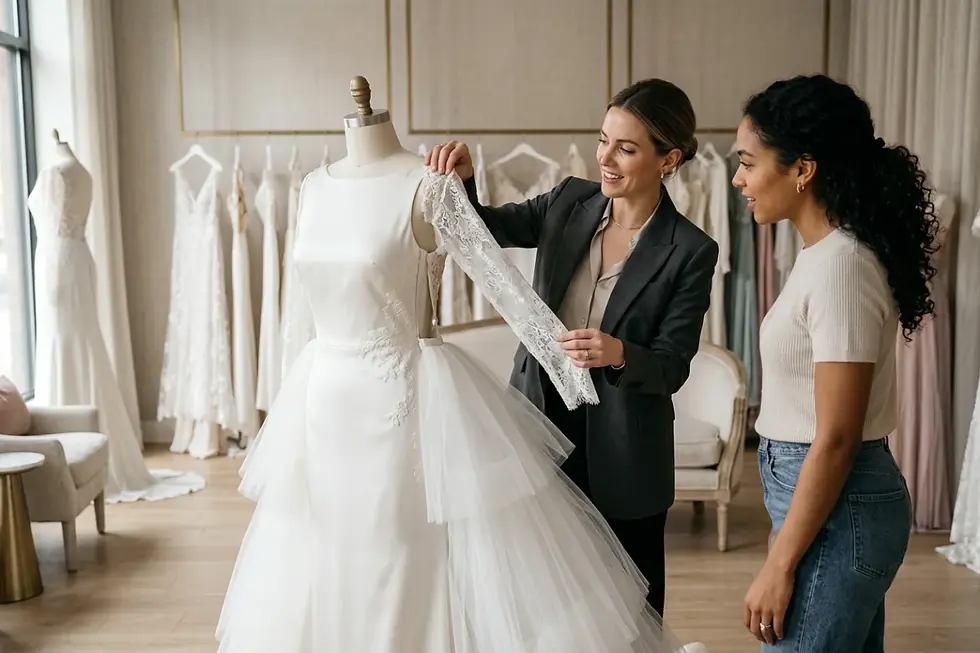
Modular customizations and versatile accessories help salons differentiate their wholesale orders.
What Is the Pre-Order Checklist to Prevent Sample Overlap?
Before submitting final purchase orders for upcoming bridal collections, run every selected sample through this four-step verification process:
Cross-Check the Appointment Log: Verify whether the new style directly solves an unfulfilled request from past brides or simply duplicates a design currently on your rack.
Run the 5-Second Mirror Test: Place photos of the new gown next to existing floor samples. If a bride browsing your rack would mistake one for the other from three feet away, eliminate or customize one of them.
Map Floor Price Distribution: Confirm the new sample fills an open price tier rather than clustering alongside existing inventory.
Confirm Manufacturer Modification Options: Ensure your manufacturing partner can modify neckline depths, train lengths, or fabric finishes to keep each sample distinct.
To ensure your next seasonal purchase maximizes rack velocity without costly duplicate inventory, Request a sample-overlap review before placing your order.
FAQ
How many total sample dresses should a standard bridal boutique carry?
Most independent bridal salons maintain between 100 and 200 sample dresses depending on floor square footage, appointment room capacity, and target turnover rates. Keeping sample count tightly curated prevents rack crowding and choice fatigue.
What is the fastest way to identify overlapping samples already in my boutique?
Conduct a floor audit by grouping your current inventory by silhouette and neckline rather than by designer. If five gowns feature identical floral plunge V-neck A-lines at similar price points, mark the lowest-performing duplicates for sample sale liquidation.
How can I diversify my gown selection if one specific style is trending?
When a specific trend is popular (such as drop-waist corset gowns), diversify within that trend by varying fabrications—order one in glossy satin, one with sheer corsetry and floral lace, and another with clean minimalist crepe.
Comments