
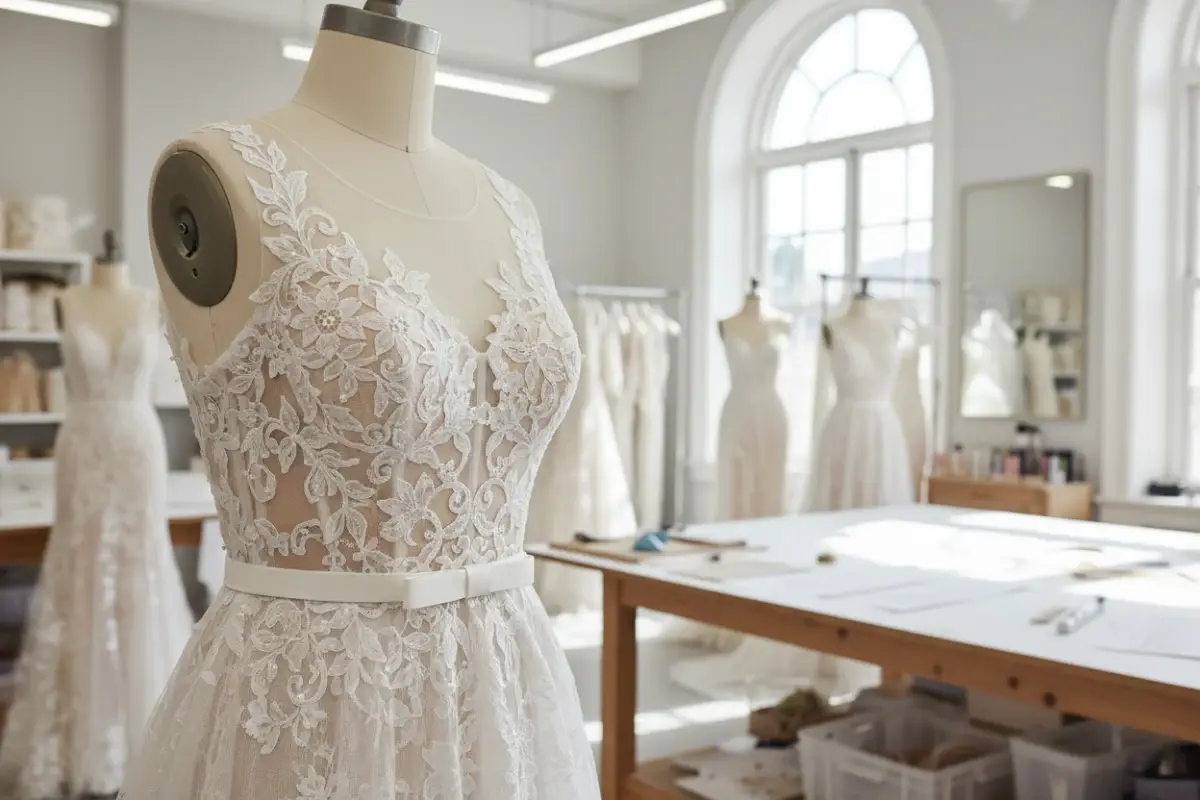
Choosing the Best Lace Wedding Dress Manufacturer for Your Bridal Boutique

For bridal salon owners and boutique buyers, the bridal gown rack is defined by the quality of its lace. A bride can immediately feel the difference between standard off-the-rack lace and an artisan-crafted gown. Behind every breathtaking gown is an experienced lace wedding dress manufacturer that understands how delicate textiles behave when draped, sculpted, and worn.
A premier lace wedding dress manufacturer sets luxury standards through symmetrical motif alignment, hand-stitched 3D applique placement, and invisible edge finishing on supportive bridal foundations. When curating inventory for discerning brides, understanding the intricacies of lace fabrication empowers your salon to select high-margin gowns that require fewer alterations and sell off the rack effortlessly.
What Sets a High-End Lace Wedding Dress Manufacturer Apart
Not all lace production is created equal. Sourcing wholesale lace wedding dresses requires looking beyond catalog images to examine garment architecture. High-end bridal manufacturing merges centuries-old lace traditions—such as French Chantilly, Alençon, and Guipure—with advanced structural corsetry.
An elite custom lace bridal gown factory does not treat lace as a flat, standard textile. Instead, pattern cutters approach lace organically. They evaluate pattern repeats, scalloped border curves, and tension variations across the weave. This level of dedication prevents common production flaws like puckering seams, misaligned back closures, and stiff, scratchy underlays that compromise bridal comfort.
Pattern Sizing and Symmetry: The Secret to Flawless Lace Placement
The hallmark of luxury bridal manufacturing lies in mirror-image symmetry. In mass-market production, lace motifs are often stamped and cut haphazardly across fabric layers, resulting in mismatched bodices and asymmetrical train cascades.
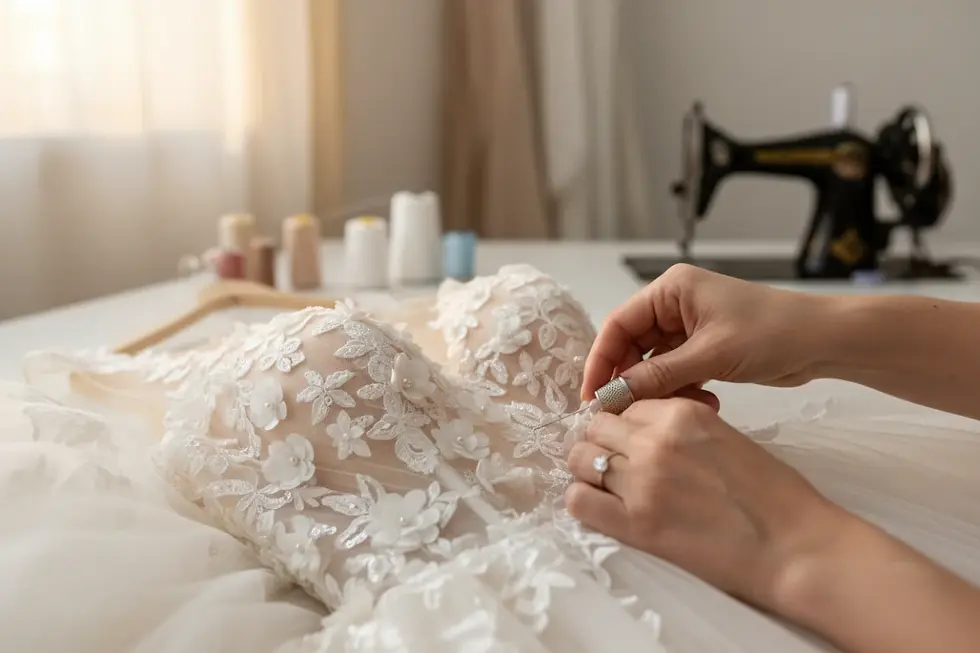
Precision hand-tacking of luxury lace appliques ensures seamless drape and texture.
At a dedicated facility specializing in handcrafted lace bridal manufacturing, pattern makers align focal medallions precisely along the center front, bust points, and back zipper lines. For plunging V-necklines and illusion backs, the lace motifs must balance perfectly on both the left and right panels. Furthermore, when grading patterns from standard bridal size 4 to plus size 24, a master manufacturer individually re-scales the placement of appliques rather than simply stretching the fabric, ensuring balanced proportions across every size on your showroom floor.
Hand-Appliqué vs. Machine Sewing: Evaluating Surface Artistry
When evaluating a luxury lace applique wedding dress, boutique owners should closely inspect how elements are attached to the base tulle or organza:
Machine-Stitched Overlays: Common in budget garments, fast machine stitching can leave visible, rigid thread outlines that flatten delicate 3D floral petals and restrict fabric fluidity.
Artisanal Hand-Appliqué: Master seamstresses cut out individual lace motifs and invisibly hand-tack them using ultra-fine mono-filament or silk thread. This preserves the natural drape and allows petals, leaves, and vine accents to sit in soft dimensional relief.
Graduated Beading Integration: Premium manufacturers seed pearls, micro-sequins, and bugle beads directly onto hand-placed lace appliques rather than using pre-beaded rolls, creating a continuous, organic sparkle that catches boutique spotlighting without overwhelming the bride.
Understructure and Boning: Supporting Heavy Beaded and Layered Lace
Layered lace and heavy crystal beadwork add significant weight to a bridal gown. Without proper foundation engineering, a strapless or illusion bodice will slide, buckle, or crease during fittings.
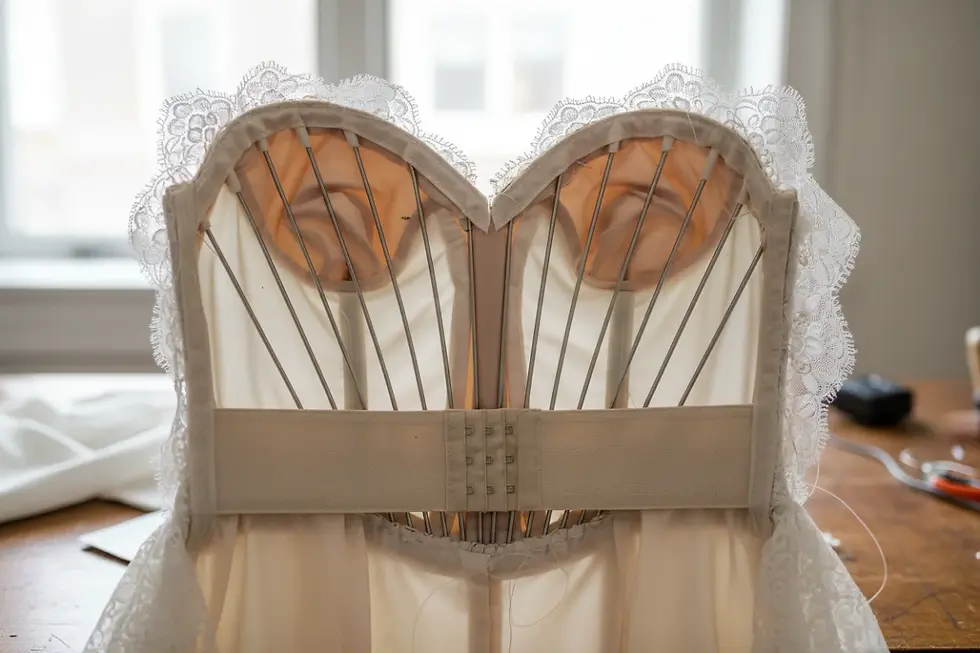
Structured internal corsetry provides optimal support for heavy layered lace skirts.
A reliable lace wedding dress manufacturer builds an internal architectural corset inside every gown. This includes:
Multi-Channel Boning: Utilizing high-density spiral steel boning or reinforced synthetic channels that curve naturally to the ribcage without digging.
Internal Waist Stretches (Grosgrain Belts): Distributing the weight of heavy multi-tier lace skirts and cathedral trains directly onto the natural waist, taking stress off delicate illusion shoulders.
Breathable Base Mesh: Employing soft, stretch-resistant power mesh beneath delicate lace to keep the bodice secure while remaining completely imperceptible on skin tones.
Edge Finishing and Invisible Mesh Seaming for Boutiques
Illusion necklines and lace hem borders are the most common areas where poor construction reveals itself. Inferior manufacturing leaves raw tulle edges exposed or attaches rigid scalloped trims with thick, scratchy seams that cause skin redness during salon appointments.
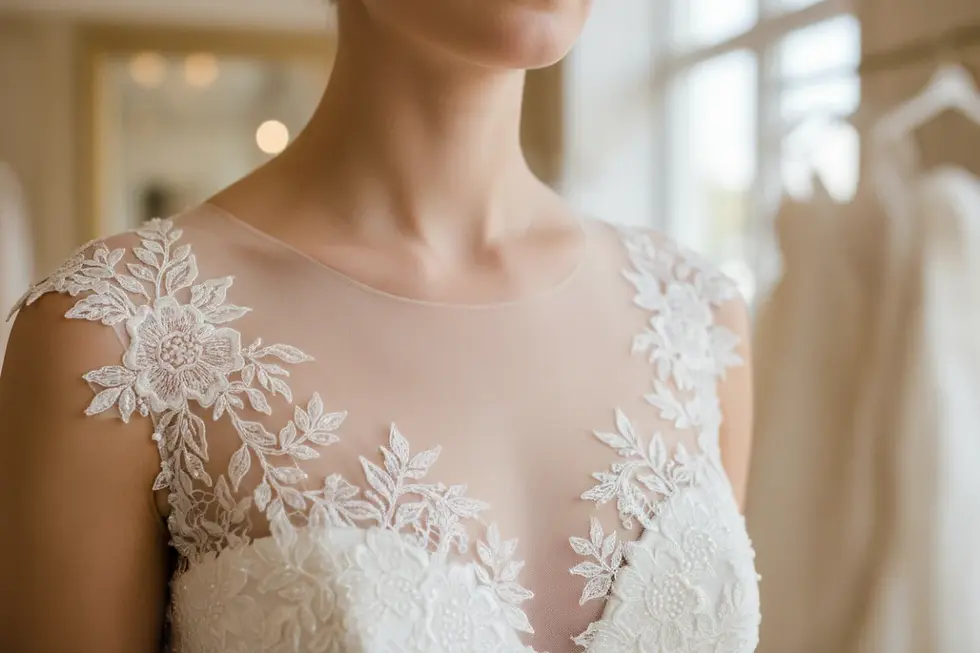
Invisible edge finishing on illusion mesh elevates comfort and photographic appeal.
Top bridal ateliers use invisible hand-rolled hems, delicate eyelash trims, or hand-appliquéd borders that organically float along the neckline, wrists, and train hem. Seams along illusion panels are matched with raw-edge applique overlays, making joining lines virtually undetectable in wedding photography.
Quality Checklist: Sourcing Lace Bridal Gowns for Your Boutique
Before placing wholesale purchase orders, use this practical checklist to evaluate sample gowns from your bridal manufacturing partner:
Quality Indicator | What to Inspect | Why It Matters for Salons |
|---|---|---|
:--- | :--- | :--- |
Motif Alignment | Center front and zipper symmetry | Eliminates customer complaints and fitting imbalance |
Hand-Tacked Appliques | Edges of 3D flowers and lace vines | Prevents peeling motifs and stiff bodice textures |
Inner Understructure | Built-in cups, boning, and inner waist stay | Reduces bridal alteration time and ensures secure fit |
Illusion Mesh Quality | Softness, stretch recovery, and color match | Maximizes bridal comfort and photogenic transparency |
Train Hem Finishing | Clean horsehair braid or hand-placed scallops | Protects the train from fraying and ensures smooth gliding |
Partnering with a specialized atelier like Huasha elevates your bridal salon's reputation with flawlessly constructed lace silhouettes. Discover our artisanal techniques, customized private label options, and couture-grade collections—View Lace Craftsmanship to enhance your boutique's inventory today.
FAQ
What is the typical minimum order quantity (MOQ) when working with a lace wedding dress manufacturer?
MOQs vary by atelier. Many boutique-focused manufacturers offer flexible starting quantities ranging from 3 to 10 gowns per order, allowing retailers to test new lace styles without excessive inventory risk.
How can bridal shop owners verify the quality of lace before placing bulk orders?
Always order sample gowns to inspect motif symmetry, seam softness, inner corsetry, and applique stitching. High-end manufacturers also provide fabric swatches displaying available Chantilly, Alençon, and 3D beaded laces upon request.
Can custom lace bridal gown factories adapt standard lace patterns for plus-size brides?
Yes. Experienced manufacturers re-grade and individually position lace medallions and appliques for larger sizes to ensure balanced visual proportions rather than simply scaling up the base fabric pattern.

Comments