

Mastering Wedding Dress Size Grading: A Strategic Guide for Bridal Boutiques

Wedding dress size grading is the technical patternmaking process of proportionally adjusting bridal gown dimensions across standard sizes to ensure structural balance, bust support, and silhouette integrity without distorting the design. Unlike ready-to-wear apparel, bridal gowns are intricate architectural garments composed of multi-layered textiles, rigid boning, and precise focal points. For bridal boutique owners, understanding how a manufacturing partner approaches sizing is essential to protecting sample room profitability and delivering an exceptional bride experience.
What Is Wedding Dress Size Grading and Why Does It Matter?
At its core, wedding dress size grading translates a base sample pattern (typically a sample size US 8 or 10) into a complete size range spanning petite to plus sizes. In bridal wear, this process requires far more than simply enlarging or shrinking pattern outlines by fixed millimeter increments.
A bridal gown must accommodate volumetric changes across the human body while maintaining design balance. When a gown transitions from a smaller size to an extended size, the proportion of bust projection, back width, shoulder slope, and waist-to-hip drop shifts non-linearly. Precise bridal gown pattern grading ensures that an intricate illusion lace bodice, an off-the-shoulder neckline, or a sculpted mermaid flare looks identical in balance whether worn by a size 4 or a size 24 bride.
Without specialized grading, boutique owners encounter inventory liabilities where gowns look stunning on showroom mannequins but fail structurally during live bride try-ons.
Linear Measurement Scaling vs. Professional Bridal Pattern Grading
Many entry-level manufacturers rely on simplistic linear scaling—adding uniform circumference increments across the chest, waist, and hips. While linear scaling reduces pattern development time for mass factories, it introduces critical structural flaws in formalwear.
Feature | Linear Sizing Scaling | Professional Bridal Pattern Grading |
|---|---|---|
:--- | :--- | :--- |
Pattern Adjustment | Uniform perimeter increases across all seams | Segmented, anatomical grade rules adjusted per body zone |
Bust Apex & Projection | Stays static or shifts horizontally only | Adjusts three-dimensionally for natural cup depth and apex drop |
Torso & Armscye Fit | Armholes and torso lengthen excessively | Armscye depths and bodice lengths remain proportionally balanced |
Structural Support | Uses identical internal corset bones across sizes | Recalibrates boning count, gauge, and placement for larger sizes |
Silhouette Fidelity | Train placement and flare points become distorted | Flare points and waistlines remain true to the original sketch |
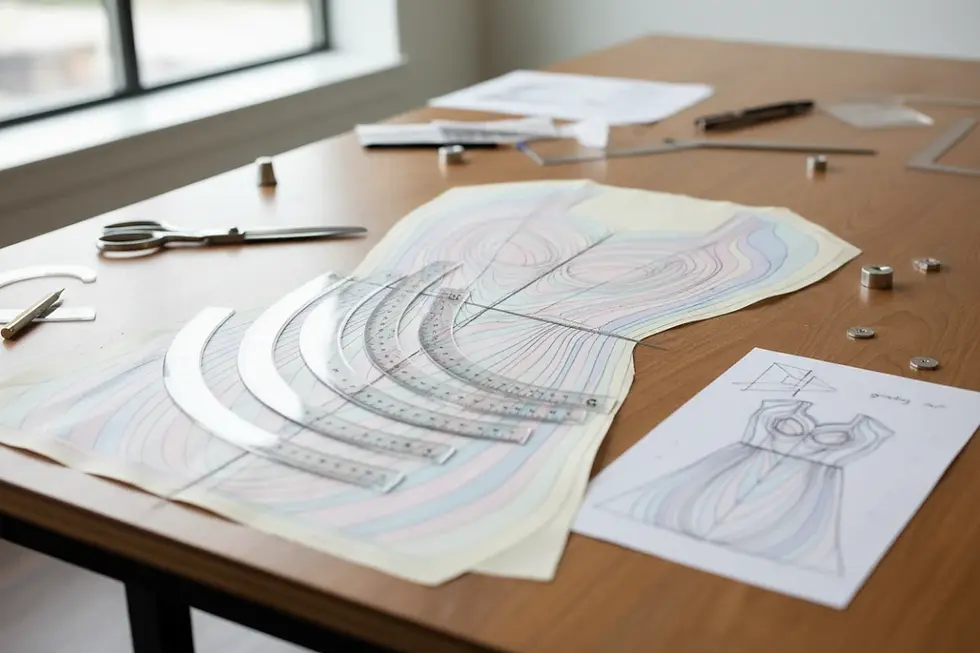
Segmented pattern grading preserves bustline position and waist placement across different bridal sizes.
Professional grading relies on anatomical grade rules established specifically for bridal couture. By treating each body zone as a distinct anatomical curve rather than a simple geometric cylinder, experienced manufacturers maintain the visual balance conceived by the designer.
How Flawed Grading Impacts Silhouette, Bustline, and Waist Placement
When a factory uses flawed or generic wedding dress sizing standards, the visual and functional defects become immediately apparent in the fitting room:
Dropped Waistlines and Long Torsos: In poorly graded plus-size gowns, factories often inadvertently lengthen the bodice, causing natural waist seams to sit across the high hip, which compresses the bride's leg line.
Misplaced Bust Apex Points: If bust apex points are merely spaced wider without accounting for cup depth, the bust cups sit too high or wide, creating uncomfortable gapping or flattening the bustline.
Distorted Silhouette Flare Points: In mermaid and trumpet gowns, improper grading shifts the knee flare point down past the bride's calf, restricting mobility and altering the gown's dramatic curve.
Neckline Gapping: Illusion mesh, plunge V-necklines, and off-the-shoulder bands lose tension and sag when pattern perimeter increments are scaled incorrectly.
When these structural inconsistencies occur, your boutique stylists are left explaining fit anomalies to anxious brides, undermining their confidence in the gown.
Critical Structural Factors: Internal Boning, Cup Positioning, and Torso Length
High-end bridal construction relies heavily on interior engineering. As gowns increase in size, the physical weight of heavy fabrics—such as duchess satin, multi-layered tulle, and heavy beading—multiplies significantly. A master patternmaker must adjust internal components to maintain bridal size chart accuracy and functional support.
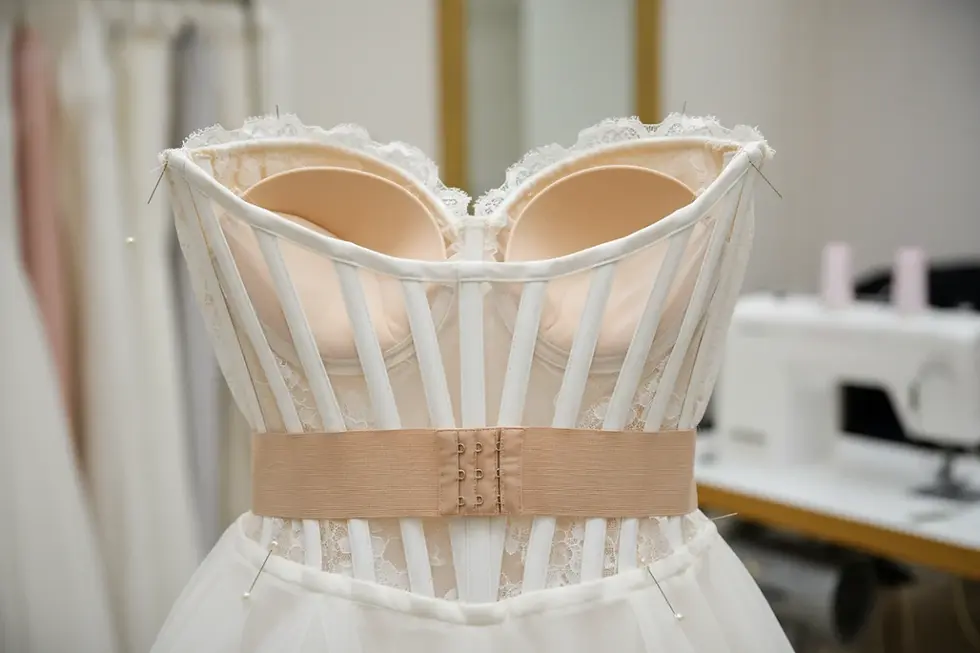
Proper grading adjusts internal boning gauges and cup positioning to support heavier fabrics in larger sizes.
First, cup sizing cannot remain static. Premium grading systems incorporate variable cup positioning, ensuring that larger band sizes receive appropriately scaled bust cups rather than an oversized surface area placed over small foundation cups.
Second, internal corset engineering must evolve across the size spectrum. While four to six flexible plastic bones may suffice for a petite size 4 bodice, an extended size requires higher-tensile boning channels, reinforced waist stays (petersham ribbon), and reinforced side-seam construction to distribute gown weight comfortably without collapsing or rolling.
How Inconsistent Grading Increases In-Store Alteration Costs for Boutiques
Boutique profitability is directly tied to alteration predictability. When a manufacturer lacks consistent bridal sample dress fit consistency, your alterations department or partner seamstresses must spend unbillable hours rebuilding core garment architecture.
Extensive Bodice Re-cutting: When bust points or torso lengths deviate from standard sizing, seamstresses must deconstruct complex lace appliqués, unpick boning channels, and reshape armholes—work that drastically drives up alteration turnaround times.
Bride Dissatisfaction and Rush Fees: If a made-to-order gown arrives fitting noticeably different from the sample dress tried in-store, boutiques often absorb emergency alteration costs or expedited manufacturer re-orders to preserve client goodwill.
Inventory Devaluation: Sample dresses with erratic grading sit longer on salon racks. If brides consistently experience awkward proportions during sample try-ons, conversion rates drop, turning floor samples into deadstock.
Partnering with a manufacturer that prioritizes rigorous grading standards eliminates these hidden operational costs and protects your bottom line.
Key Criteria for Boutique Buyers to Evaluate a Manufacturer's Sizing Quality
Before adding a new bridal label or private-label manufacturing partner to your salon, evaluate their technical grading protocols using these four checkpoints:
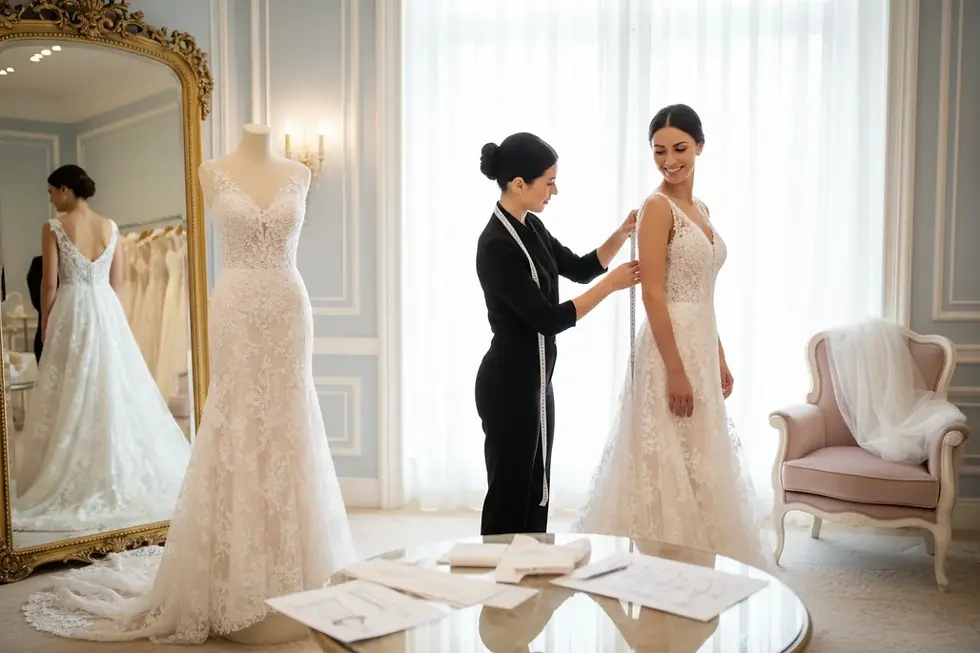
Accurate manufacturer grading reduces in-store alteration hours and enhances the bride's try-on experience.
Request Technical Measurement Specifications: Review detailed grade rule charts covering not only bust, waist, and hip, but also hollow-to-hem, apex-to-apex, back length, and shoulder-to-waist dimensions.
Verify Multi-Size Live Model Fitting: Inquire whether the manufacturer tests patterns on live fit models across multiple size categories (e.g., standard size 8, curvy size 16, plus size 22) rather than grading purely via software algorithms.
Examine Interior Foundation Details: Inspect physical samples across different sizes to verify that internal construction, boning thickness, and cup shaping scale alongside exterior measurements.
Evaluate Manufacturing Tolerance Limits: Reliable couture manufacturers maintain strict quality control limits (typically within 0.5 cm to 1 cm variance), guaranteeing that production gowns mirror your floor samples accurately.
By demanding technical precision in pattern grading, bridal retailers safeguard their reputation, streamline alteration workflows, and deliver a flattering fit to every bride walking through the door.
At Huasha, our technical patternmaking team applies specialized bridal grading rules and multi-size fit testing across our entire collection, ensuring your salon receives dependable proportions and flawless craftsmanship every season. Ask for the Size Chart to review our precision grading specifications and explore how our gowns elevate your boutique inventory.
FAQ
What is the difference between standard ready-to-wear grading and wedding dress size grading?
Ready-to-wear grading relies primarily on linear perimeter increases for flexible, unlined fabrics. In contrast, wedding dress size grading requires multi-dimensional pattern adjustments to accommodate rigid internal corsetry, cup depth, torso proportions, and heavy architectural fabrics without shifting silhouette lines.
Why do bridal sample sizes fit differently across various manufacturers?
Fit differences occur because each bridal manufacturer establishes their own base fit models and grading algorithms. Factories using linear scaling often produce distorted proportions in smaller or larger sizes, whereas manufacturers using anatomical grading maintain consistent fit across the entire size chart.
How does poor grading increase alteration expenses for bridal boutiques?
When grading is miscalculated, natural waistlines drop, necklines gap, and bust apex points become misplaced. Correcting these systemic structural errors requires seamstresses to completely deconstruct bodices and reposition appliqués, adding extensive labor hours and unpredictable alteration costs.

Comments