
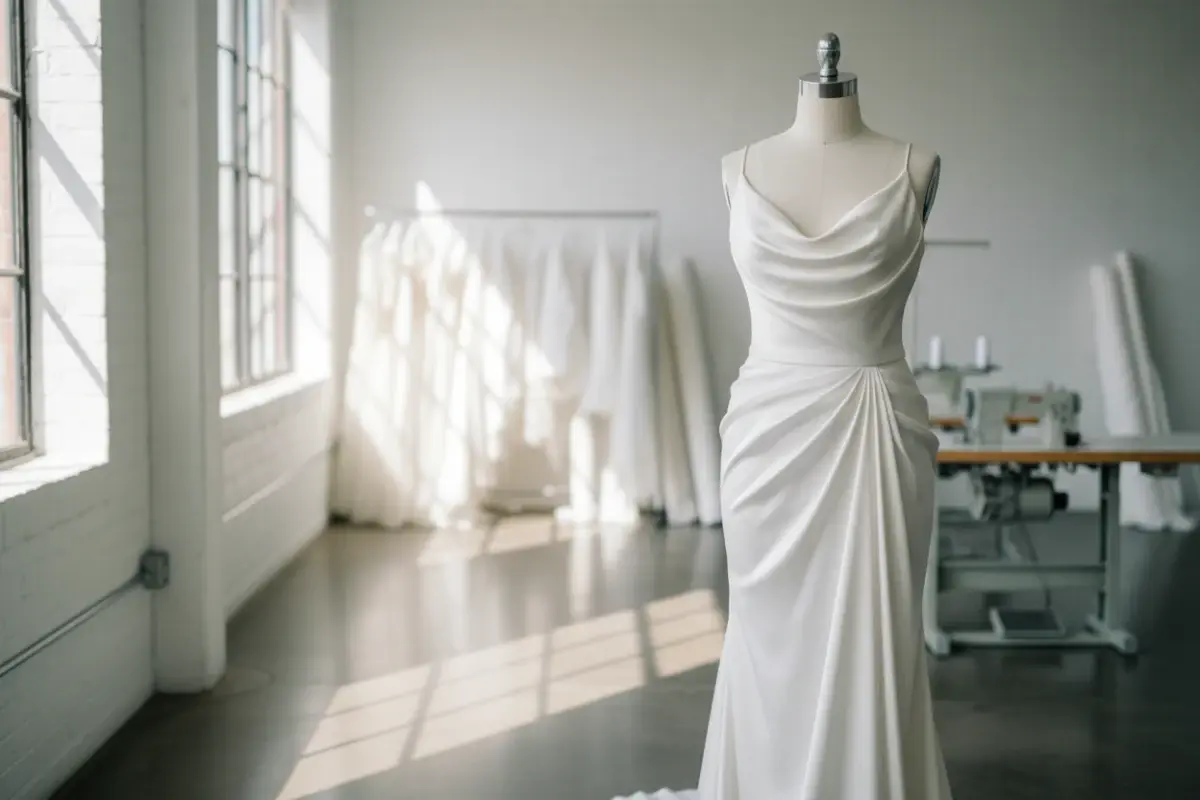
Partnering with a Quality Satin Wedding Dress Manufacturer: A Boutique Owner's Guide

For modern bridal boutiques, minimalist satin gowns represent both high customer demand and a demanding technical challenge. Minimalist bridal dresses require uncompromising pattern drafting, flawless fabric handling, and meticulous stitching because the unembellished, lustrous surface leaves zero room to hide tailoring defects. Choosing an experienced satin wedding dress manufacturer is therefore one of the most critical decisions a boutique owner can make to ensure consistent fit, luxurious drape, and profitable inventory.
Why Minimalist Satin Gowns Are the Ultimate Test of Factory Craftsmanship
While heavily beaded ballgowns or multi-layered tulle skirts can mask subtle asymmetrical cuts or minor seam puckers, clean satin gowns reflect light uniformly across the body. Any flaw in tension, grainline alignment, or pressing immediately becomes visible to the bride under boutique lighting.
Bridal boutique owners ordering minimalist satin bridal gown wholesale collections need to ensure that their manufacturing partner understands the engineering behind clean silhouettes. A single misaligned dart or tight stitch line will pull the lustrous face of the fabric, creating ripples that cannot be pressed out during final alterations. Craftsmanship in satin production is not merely about assembling fabric panels; it is about respecting the fluid physics of weighted woven fibers.
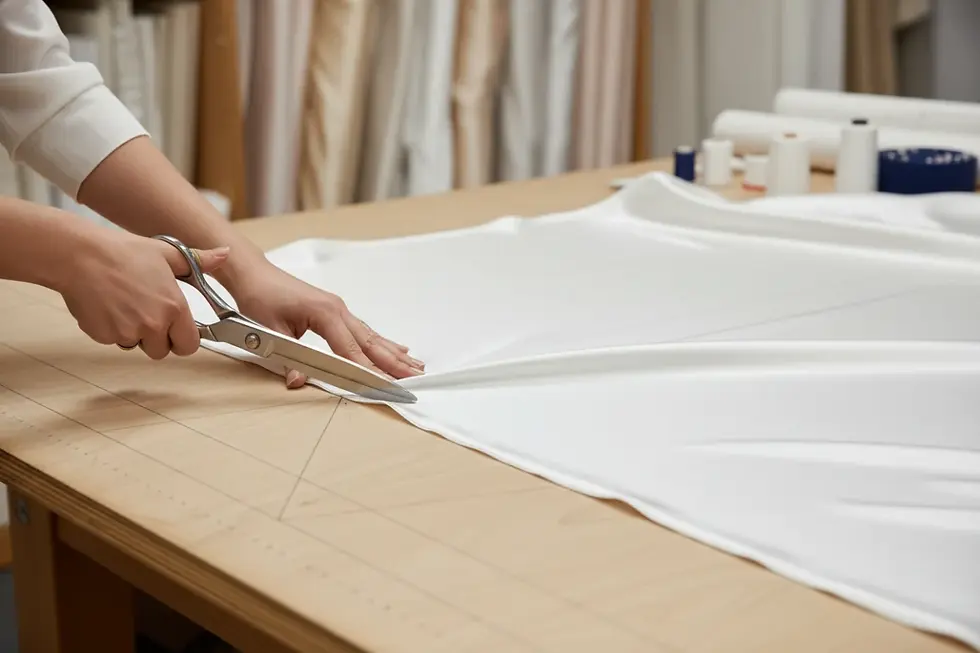
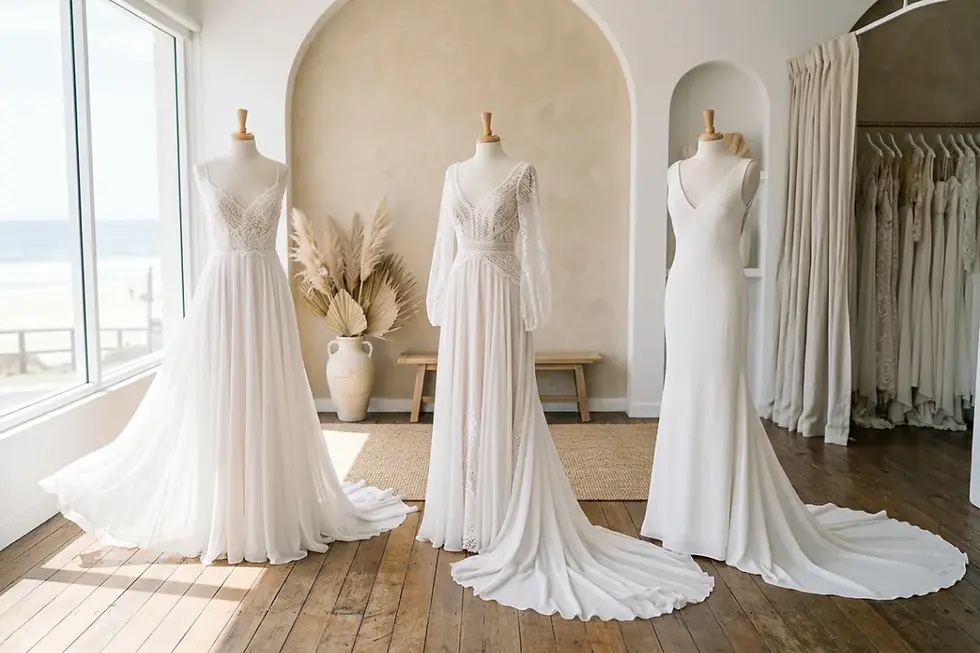
Accurate grainline cutting ensures satin gowns drape smoothly without twisting.
Pattern Drafting and Fit: The Foundation of Clean Silhouette Construction
Flawless satin gowns rely heavily on internal architectural balance. A high-end custom satin wedding dress factory builds gowns from the inside out, incorporating structured foundation layers that support the garment without showing through to the exterior surface.
Precision Bias and Grain Alignment: Satin must be cut on true grain or precise bias angles. Off-grain cutting causes the dress to twist around the bride's torso or legs when she walks.
Invisible Internal Corsetry: To keep the exterior smooth and fluid, boning channels, waist stays, and interfacings must be seamlessly secured to inner linings rather than stitched directly through the exterior satin.
Graded Bust Contouring: Darts and princess seams must follow anatomical curves tightly without creating pointed apexes or puckering along concave seams.
When patterns are drafted accurately, the gown skims the figure effortlessly, giving boutique brides the sculpted, high-fashion silhouette they seek.
Technical Challenges in Satin Sewing: Eliminating Puckering and Seam Tension
Sewing satin requires specialized machinery, delicate operator handling, and strict climate control in the production facility. Even minor friction or thread mismatch can ruin an entire production run.
Technical Element | Standard Production Risk | Specialized Satin Manufacturing Protocol |
|---|---|---|
:--- | :--- | :--- |
Needle Selection | Snags, needle holes, fiber breakage | Ultra-fine Microtex or ballpoint needles, changed frequently |
Thread Tension | Seam puckering, wavy zip lines | Calibrated lower tension settings with continuous-filament thread |
Feed Dog Handling | Fabric bruising, uneven feed drag | Teflon presser feet and synchronized needle-feed or differential feed systems |
Pressing & Finishing | Glaze marks, seam impressions, scorch | Specialized velvet boards, low-moisture steam, and Teflon-coated iron shoes |
Working with a dedicated bridal boutique satin dress production unit ensures that every seam lies flat and every hem hangs with a clean, weighted fall.
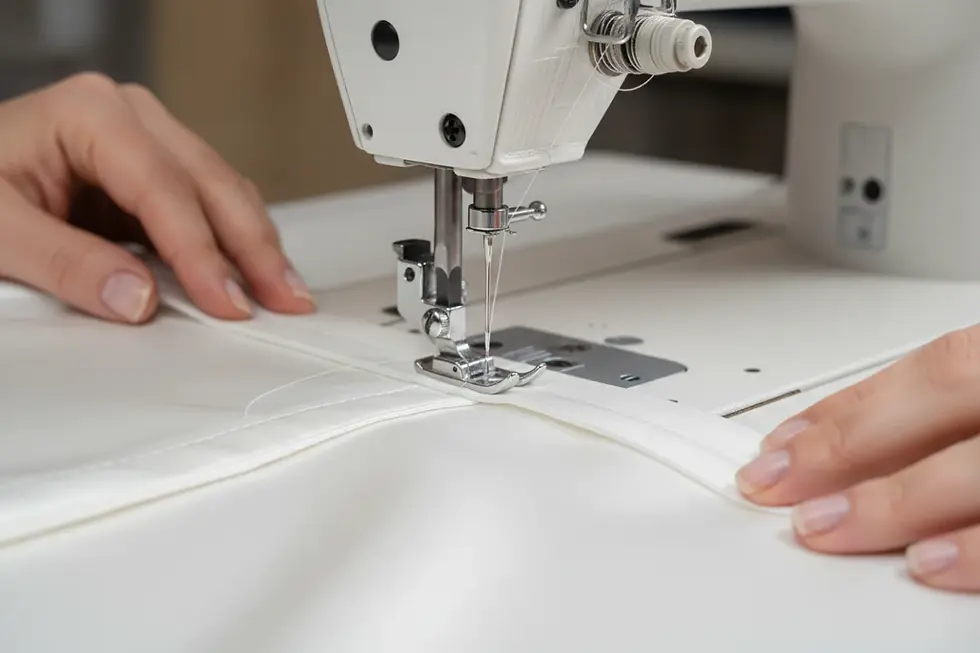
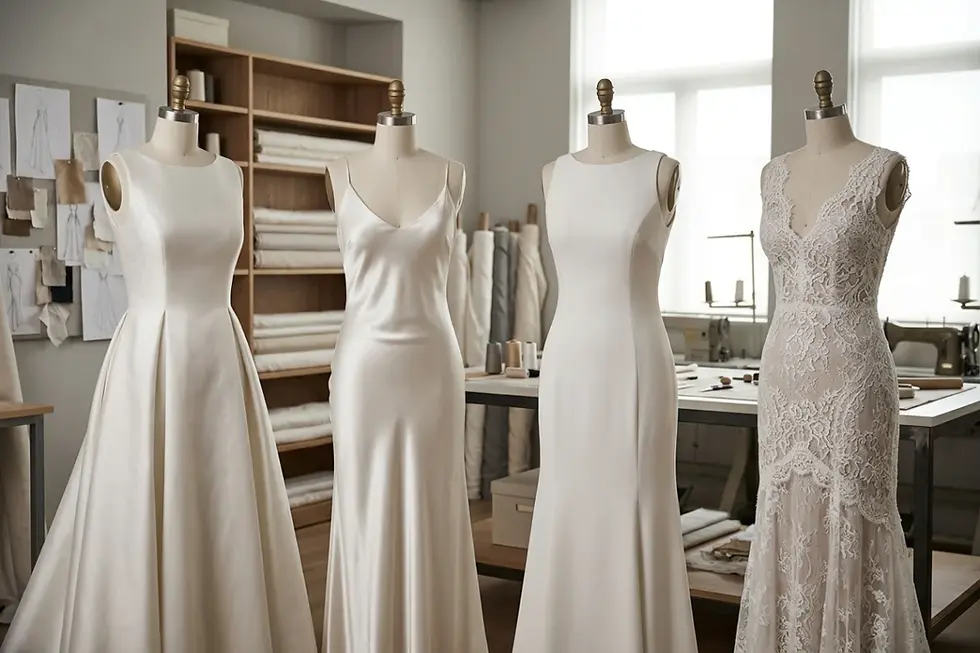
Fine Microtex needles and calibrated tension prevent puckering along satin seams.
Selecting High-Grade Satins: Crepe Back, Duchess, and Stretch Alternatives
A reliable silk satin bridal gown supplier or synthetic textile specialist provides access to diverse fabric weights suited for distinct bridal aesthetics. Understanding the differences helps boutique buyers curate a balanced collection:
Duchess Satin: A heavy, lustrous weave with a crisp hand. It is ideal for dramatic A-line gowns, tailored pleats, and architectural ballgowns requiring firm structure.
Crepe-Back Satin (Crepe Satin): Featuring a lustrous front and a pebbled crepe back, this fabric offers liquid drape, making it perfect for bias-cut slip dresses and softly draped cowls.
Stretch Bridal Satin: Infused with 2% to 5% elastane, stretch satin accommodates diverse body proportions, providing brides with enhanced comfort and ease of movement during fittings.
Pure Silk Satin vs. High-Grade Polyester Satin: While pure silk satin delivers unmatched natural luxury and breathability, premium high-twist micro-polyester satins offer wrinkle resistance, uniform dye consistency, and accessible price points for commercial boutique margins.
What Boutique Buyers Should Look for in a Satin Bridal Manufacturer
When vetting potential manufacturing partners for your boutique, prioritize technical transparency, prototyping reliability, and rigorous quality inspection. A trusted partner should provide clear sampling protocols, allowing you to test drape, seam durability, and sizing consistency before placing volume orders.
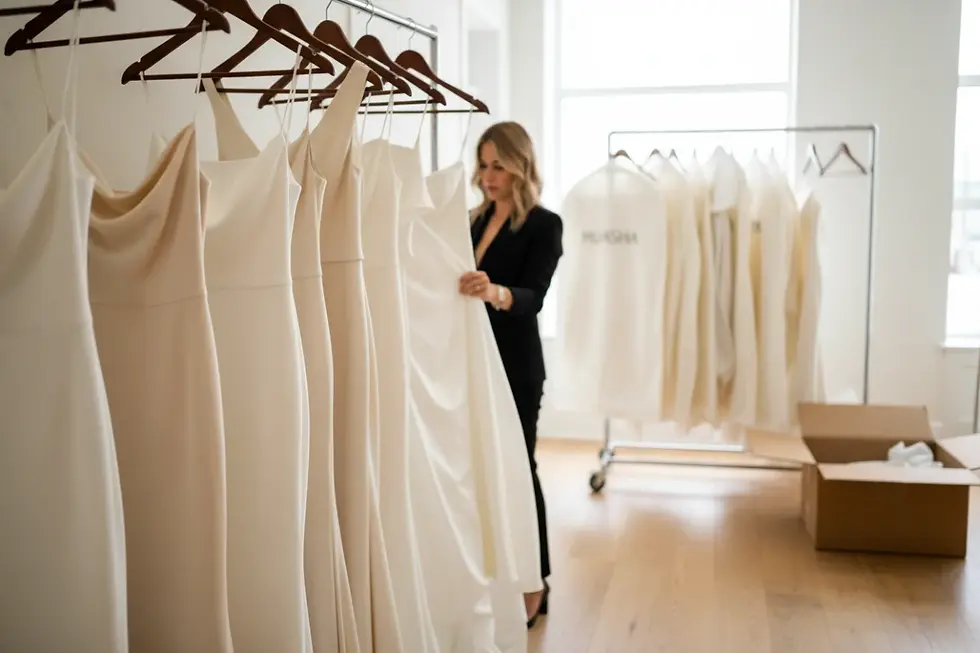
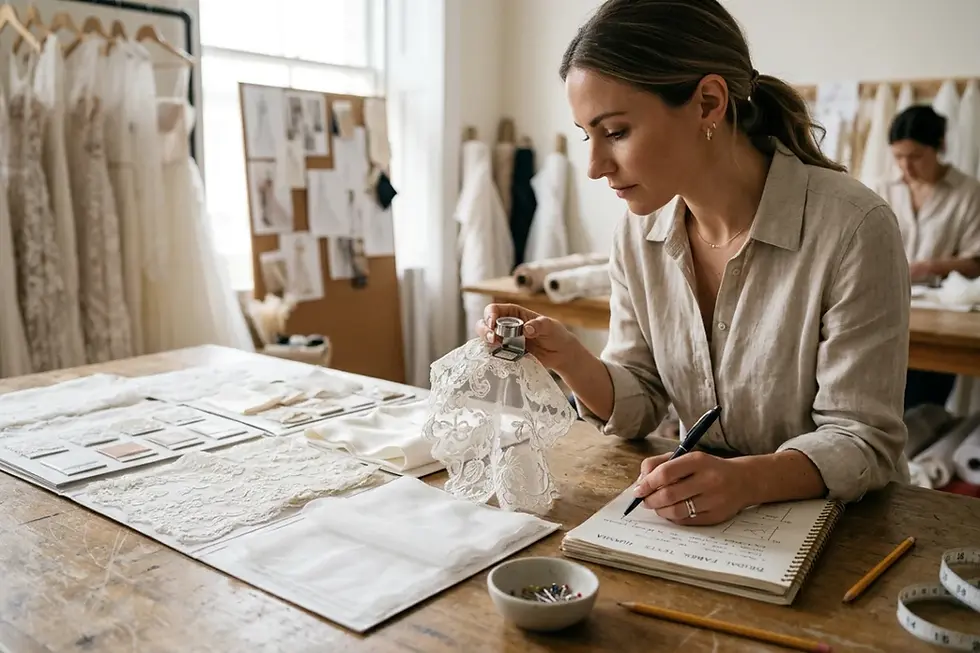
High-grade satin selections ready for luxury bridal boutique showrooms.
Look for factories that maintain dedicated quality control checkpoints throughout cutting, stitching, and final pressing. Clear communication regarding customization capabilities, pattern adjustments for plus sizes, and consistent lead times will protect your boutique’s reputation and bottom line. At Huasha, our specialized production lines ensure pristine finishing and tailored support for expanding bridal collections.
Ready to elevate your showroom racks with meticulously tailored minimalist gowns? Explore Satin Best Sellers to view our latest wholesale collections and custom manufacturing solutions.
FAQ
Why is satin more difficult to manufacture than other bridal fabrics?
Satin has a smooth, highly reflective surface that reflects light uniformly. Any minor stitching flaw, uneven tension, or needle puncture is immediately visible because there is no lace, beading, or texture to hide imperfections.
What is the difference between duchess satin and crepe-back satin in bridal production?
Duchess satin is heavier and stiffer, providing structural support for structured bodices and A-line silhouettes. Crepe-back satin is softer and more fluid, making it ideal for draped necklines, slip dresses, and body-skimming bias cuts.
How can bridal boutiques prevent seam puckering in satin gown orders?
Boutiques should partner with specialized manufacturers that use fine Microtex needles, differential feed machinery, and balanced thread tension, followed by professional low-pressure steam pressing.
Comments