
The Boutique Owner's Guide to Wedding Dress Corset Construction

For bridal boutique owners, the true value of a designer gown lies not only in its surface lace or beading, but in the engineering hidden beneath the lining. Masterful wedding dress corset construction is the foundation of a silhouette that flatters, supports, and empowers the bride the moment she steps into the fitting room. When a sample gown provides effortless structure without pinching or slipping, brides instantly feel confident, directly boosting salon sales and minimizing post-purchase alteration complaints.
Understanding the intricacies of internal bodice engineering enables boutique buyers to make strategic wholesale selections that balance aesthetics, comfort, and commercial viability.
Anatomy of High-End Wedding Dress Corset Construction
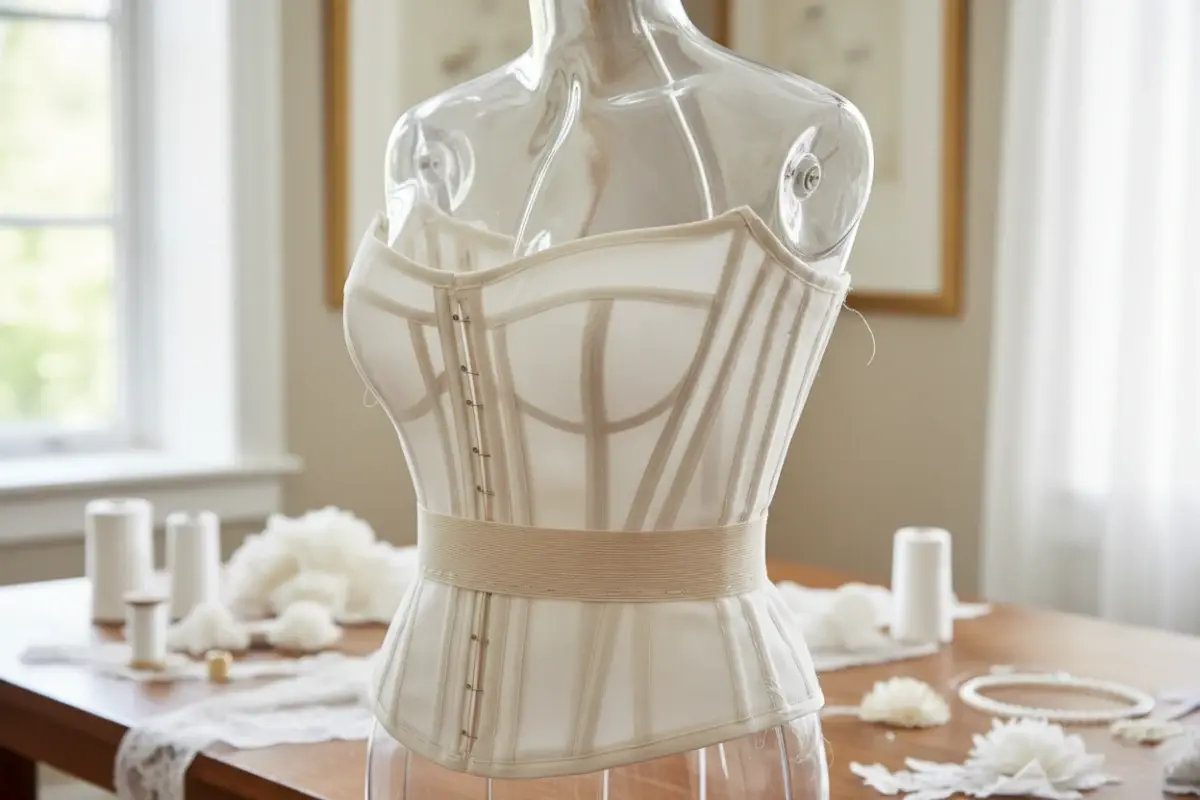
A luxury bridal bodice is a multi-layered architectural system designed to sculpt the torso and distribute the gown's weight evenly across the bride's natural waistline. High-performing structured wedding dress construction typically incorporates five essential layers:
Outer Shell (Fashion Fabric): Silk crepe, tulle, satin, or organza, often embellished with lace appliques or hand beading.
Stabilizing Interlining: A firm, breathable mid-layer (such as coutil, fine canvas, or fused organza) that prevents the delicate fashion fabric from stretching or distorting under tension.
Boning Channels: Dedicated fabric channels stitched securely along structural seams to house supportive boning strips.
Molded Bust Cups & Underwire: Ergonomically placed cups that lift and define without creating unnatural shelf lines.
Inner Waist Stay & Lining: A grosgrain ribbon belt fastened with hook-and-eye closures inside the gown, anchoring the bodice firmly around the ribcage and hips, lined with skin-friendly silk or cupro.
When these components are balanced precisely, the bridal bodice internal structure supports heavy multi-tier skirts without dragging the neckline down, eliminating the bride's constant urge to pull up her strapless gown.
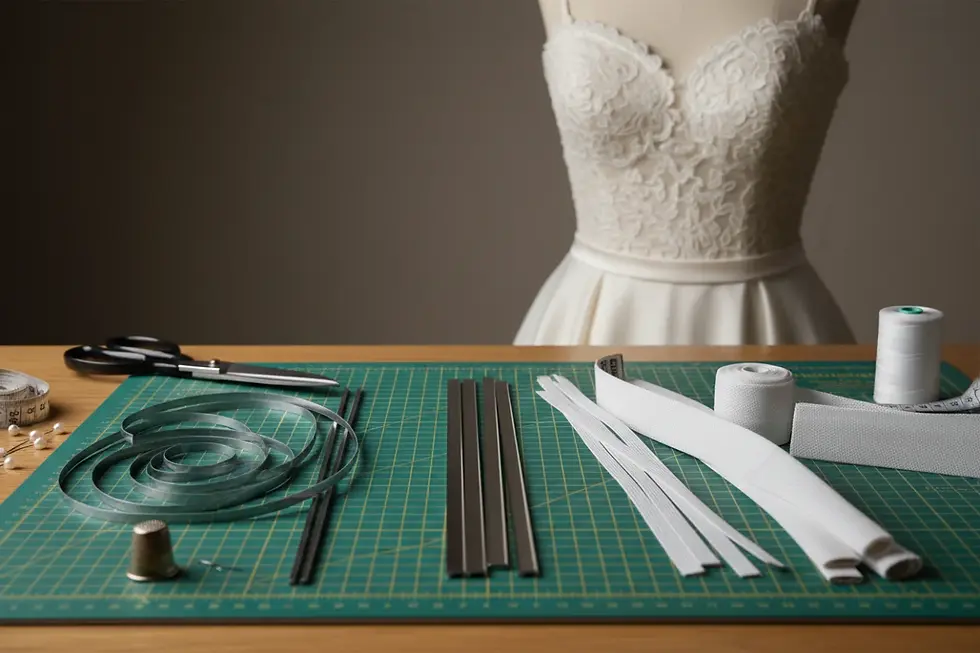
Selecting the right boning materials ensures structural resilience without compromising bride comfort.
Wedding Gown Boning Types: Plastic, Rigilene, and Spiral Steel
Boning provides the vertical integrity that keeps a corset smooth and crease-free. However, not all boning materials deliver the same level of performance. Knowing the differences among wedding gown boning types helps buyers assess durability and fit retention across different gown silhouettes.
Boning Type | Flexibility & Comfort | Support Level | Best Gown Applications | Key Boutique Considerations |
|---|---|---|---|---|
:--- | :--- | :--- | :--- | :--- |
Plastic / Nylon Boning | Low to Moderate | Low | Budget lightweight gowns, informal slip dresses | Prone to permanent creasing and warping under body heat; not recommended for luxury bridal samples. |
Rigilene (Woven Polyester) | High | Moderate | Sheer illusion bodices, lightweight A-lines | Sewn directly to seams; flexible and lightweight, but offers limited support for heavy ballgowns. |
Spiral Steel Boning | High (2D flex) | Very High | Fitted mermaids, structured ballgowns, heavy train dresses | Flexes naturally with torso movement while resisting buckling; ideal for all-day comfort. |
Spring Steel (Flat Steel) | Rigid (1D flex) | Maximum | Back closures, center front panels | Keeps zipper lines and eyelet plackets perfectly straight without rippling or collapsing. |
For high-end salons, gowns constructed with a hybrid combination of spiral steel along the curved side-body seams and flat steel along the back closure deliver the best bridal corset support quality.
How Bodice Structure Influences Fit, Comfort, and Try-On Conversion
The fitting room is where bridal purchase decisions are won or lost. When a bride tries on a dress with superior bridal bodice internal structure, three immediate physiological and psychological shifts occur:
Instant Posture Enhancement: Structured corsetry gently aligns the spine, pulls the shoulders back, and accentuates the waistline, giving the bride an immediate "bridal glow" in mirrors and photos.
Size Adaptability on Floor Samples: Well-engineered internal architecture allows a single sample size to accommodate a broader range of torso shapes cleanly, reducing awkward gaps or bunching during try-ons.
Confidence in Movement: A secure bodice reassures the bride that she can dance, sit, and hug guests without worrying about wardrobe malfunctions.
Investing in collections featuring refined wedding dress corset construction directly enhances try-on conversions, as brides instantly perceive the difference in craftsmanship compared to fast-fashion alternatives.

Superior bridal bodice internal structure provides instant posture enhancement during fitting room try-ons.
Key Quality Indicators to Inspect in Bridal Internal Architecture
When evaluating new bridal collections at trade shows or assessing wholesale manufacturing partners, boutique buyers should turn sample garments inside out and inspect the following technical indicators:
Capped Boning Ends: Verify that steel bones are sealed with metal end-caps or dipped in silicone, encased within reinforced plush casings to prevent sharp ends from puncturing the fabric or poking the bride.
Reinforced Waist Stay Bands: Check for an internal grosgrain or satin waist stay with multiple hook-and-eye adjustments. A sturdy waist stay bears the weight of the skirt rather than relying solely on the zipper.
Seamless Cup Integration: Cups should be smooth, seamlessly sewn into the interlining rather than tacked loosely on the lining surface.
Even Tension Along Seams: Check seam puckering along curved princess seams. Clean, tension-free stitching indicates master-level pattern drafting and seam pressing.
By establishing a strict checklist for bridal corset support quality, your boutique preserves its reputation for premium curation and reduces post-delivery alteration complications.
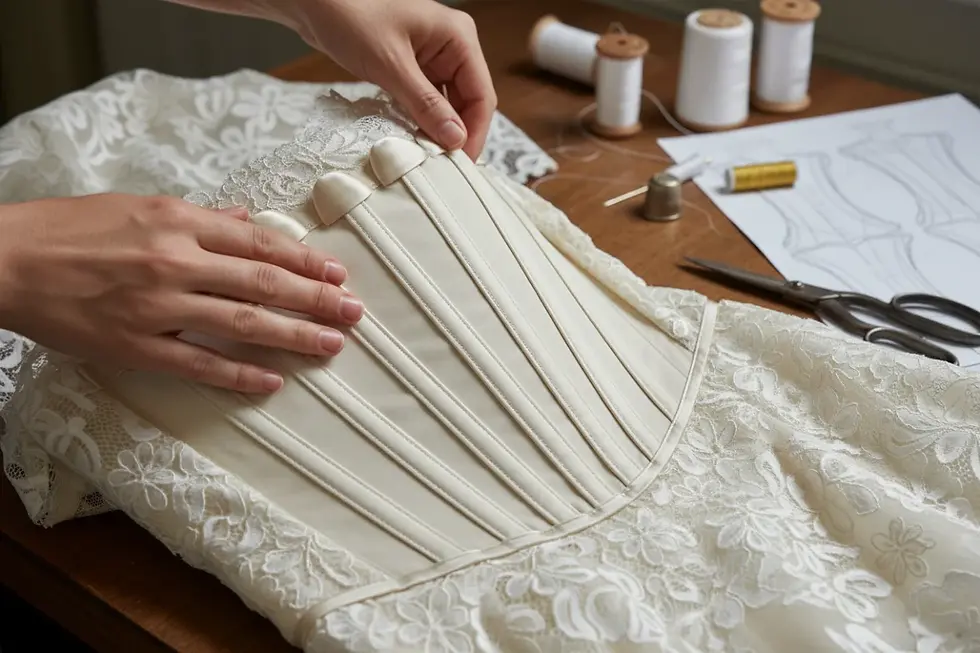
Meticulous internal finishing prevents boning protrusion and streamlines future alterations.
Why Superior Bodice Craftsmanship Lowers Alteration Overhead
Bodice alterations represent one of the highest labor costs and common friction points between bridal boutiques and clients. Poorly constructed bodices often require complete deconstruction: seamstresses must rip open linings, replace cheap plastic boning, reshape bust cups, and re-engineer closure panels to achieve a clean fit.
Conversely, dresses built with professional structured wedding dress construction allow in-house or partner tailors to take in or let out side seams cleanly without destroying the internal scaffolding. This streamlines the fitting process, cuts down labor hours per gown, and ensures the finished gown fits just as flawlessly as the showroom sample.
Elevating your boutique's inventory with expertly engineered internal construction creates a reliable competitive advantage. Explore how our master tailors engineer every internal layer for maximum comfort, support, and salon appeal—Request Construction Detail Videos to view our atelier's step-by-step bodice craftsmanship.
FAQ
What is the difference between fashion corsetry and bridal corset construction?
Fashion corsetry is often designed for dramatic waist reduction or external aesthetic display, whereas wedding dress corset construction prioritizes structural load distribution, bust support, all-day comfort, and seamless integration beneath delicate outer fabrics.
Why is an internal waist stay essential in structured wedding dresses?
An internal waist stay anchors the gown firmly around the bride's natural waist, transferring the weight of heavy skirts and trains directly to the hips and preventing strapless bodices from sliding down.
How does spiral steel boning benefit heavy bridal gowns compared to plastic boning?
Spiral steel flexes in two dimensions, contouring naturally to body curves while retaining high vertical tension. Unlike plastic boning, it will not kink or bend permanently under body heat or the physical weight of heavy multi-layered skirts.

Comments