

A Complete Guide to Wedding Dress Fabric Inspection for Bridal Retailers

Wedding dress fabric inspection evaluates raw textiles for color uniformity, structural flaws, weight, and handfeel prior to cutting to prevent costly manufacturing defects in finished bridal gowns. For bridal boutique owners and bridal brand directors, material perfection is non-negotiable. A bride expects an immaculate garment on her wedding day, and even a microscopic snag, dye lot mismatch, or irregular weave can turn a luxury gown into an expensive salon liability.
Understanding how textile inspection operates at the manufacturing level empowers boutique owners to select reliable manufacturing partners, uphold luxury standards, and protect their profit margins.
Why Rigorous Fabric Inspection is Essential in Bridal Manufacturing
Bridal apparel requires significantly higher quality standards than standard ready-to-wear fashion. Gowns constructed from silk satin, mikado, French tulle, organza, and crepe rely heavily on clean draping lines, consistent luster, and precise structural integrity.
When a factory skips comprehensive wedding dress fabric inspection, hidden textile flaws move directly into the pattern cutting room. Once individual panels are cut and stitched, discovering a defect means re-cutting entire pattern sections or scrapping fully assembled gowns. This causes delivery delays, increases sample variation, and damages brand trust.
Implementing strict bridal fabric quality control protocols ensures:
Consistent color matching across multi-layered bodices, skirts, and illusion sleeves.
Flawless handfeel and drape suitable for high-end boutique presentations.
Accurate fabric yield calculations, reducing costly fabric wastage.
Zero structural failures in high-tension areas such as corset boning channels and zipper seams.
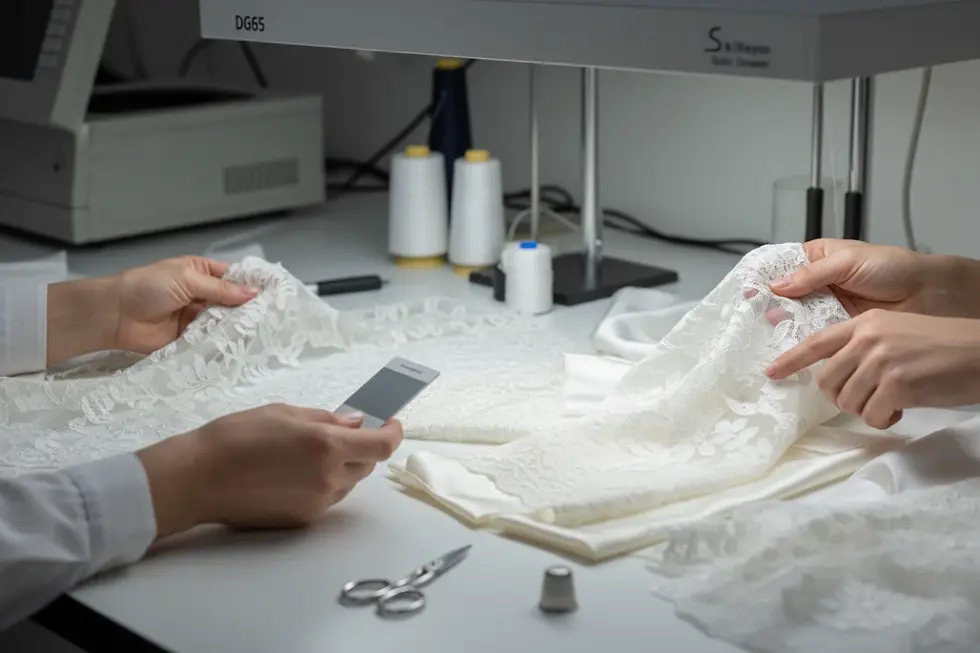
Incoming textile inspection checklist includes standardized lighting evaluations for color consistency.
Incoming Textile Inspection Checklist: What to Test Before Cutting
Before raw fabric rolls are unrolled onto the cutting table, professional apparel makers execute a comprehensive incoming textile inspection checklist. This multi-step protocol assesses physical, visual, and chemical properties against established pre-cutting fabric testing standards.
1. Color Fastness and Shading Consistency
Bridal gowns often incorporate several materials, such as lining satin, organza overlays, and lace appliques. A light booth evaluation under standard D65 daylight illuminants ensures that side-to-side, end-to-end, and roll-to-roll shading discrepancies are caught immediately.
2. Weight (GSM) and Yarn Density
Every bridal design is calibrated for specific fabric weights. Inspecting grams per square meter (GSM) and warp/weft thread counts ensures the material provides adequate opacity, structural stiffness, or flowing drape as designed in the technical pack.
3. Dimensional Stability and Shrinkage
Silk, rayon, and fine synthetic fibers must undergo heat, steam, and dry-cleaning shrinkage tests. Excessive shrinkage during pressing or steaming can alter gown measurements, causing sizing discrepancies on boutique display samples.
4. Mechanical Strength and Seam Slippage
Tulle and delicate chiffon must withstand standard seam slippage and tear resistance tests. If yarn slippage occurs under minimal tension, the gown risks splitting along the zipper or side seams during bridal alterations.
Wedding Gown Fabric Defect Grading and the 4-Point System
The internationally recognized ASTM D5430 standard, commonly known as the 4-Point System, serves as the standard framework for wedding gown fabric defect grading. During this process, inspectors run fabric rolls across lighted inspection tables at controlled speeds to assign penalty points based on defect length.
Defect Length | Penalty Points Assigned |
|---|---|
:--- | :--- |
Defects up to 3 inches (75 mm) | 1 Point |
Defects between 3 and 6 inches (75 mm - 150 mm) | 2 Points |
Defects between 6 and 9 inches (150 mm - 230 mm) | 3 Points |
Defects over 9 inches (230 mm) | 4 Points |
Holes or openings larger than 1 inch (25 mm) | 4 Points |
To calculate the overall roll grade, quality control specialists use the standard formula:
$$ ext{Points per } 100 ext{ sq. yd.} = \frac{ ext{Total Penalty Points} imes 3600}{ ext{Inspected Length (yards)} imes ext{Usable Width (inches)}}$$
In bridal manufacturing, acceptable point thresholds are much stricter than in casual apparel. While commercial fashion often allows up to 40 points per 100 square yards, bridal gown fabrics generally enforce an acceptance threshold of under 15 to 20 points per 100 square yards depending on the fabric grade.
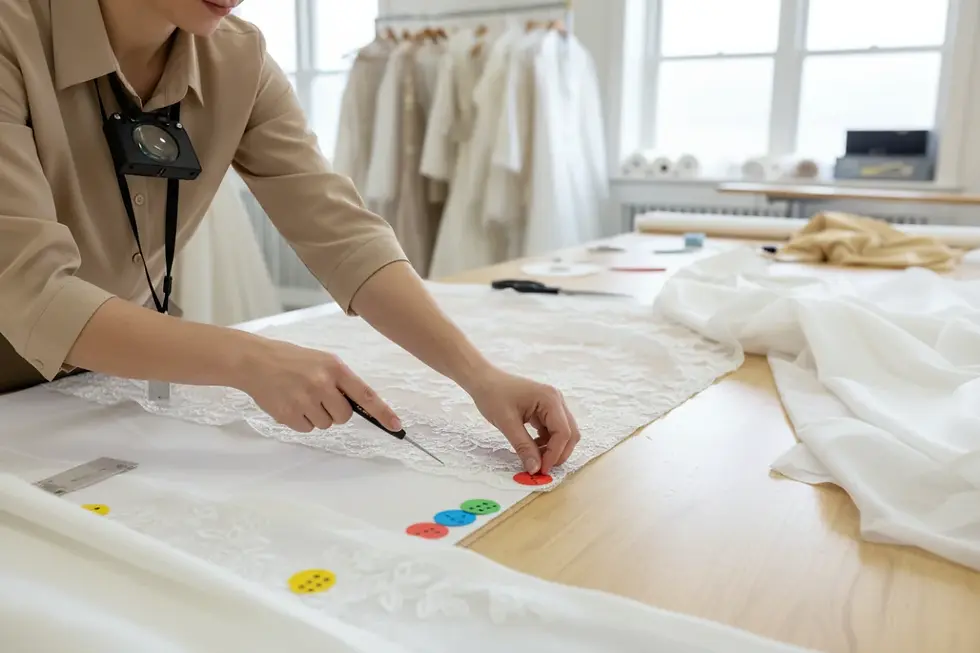
Wedding gown fabric defect grading prevents localized weave irregularities from entering final garments.
Common Bridal Fabric Defects and How Manufacturers Catch Them
High-end bridal textiles are delicate and prone to specific production flaws. A structured wedding dress fabric inspection process targets the most recurring defects:
Snags and Pulled Threads: Highly common in satin and crepe. Inspection machines with backlighting identify snagged filament fibers before pattern placement.
Barre Marks and Weft Streaks: Unintended horizontal bands across woven or knitted fabrics caused by tension unevenness during weaving.
Dye Spots and Oil Stains: Lubricant residue from weaving looms or uneven dye dispersion that ruins ivory and off-white bridal gowns.
Slubs and Foreign Fibers: Thickened yarn sections or colored contamination fibers trapped within transparent organza or tulle layers.
When minor localized defects are detected on acceptable rolls, inspectors apply visible metallic defect flags on the fabric selvedge. This alerts the pattern cutter to work around the marked area, ensuring zero flawed components reach the assembly line.
Best Practices for Bridal Brands to Ensure Material Integrity
Bridal boutique owners and custom atelier designers do not have to manage textile testing laboratories themselves. However, setting clear expectations with your manufacturing partners is critical to maintaining boutique standards.
Demand Pre-Production Inspection Reports: Request fabric testing summaries covering shrinkage, color fastness, and 4-point grading before bulk cutting begins.
Specify Strict Shade Lot Approvals: Require lab dip approvals and fabric swatches from the exact dye lot allocated for your boutique's orders.
Partner with Experienced Bridal Manufacturers: Work with established production houses like Huasha that maintain dedicated textile evaluation units and specialized bridal sewing facilities.
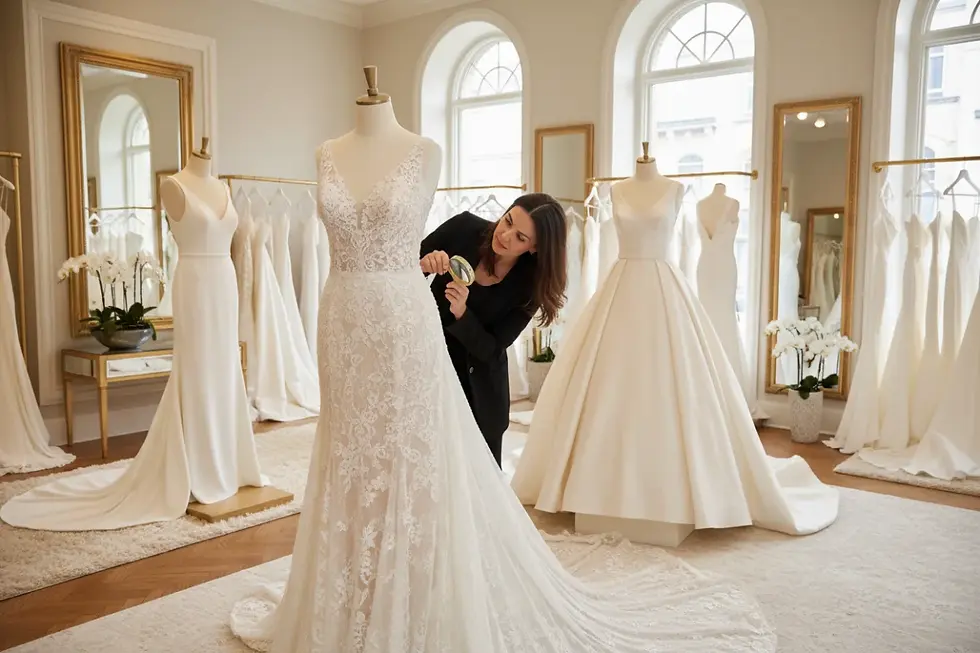
Adhering to pre-cutting fabric testing standards results in flawless bridal gown silhouettes.
Maintaining uncompromising quality across your bridal collections starts with raw material verification. If you are developing a new gown collection or seeking dependable manufacturing for your salon, take the next step to secure top-tier textiles: Request Material Sourcing Support today.
FAQ
What is the 4-point system in wedding dress fabric inspection?
The 4-point system is an internationally recognized standard (ASTM D5430) for fabric inspection that assigns 1 to 4 penalty points to visual defects based on their length. Bridal textiles must meet strict, low-point thresholds before approval for cutting.
Why is pre-cutting shrinkage testing critical for bridal gowns?
Bridal fabrics like silk, crepe, and organza react to steam pressing during assembly. Shrinkage testing ensures fabric is properly pre-relaxed or stabilized so finished gown measurements remain true to sizing charts.
How can bridal boutiques verify their manufacturer's fabric quality?
Boutiques can request fabric inspection reports, swatch approvals under D65 daylight, and material testing data sheets covering seam slippage and color fastness directly from their manufacturing partner.

Comments