
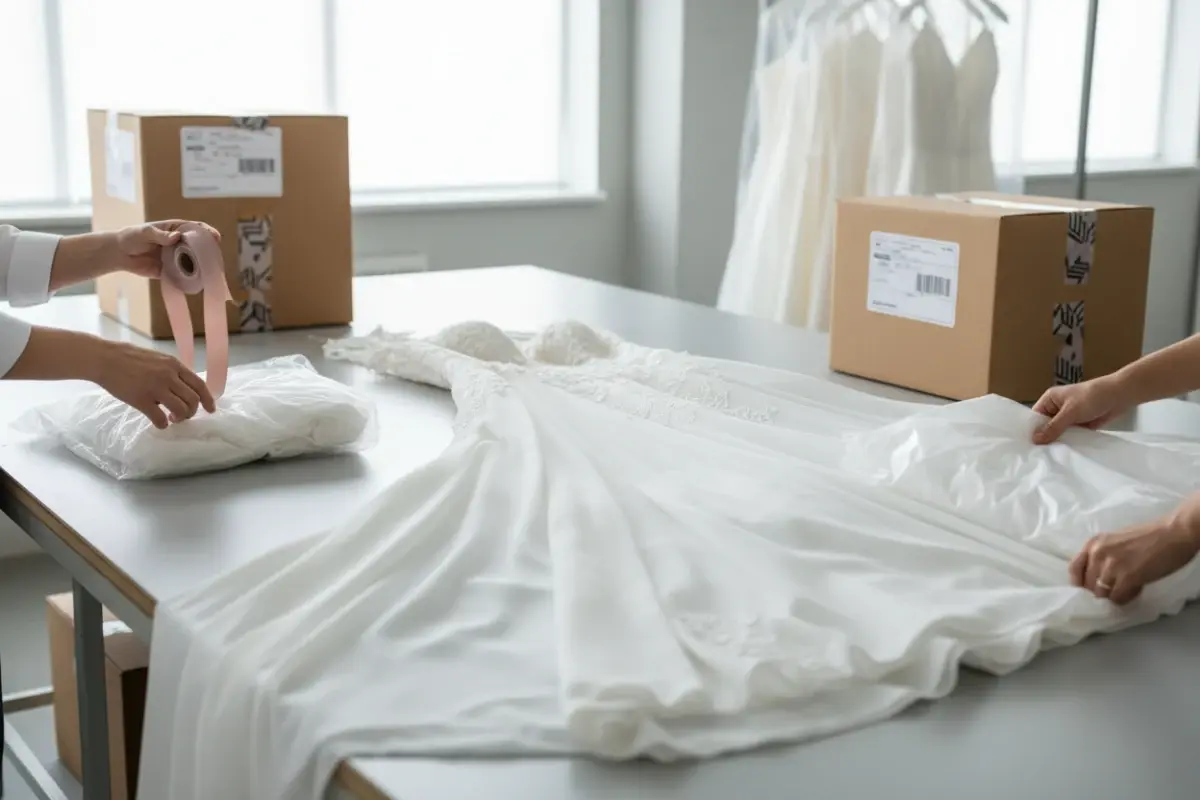
Mastering Wedding Dress Packaging for International Shipping: Boutique Guide

For bridal boutique owners and bridal retailers, receiving custom gowns from overseas manufacturers is a regular part of inventory management. However, transit across ocean freight lanes or air cargo hubs exposes delicate textiles to moisture, high pressure, rough handling, and severe temperature fluctuations. Implementing professional wedding dress packaging for international shipping ensures that every intricate bead, fine lace applique, and structured corset arrives in pristine, boutique-ready condition.
Professional wedding dress packaging for international shipping combines acid-free tissue wrapping, breathable inner garment bags, reinforced carton sizing, and moisture barriers to prevent fabric snagging, crushing, and humidity damage during transit. Understanding these export methods helps retailers collaborate effectively with suppliers to safeguard inventory and reduce costly prep times.
Key Freight Risks: Understanding Transit Damage in Long-Haul Bridal Shipping
International freight involves multiple transfers across trucks, sorting centers, customs inspection warehouses, and cargo holds. Without meticulous preparation, gowns are susceptible to specific transit hazards:
Crushing and Creasing: Deep-set creases in delicate fabrics like mikado, tulle, or organza can require hours of specialized steaming or cause permanent distortion.
Friction and Snagging: Heavy beadwork, sequins, and crystal embellishments on one gown can easily snag delicate tulle or lace overlays on adjacent fabrics.
Humidity and Odor Absorption: Long ocean voyages or transit through humid climate zones introduce dampness, risking mildew or moisture staining.
Carton Deformation: Substandard exterior cartons can collapse under pallet stack loads, directly compressing delicate internal structures like horsehair braids and crinoline petticoats.
Employing proven techniques to prevent wedding dress shipping damage minimizes boutique alteration labor and ensures client delivery schedules remain intact.
Multi-Layer Protection: Acid-Free Tissue, Garment Bags, and Moisture Barriers
High-grade bridal transport protection methods rely on a multi-layer packaging philosophy designed to cushion, isolate, and seal each gown.
Packaging Layer | Primary Material | Function & Protection Benefit |
|---|---|---|
:--- | :--- | :--- |
Primary Wrapping | Acid-free, pH-neutral tissue paper | Isolates embellishments, supports bodices, and prevents yellowing |
Inner Enclosure | Breathable non-woven or PE garment bag | Protects against dust, surface friction, and minor moisture |
Waterproof Shield | Heavy-duty poly outer bag or sealed liner | Guards against ambient humidity, condensation, and water exposure |
Outer Shell | 5-ply or 7-ply double-wall corrugated carton | Resists stacking compression and exterior impact during transit |
Acid-free tissue should be gently packed inside bodice cups to preserve architectural boning and rolled between skirt folds to prevent sharp creasing. Metal zippers, hook-and-eye closures, and ornate crystal belts must be individually wrapped in tissue so they cannot contact surrounding sheer fabric layers.
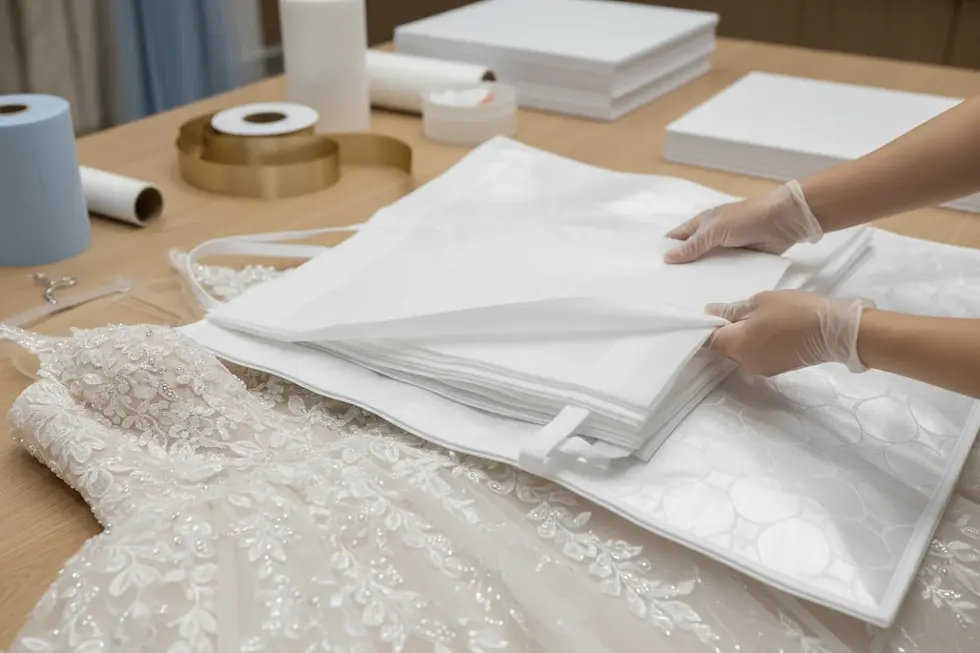
Multi-layer wrapping safeguards delicate lace and beadwork from friction during long-haul transit.
Carton Sizing Strategies: Balancing Dimensional Weight with Wrinkle Prevention
Selecting the right carton dimensions is essential for balancing transport safety and international freight costs. Air freight forwarders calculate charges based on volumetric (dimensional) weight, making excessively large boxes expensive. Conversely, compressing a voluminous ballgown into a box that is too small leads to severe fabric crushing.
When choosing bulk wedding dress shipping boxes, consider the following best practices:
Silhouette-Matched Carton Sizes: Fit-and-flare and sheath dresses can be packed efficiently in slim export boxes, whereas ballgowns and cathedral trains require deeper cartons with built-in fold expanders.
Controlled Folding Methods: Fold dresses in a smooth "Z-fold" or "accordion fold" configuration over layers of tissue rather than tight rolled bundles, distributing fabric volume evenly across the carton.
Cushioned Headroom: Leave 2 to 3 inches of clearance at the top of the box. Fill empty voids with air cushions or kraft paper to prevent internal movement without applying downward pressure on delicate bodices.
Securing Delicate Elements: Protecting Beads, Lace, and Structured Corsetry
Intricately adorned gowns require specialized isolation methods to survive long-distance transit without missing stones or pulled threads.
Embellished Bodice Isolation: Place foam padding or dense acid-free paper pads directly over heavy beadwork before folding skirts over the front of the gown.
Boning Support: Ensure boned corsets remain straight or follow their natural curve. Forcing a structured bodice into an unnatural bend during packing can permanently warp internal steel or plastic bones.
Train Fastening: Long trains should be folded loosely upward into the skirt envelope, avoiding sharp right-angle creases that stress delicate hem lace or horsehair trim.

Heavy-duty bulk wedding dress shipping boxes ensure structural integrity across air and sea freight.
Bridal Gown Export Packaging Standards and Factory QC
Reputable bridal manufacturers maintain rigorous bridal gown export packaging standards to protect shipments worldwide. Factory-level quality control procedures ensure consistency across bulk boutique orders:
Pre-Pack Steaming & Final Inspection: Each gown undergoes thorough thread trimming, bead stability checks, and gentle steaming before packing begins.
Clear SKU and Barcode Labeling: Every internal garment bag and outer carton features clear labeling with style numbers, sizes, color variants, and handling icons (such as "Keep Dry" and "Fragile").
Carton Edge Reinforcement: High-stress outer corners are reinforced with strapping tape and corner protectors to ensure cartons withstand multi-tier palletization in air and ocean cargo holds.
Adhering to these strict export protocols significantly reduces return rates, handling disputes, and unboxing delays for retailers.
Best Practices for Bridal Boutiques Receiving International Shipments
Once a shipment reaches your bridal salon, following an organized unboxing workflow ensures gowns recover quickly from international transit:
Immediate Inspection: Check exterior cartons for signs of water exposure or puncture damage before signing courier delivery receipts.
Unpack Immediately: Remove gowns from compressed export cartons as soon as they arrive. Avoid leaving packed dresses inside shipping boxes for extended periods.
Hang and Air: Place gowns on heavy-duty, padded bridal hangers in a climate-controlled showroom. Allow ambient airflow to naturally relax minor surface wrinkles.
Professional Finishing: Use a commercial-grade vertical garment steamer, working from the bottom lining upward through outer lace and tulle layers.
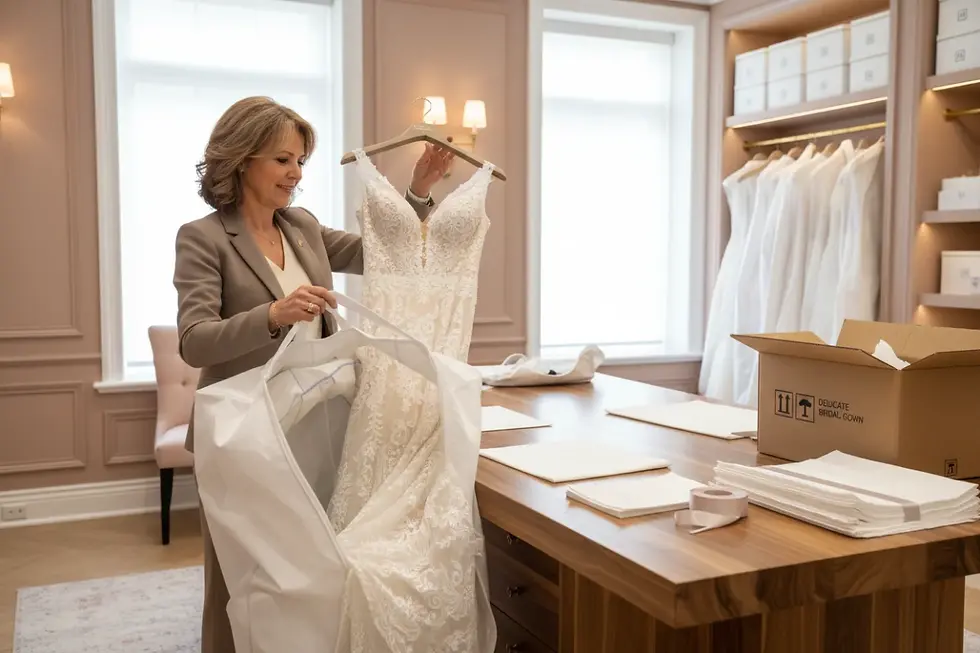
Proper export packaging allows boutique owners to quickly steam and display arriving bridal gowns.
Elevate Your Bridal Inventory with Huasha
Protecting your bridal inventory begins at the production stage with specialized export packaging protocols. At Huasha, our comprehensive production and logistics workflow ensures that every handcrafted gown is inspected, wrapped, and boxed to withstand long-haul international routes, arriving ready for your boutique's showroom floor. Ask About Shipping Preparation to learn more about our export standards, tailored packaging options, and bulk shipping support for bridal salons.
FAQ
What materials are recommended for wedding dress packaging for international shipping?
The best combination includes acid-free tissue paper for separating layers and supporting bodices, breathable non-woven garment bags for dust and scratch protection, waterproof poly liners for moisture defense, and heavy-duty double-wall corrugated cartons for exterior impact resistance.
How can boutiques prevent wedding dress shipping damage from beadwork snagging?
Beadwork and crystal belts should be wrapped with acid-free tissue or soft foam sheets before the skirt is folded over the bodice. This physical barrier prevents decorative stones from catching on delicate tulle or lace.
How long can wedding dresses stay packed inside shipping boxes?
Gowns should be unpacked as soon as they arrive at the boutique. Leaving gowns in compressed shipping cartons for weeks can cause set-in wrinkles and compress internal boning or crinoline structures.
Why is acid-free tissue essential for bridal export packaging?
Standard tissue paper contains acid and lignin that can react with delicate bridal fabrics over time or under fluctuating humidity, leading to fabric discoloration and yellowing during international transit.


Comments