
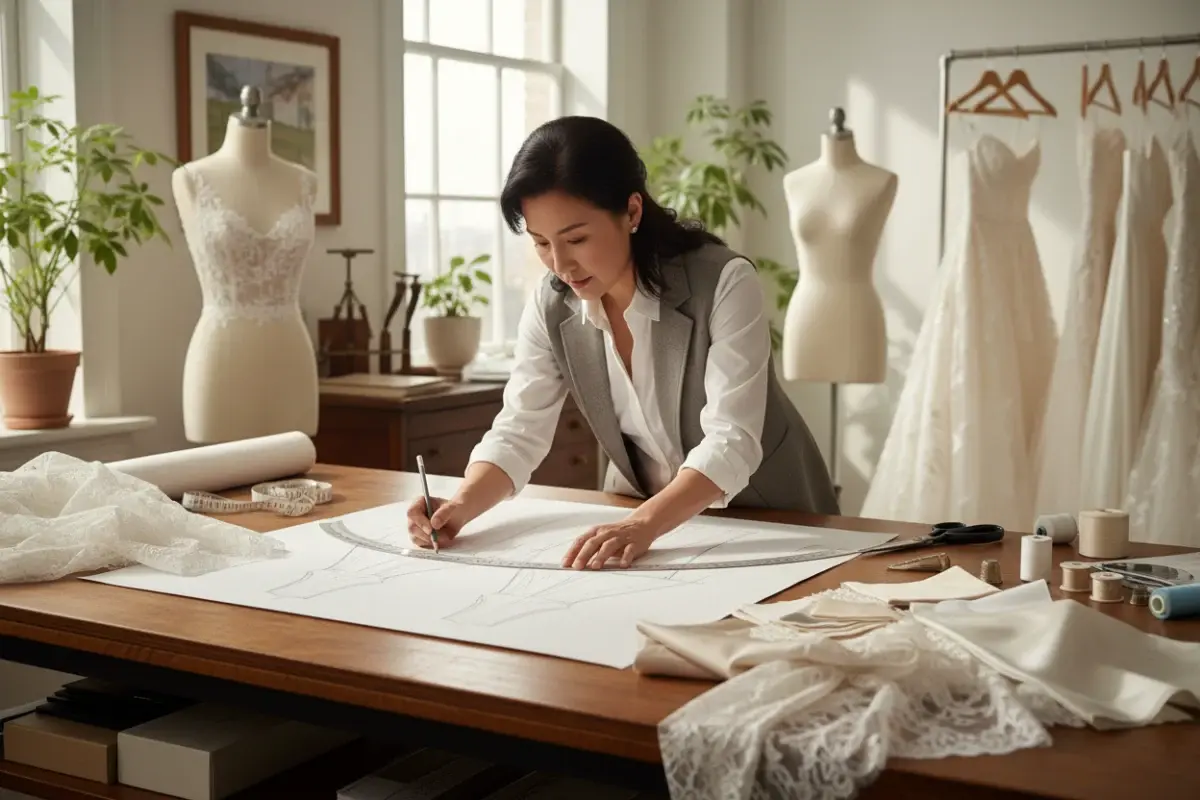
Choosing the Right Wedding Dress Pattern Making Manufacturer for Your Bridal Line

A professional wedding dress pattern making manufacturer translates design concepts into precise structural blueprints, ensuring exact silhouette fit, internal bodice support, and flawless consistency during mass production. For bridal boutique owners and independent bridal designers, bridging the gap between an inspiring sketch and a wearable, commercial gown is one of the most critical stages of product development. Without accurate pattern engineering, even the most luxurious silks and intricate laces will fail to drape properly or provide the support modern brides demand.
Selecting an experienced manufacturing partner who specializes in bridal pattern development allows you to streamline sample approvals, minimize fabric waste, and deliver gowns that fit reliably across diverse sizing charts.
The Core Role of Pattern Engineering in Bridal Fit and Silhouette
Unlike standard ready-to-wear apparel, bridal gowns carry significant structural weight due to multi-layered skirts, heavy beadwork, and elongated trains. Precision pattern making serves as the architectural foundation that distributes this weight evenly across the bride's body without distorting the silhouette.
Professional bridal gown pattern development involves sophisticated drafting techniques that account for fabric stretch, grainline orientation, and drape dynamics. A skilled pattern engineer balances visual aesthetics with functional engineering by:
Aligning Fabric Draping with Seam Placement: Ensuring seamlines enhance natural body curves while maintaining structural integrity.
Balancing Skirt Volume and Movement: Calculating precise flare angles for A-line, ballgown, and mermaid cuts so skirts hold their shape without collapsing.
Engineering Illusion Elements: Creating stable attachment zones for sheer tulles and illusion necklines so they withstand movement without tearing.
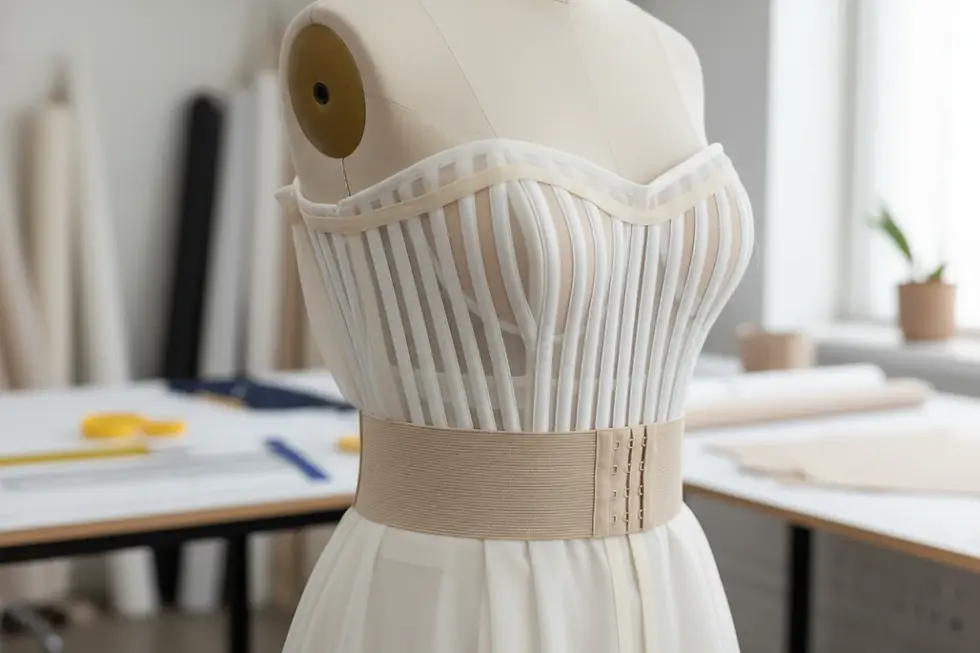
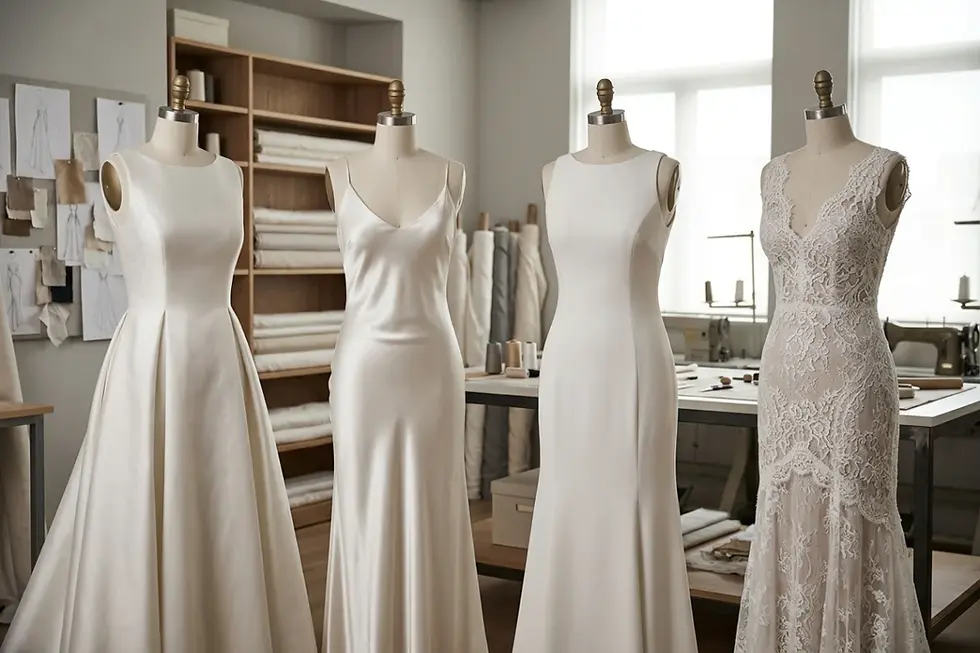
Structured internal corsetry ensures secure bust support and sleek lines across all bridal silhouettes.
Internal Bodice and Corsetry Construction: The Foundation of Support
The internal bodice of a wedding dress is where pattern engineering directly impacts customer satisfaction. Bridal gowns frequently feature strapless, plunge, or low-back designs that require built-in support mechanisms capable of contouring the bust and waist without external bras.
A specialized custom wedding dress pattern maker develops multi-layered inner foundation patterns that incorporate boning channels, waist stays, and padded cups. Advanced bridal corsetry and grading demand accurate cup-to-underbust ratios to avoid gapping, pinching, or slipping during extended wear.
Bodice Construction Component | Pattern Engineering Function | Impact on Bridal Fit |
|---|---|---|
:--- | :--- | :--- |
Spiral & Flat Steel Boning Channels | Anchors bodice panels vertically | Prevents fabric bunching and maintains vertical posture |
Under-Bust Waist Stay (Grosgrain) | Distributes dress weight to the waist | Removes downward tension from the bust and shoulders |
Multi-Part Contour Cups | Provides anatomical shape | Eliminates side-bust spill and upper cup gapping |
Interlining & Canvas Base | Stabilizes delicate outer fabrics | Keeps delicate laces and satins smooth over the boning |
Standardizing Sizing and Grading for Flawless Bulk Production
One of the most persistent challenges for bridal boutique owners is inconsistent sizing across reordered styles. When a sample dress in size 6 fits perfectly, but customer reorders in size 14 or 20 arrive with distorted proportions, store reputations suffer.
Grading bridal patterns requires non-linear proportion scaling rather than simple perimeter enlargement. As sizes increase, bust depth, armhole circumference, and torso lengths shift at varying ratios. An expert wedding dress pattern making manufacturer applies specialized bridal grading rules that preserve original design lines across standard sizes 0 to 28 as well as custom made-to-measure orders. This rigorous approach prevents common defects such as elongated armholes, dropped bust points, or unmanageable train lengths on petite sizes.

Digital CAD grading guarantees consistent proportions from petite to plus-size bridal collections.
From Sketch to Reality: Wedding Dress Sample and Tech Pack Development
Efficient manufacturing begins with comprehensive documentation. Before cutting the first yard of silk or lace, an experienced pattern team works alongside you to complete thorough wedding dress sample and tech pack development. A complete bridal tech pack serves as the master blueprint for production, detailing:
Detailed 2D CAD Pattern Blocks: Digitized pattern pieces exported in industry-standard formats for automatic cutting systems.
Point of Measure (POM) Sheets: Strict tolerance guides detailing seam allowances, finished garment measurements, and grading increments.
Bill of Materials (BOM): Comprehensive listings of all shell fabrics, linings, interfacings, zippers, boning types, and hand-beading threads.
Construction Callouts: Precise sewing sequence diagrams, edge finishing methods (e.g., French seams, horsehair braid hems), and lace applique placement guidelines.
Developing an initial toile (muslin prototype) from these patterns ensures fit issues are corrected early, saving boutique owners costly rework during sample production.
Key Capabilities to Evaluate in a Bridal Pattern Making Manufacturer
When vetting potential manufacturing partners for your bridal boutique or private label collection, look beyond general garment capabilities and evaluate bridal-specific technical proficiencies:
Hybrid Digital & Manual Drafting: While 3D CAD modeling accelerates initial drafting and digital grading, bridal lace placement and bespoke draping often require master hand-finishing.
Deep Understanding of Bridal Textiles: Different fabrics—such as crepe, mikado, organza, and chantilly lace—react uniquely under tension; your manufacturer must adjust seam allowances and grainlines accordingly.
Low-MOQ Prototype Flexibility: Boutique brands need the ability to test single-piece sample iterations before committing to full collection rollouts.
Data Security and Proprietary Pattern Protection: Reliable manufacturers keep your proprietary pattern library securely archived for seamless recurring reorders.
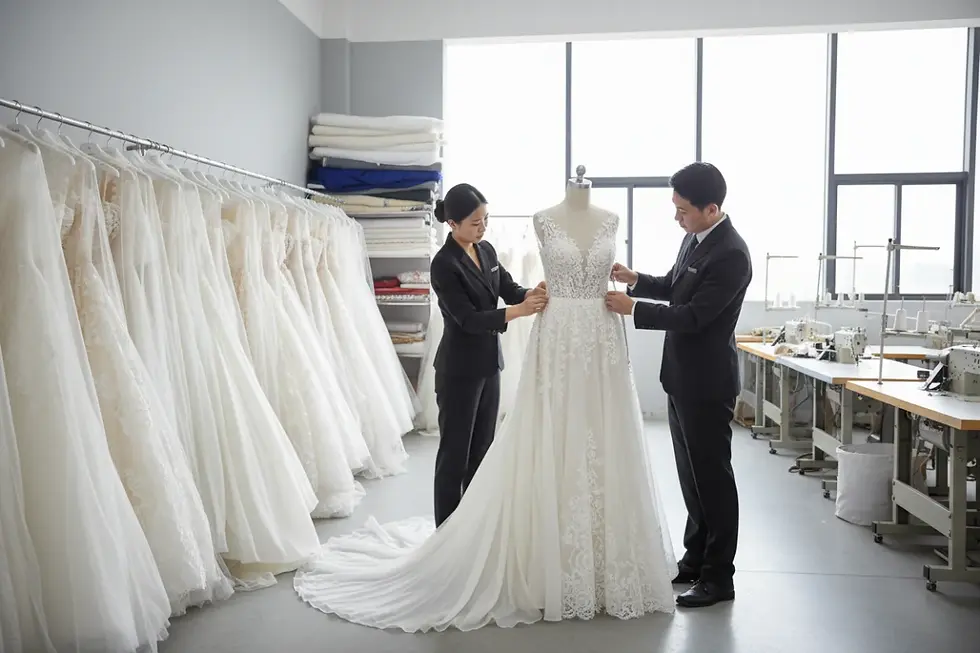
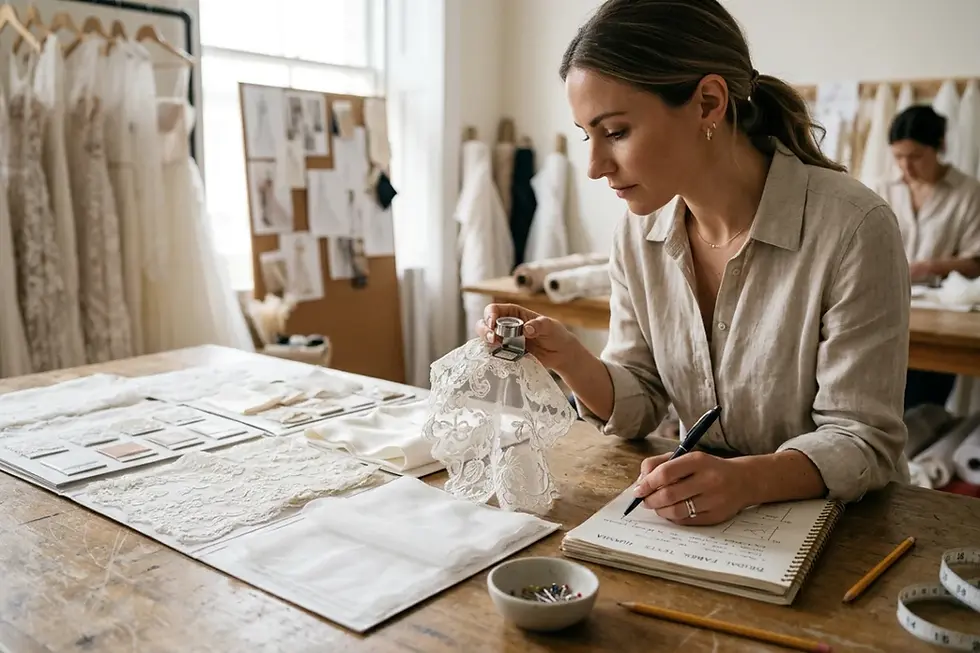
Rigorous sample inspection confirms pattern accuracy before commencing bulk gown manufacturing.
Partnering with Huasha for Precision Bridal Pattern Development
At Huasha, we specialize in high-precision pattern engineering, sample prototyping, and scalable manufacturing tailored for bridal boutique owners and boutique designers worldwide. Our master pattern cutters and technical developers work directly from your sketches, reference photos, or existing samples to build production-ready digital tech packs and balanced pattern blocks.
By uniting traditional couture draping with modern pattern grading software, Huasha ensures that every gown in your collection delivers dependable structural support, comfortable movement, and exquisite silhouette definition.
Ready to elevate your collection's fit and streamline your manufacturing process? Discuss Pattern Development with the Huasha engineering team today to bring your next bridal collection to life.
FAQ
Why is specialized pattern making so critical for wedding dresses compared to regular apparel?
Wedding dresses feature heavy multi-layered fabrics, intricate train structures, and strapless or backless bodices. Specialized pattern makers engineer internal foundations like boning, waist stays, and contoured cups to distribute dress weight comfortably and maintain shape throughout movement.
What information do I need to provide to start pattern development?
You can start with technical sketches, mood boards, reference photos, or an existing sample dress. Providing target size charts, fabric preferences, and specific closure details helps the pattern maker generate an accurate tech pack.
How does bridal pattern grading handle plus sizes and custom body proportions?
Professional bridal grading utilizes non-linear grading rules, adjusting critical points like bust depth, armhole curvature, and torso balance independently rather than simply scaling the overall circumference, ensuring the original design lines flatter every body type.
Can Huasha produce samples before committing to a full production order?
Yes. Huasha creates initial prototype toiles and fully finished sample gowns for review and fitting adjustments before you commit to bulk bridal gown manufacturing.
Comments